Hello to you on this beautiful May Day! I hope the weather wherever you are is as lovely as it is here in Western MA. I took my morning tea outside to enjoy while listening to the sparrows in my maple tree cheep, chirp, holler, and screech (the latter two occurred when Momo came out to join me. Apparently my cat was not as welcome a guest as I was.
It’s been a couple weeks since my last post; I haven’t read through much of my haul from the last library sale, and another one is coming up on the 7th. I will of course be there with multiple bags. I have been having fun with the two cookbooks I picked up, both of which had been on my Amazon list for quite a while. My new-to-me books are patiently waiting for me to get to them, but I’ve been a bit busy with other books. Like the proverbial Alice, I’ve found myself falling into rabbit holes and I’m not in any real hurry to find my way out.
Rabbit Hole #1: Pandora’s Jar by Natalie Haynes & The Trojan Women by Euripides


I LOVED Natalie Haynes’ A Thousand Ships. I read it in one sitting, leaving all of the day’s chores to languish while I wandered through women’s lives in ancient Greece. I gave that book 5 stars on Goodreads, and I rarely do that. Because that book was so good, I preordered Haynes’ Pandora’s Jar as soon as I saw the announcement on Instagram. I gave this book 4 stars on Goodreads, but I may go back and change it to 5. Haynes’ style of writing in this book made me think of Rosalind Miles’ Who Cooked the Last Supper (my favorite nonfiction book), though the subject matter is quite different. Haynes gives us several popular myths, then reviews them from a feminine viewpoint, asking why history has been so quick to accept the stories as they were presented rather than considering both sides of the story. (Personally, I think one reason can be found in the word HIStory but that’s just me)
In the chapters on Helen, Clytemnestra, and Penelope, Haynes frequently cites Euripides’ 415 BCE play The Trojan Women, which I had never read. By the fourth mention of the play, I decided I needed to order it from the library; by the sixth mention of it I remembered that I still have my college copy of Euripides Ten Plays because I have a rather disturbing fascination with the play Medea (another vilified woman Haynes studies in her book–the rabbit hole just kept getting deeper and deeper). Happily, The Trojan Women was included in Ten Plays. Unfortunately, his play The Phoenician Women is not, and Haynes cites that once throughout her study of Jocasta, so I will still need to do some searching. So, after reading and highlighting my way through Natalie Haynes’ fantastic book I dove into Euripides. As I have a to-read pile that is easily two feet high I only allowed myself to read The Trojan Women.
The Trojan Women begins after Troy has fallen, all of its heroes are dead, and the surviving women are waiting to be taken to Greece as slaves. Cassandra’s mad rant is artistic perfection: she revels in her doom knowing that there is no escape for her, and aware that no one is believing a word she says, and in that is her triumph. Helen is unrepentant and lays all of the blame for the war at Hecuba’s feet because she had the audacity to give birth to Paris; Hecuba is mourning the loss of her sons, her daughters, her city, and her status, and after she is presented with the unthinkable, responds with dignity befitting her role as a Queen and mother. I can understand why this play was rarely performed; the death of Andromache’s son is absolutely gut-wrenching.
If you are so inclined to read any of Natalie Haynes’ work, and I highly recommend it, be ready to tumble into the rabbit hole of linked mythos and scholarly works. Pat Barker’s The Women of Troy is another book of a similar vein that I read recently; I did not realize it was book 2 of a series, but it is easy to read as a standalone. I’m going to look up book 1, The Silence of the Girls so I have a better foundation for when book 3 comes out.
Rabbit Hole #2: The Collected Poems by Sylvia Plath & Red Comet: The Short Life and Blazing Art of Sylvia Plath by Heather Clark
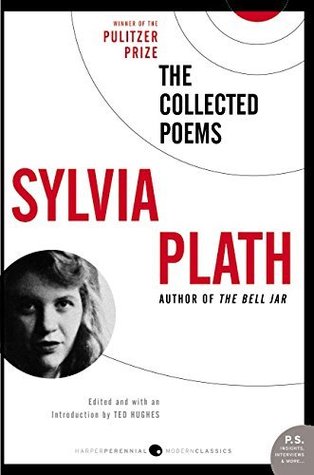

Before I begin to speak about how amazing I found much of Plath’s poetry, let me give you a bit of backstory. I attended Greenfield Community College from 2003 to 2009 as a Liberal Arts English major. After a longer break than I anticipated I returned to college to finish my Bachelor’s Degree in Literary Studies and Creative Writing. I spent a year at Bay Path University then transferred to UMass Amherst. My BA took three years. That’s nine years of college altogether. During those nine years and many many literature classes, I read exactly one poem by Sylvia Plath. Ariel is probably her best-known poem; I thought it was “nice,” liked the imagery that she used, and wound up with no opinion of Plath, good or bad. What I did learn about Sylvia Plath was: She was a poet who wrote Ariel about a morning horseback ride while contemplating suicide; she wrote The Bell Jar about a young woman that loses her mind; and she killed herself. If this doesn’t give you an idea of how underrepresented female writers are in higher education, then I don’t know what will.
I love poetry. I write it and I read as much of it as I can get my hands on. For two years I have had a subscription to Poetry Magazine published by the Poetry Foundation. If you are a poetry fan, I cannot recommend a subscription enough. $12 a year gets you 11 beautiful volumes of poetry and essays on poetry. For the cost I expected a thin periodical, certainly not the well-crafted chapbook of poetry I received. However, I digress…
As much as I enjoy poetry, it did not occur to me to look up any of Sylvia Plath’s work so I could gain an educated understanding of her craft. I can thank BookBub for that. Here comes another digression: BookBub has an amazing little daily newsletter with fantastic deals on ebooks. Like $1.99 for the Complete Poems of Sylvia Plath fantastic. I expected a hundred and fifty-or so pages that I would get through in an afternoon ebook of Sylvia Plath, not a 341-page ebook of Sylvia Plath. I had no idea she even wrote that much. (See comment above about underrepresentation.) I was absolutely blown away. Did I love it? No. Honestly, there were many poems I didn’t care for at all. Others were absolutely amazing. Her use of imagery is second to none; Plath painted with words. Murals, sweeping landscapes of heartache, anger, love, pain, searching for who she was, striving to be who she thought others wanted her to be; Sylvia Plath’s work is powerful in a way that others aim for and fail. I now have a sincere appreciation for Sylvia Plath’s work. Ironically, prior to reading her poetry, Heather Clark’s biography of Sylvia Plath made its way onto my Goodreads list after seeing it show up on my favorite BookTuber’s channel. I found it at my library this week and took the behemoth home. This chonker is 937 pages and weighs more than my cat. I am currently on chapter 2. Sylvia and I have a journey ahead of us.
So, there you have a little bit of what I’ve been reading lately. I am also reading Liar, Temptress, Soldier, Spy by Karen Abbott with my fellow Muffin Wallopers for our book group on Facebook. I’ll share a review of that when we are finished. It’s an interesting and entertaining book, and I am definitely enjoying it.
If you are interested in Poetry Magazine, here is the link for the Poetry Foundation: https://www.poetryfoundation.org/poetrymagazine/subscribe
For some can’t-miss ebook deals, subscribe to BookBub’s daily newsletter here: https://www.bookbub.com/welcome
And finally, for some great book reviews and reading inspirations, visit abookolive on YouTube https://www.youtube.com/c/abookolive
Happy reading!
 This is the Mask