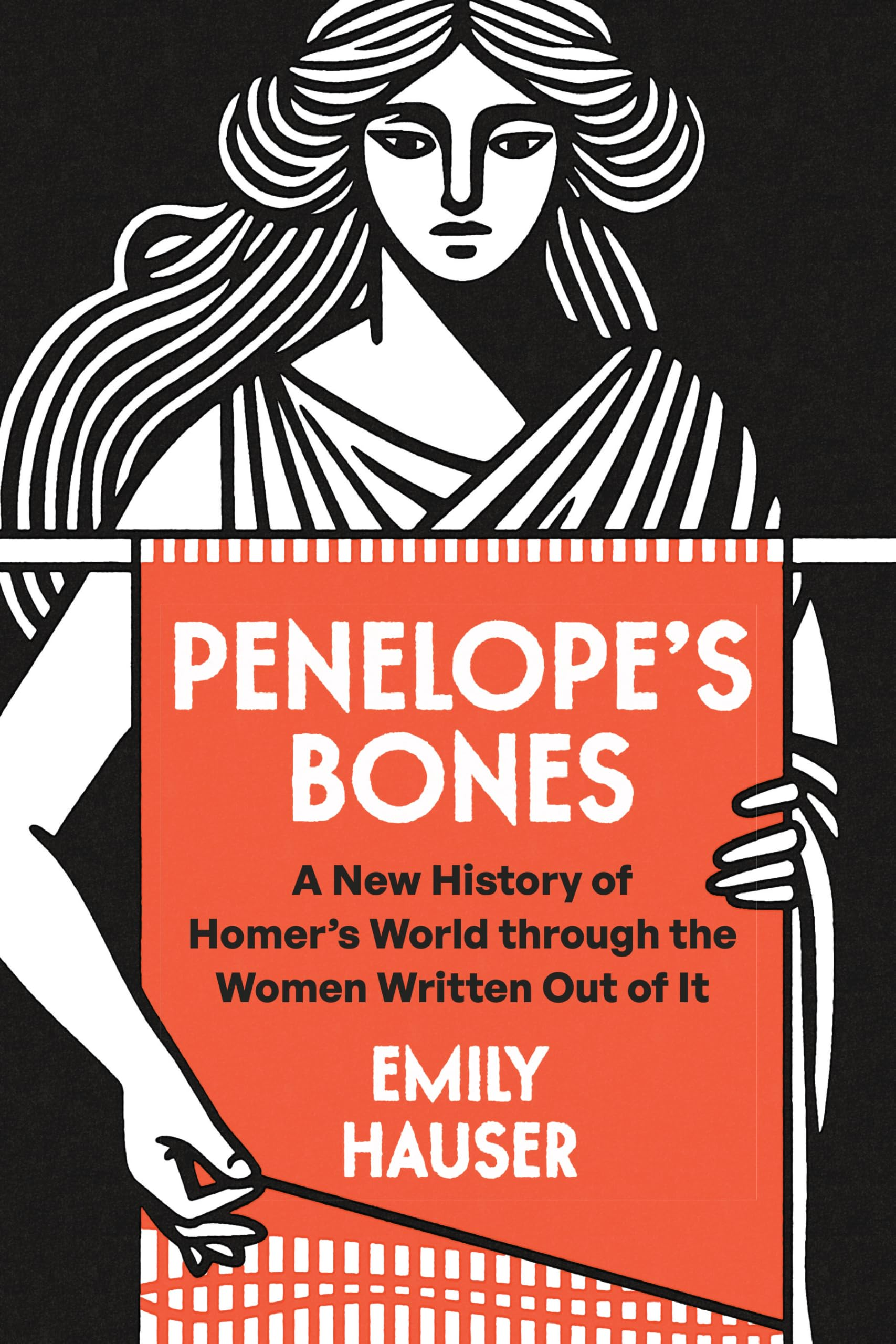
Emily Hauser’s brilliant book “Penelope’s Bones” has a place of note on the shelf beside my copies of Natalie Haynes’ “Pandora’s Jar” and Divine Might.” Hauser has presented her readers with a detailed study of figures from Homer’s works that hover in the background of his heroes’ lives: the women of legend. The women not deemed important enough to have their own epics, the women that worked so the men could ride to glory, the women that were captured, enslaved, crowned, and killed.
This book is engaging and informative, offering different theories about women’s roles in ancient Greece thank ones that have been accepted as fact for centuries. Hauser supports her theories with archaeological studies that suggest what we have been taught to believe may not have been so. One thing that I appreciate about this book is that Hauser examines women from the mythos as living women from historical records. She doesn’t portray Briseis just as “Achilles’ slave” but considers what the background of a woman in her position might have been, what her life might have been like before her enslavement, and what happened after.
“Penelope’s Bones” is a fascinating way of reexamining the Iliad and the Odyssey, allowing readers to look into the lives of women from a long-distant past.


Leave a Reply