Here is another collections of books I have recently read, courtesy of NetGalley.
***
Dark is When the Devil Comes by Daisy Pearce
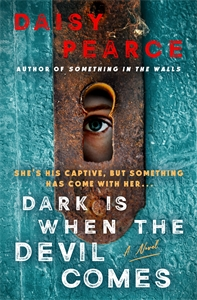
This book is creepy as hell. Not quite nightmare-inducing, but not far from it. When Hazel returns to her hometown following a failed marriage, she is struggling to adapt to the next chapter of her life. Her first step is reconnecting with her estranged sister Cathy. What starts out as a simple walk to clear her head before meeting up with her sister quickly turns into a nightmare Hazel isn’t sure she can escape.
At the beginning of the story, I assumed that the book’s title was in reference to the antagonist, who manages to lure Hazel on the premise of study in her field of interest as an amateur mycologist. We quickly learn that he isn’t the only devil in the story. Someone else is lurking around Hazel, and that person may be even worse than her captor.
This is a fantastic horror story featuring strong female characters. I haven’t read Daisy Pearce’s work prior to this, and I am definitely interested in reading more.
***
Things My Grandmother Said by Amit Majmudar.
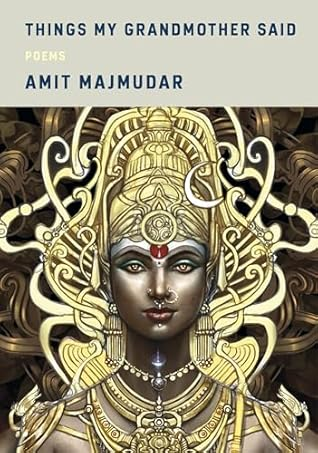
This incredible book is a collection of poems written in recognition of the divinity of women. Majmudar writes to honor the women whose influences have shaped the man he has become. The poems titled “Things My Grandmother Said,” and “More Things My Grandmother Said” make me wish I had thought to record things my own grandmother told me.
Majmudar speaks of his connection to his heritage in “Mother Country,” acknowledging the difference in his and his mother’s upbringing while holding onto their link: “My mother’s country / never became my mother country, / but I will always be a citizen of rain.”
Majmudar has a medical degree, and this background colors such poems as “Ovid in Exile, Stargazing.” He uses words in unexpected ways, crafting lines that read like mythology: “I’ll meet her by chance in the woods and recognize her / hundred green hands by the dreamcatcher leaf veins / fractalling out from her wrists.”
Amit Majmudar writes about the upheaval of pandemics and wars; the losses and overwhelming fear refugees are forced to endure. He gives readers an unflinching look at the fallout of capitalism and greed: “[…] Lily pistil tipped with pus, / Who did this to us but us? / Lies and profit, lethal liaison, / Inundation, kyrie eleison.” His poetry is a wake-up call. We need to begin to care about others more than profit before the damage is too great to recover from.
In “Remote Work” Majmudar reflects on the lack of human interaction that has emerged from humans’ reliance on technology: “We are kites without strings, strings / desperate to be strummed […] You don’t have to attend in person / to your own hands-free attempts at love / and war and art.”
Amit Majmudar has several other poetry collections to his name. Based on the merit of “Things My Grandmother Said,” I intend to read more of his work.
***
Bird Watching & Their First Three Books of Poetry by Eileen Myles
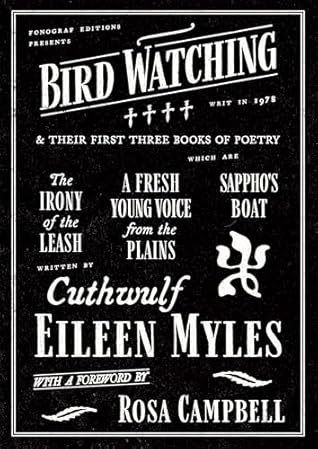
This was an interesting collection of poems that I quite enjoyed. “Bird Watching” is a newly published book-length poem first written by Eileen Myles in 1978. The other collections in the volume, “The Irony of the Leash;” “A Fresh Young Voice From the Plains;” and “Sappho’s Boat” are out of print works. Myles’ preface to the volume is worth reading on its own, not just for the insight into the collection but as a glimpse into their creative process and what first birthed their work. Myles’ poems are mesmerizing. They are rambling, stream-of-consciousness words that you wouldn’t think you could gain the meaning of, and you don’t quite think that you do, and yet all of it connects in an unexpected and profound way.
It does not come a surprise to know that Myles studied at St. Mark’s Poetry Project with Alice Notley; Myles’ whirlpool-of-thought writing style brought Notley’s work to mind as well as that of Erica Jong. This is not to say that Myles’ work isn’t original; it is entirely its own.
Eileen Myles’ work invites you to reread, to pause to reflect and parse the meaning from between the lines. I took pages of notes, questioning phrases and structures. Reading Eileen Myles is like walking through a museum of the mind.
***
The Emerson Circle by Bruce Nichols

My favorite literary era is the 19th century, and I have a special place in my heart for the 19th century writers of Massachusetts. I am always awed by the fact that I grew up twenty minutes from Emily Dickinson’s hometown, and only an hour from Concord, MA. My visit to Louisa May Alcott’s grave at Sleepy Hollow Cemetery was a pilgrimage to my personal literary saint.
Bruce Nichols presents the Concord Transcendentalists from a fresh perspective. He delves into the lives of these incredibly literate people, examining the philosophy of Transcendentalism and the works that they produced. Ralph Waldo Emerson, Henry David Thoreau, Margaret Fuller, Louisa May Alcott and her father Bronson, Nathaniel Hawthorne, and Herman Melville and Walt Whitman–slightly removed from the Concord circle but equally influential–all contributed to a new spiritual ideal that germinated poetry, essays, lectures, literary journals, and some of the most famous works of fiction in history.
Nichols discusses the social and political events that shaped much of the Transcendentalist philosophy. Margaret Fuller sought social reform. The Alcott’s supported abolition and hid people fleeing slavery on the Underground Railroad. Louisa May Alcott and Walt Whitman both served in Civil War hospitals. Louisa, Fuller, and Louisa’s mother Abba May Alcott were suffragists.
I have read many books about Louisa May Alcott (she’s my favorite writer) and the rest of the Concord Transcendentalists, and Nichols’ book presented points I was previously unaware of. His research was thoughtfully done with an eye to the finer details that have slipped past others. His book is an homage to this brilliant group of thinkers who made lasting change to literary and philosophical culture.
***
One Moment by Luis Munoz
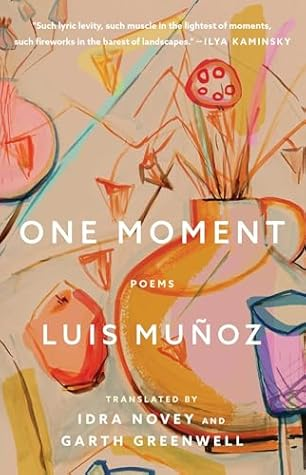
“One Moment” is a lovely collection of poetry. Some of Munoz’s poems have the essence of haiku to them, not in form but in how they convey meaning. His writing is elegant and lyrical without being overblown. There is an air of melancholy whimsy to some pieces, almost a lightness, that does not detract from the emotion beneath the words.
Munoz has published several other volumes of poetry, however “One Moment” is only the second one to be translated into English. I am going to track down his other English translation (and mourn my inability to read his work in its native language).
***
Conjuring the Hurricane by Sarah Hanson
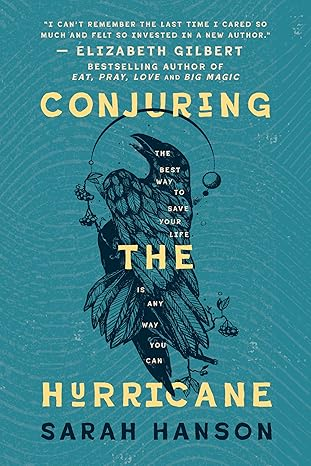
I identified with Hanson’s writing on so many levels. “Conjuring the Hurricane” is a deeply personal book; Hanson unflinchingly shares her traumas, her love, and her healing. “Cabin for Two” is the story of an abusive marriage, reminding me of a past relationship that took me too long to find the courage to end. “Intuition” reminds all women to trust themselves when things feel wrong. You’re not overreacting, she says. And if you are, who cares? We all have the right to be safe.
I saw my own childhood reflected in “My Father’s Anger,” and read about a family free from judgement in “I Was Born into a Coven and Didn’t Even Know It.” I have tried to be this kind of mother to my own children. Hanson writes about her joys in “Little Miracles,” a poem that reflects my own marriage; in “We Are What We Hoped For,” and “I Now Pronounce You.”
Some of my favorite poems in the collection are “A Wild and Clawed Non-Apology,” a beautifully written Golden Shovel poem inspired by Rumi’s work; “Love Notes,” and “Soft Animal,” another Golden Shovel inspired by Mary Oliver (one of my favorite poets). I have written my own Golden Shovel poems; they are difficult and force you to write slowly and carefully consider what it is you want to convey. Hanson’s skill with this style is impressive.
***
Secrets Make You Sick by Sarah Erin
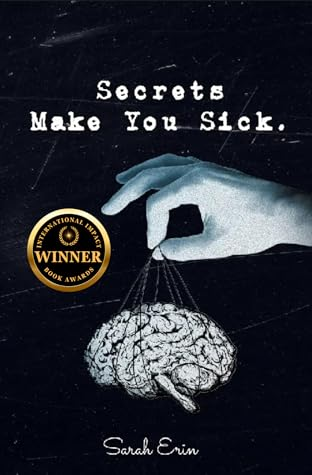
This book was difficult to read because it hit so close to home, but it is a work of profound honesty and should be recognized for the strength of character that went into living these poems.
As someone living with mental illness, I am in awe of Sarah Erin’s raw candor. I don’t know if I could put myself on paper as starkly as Erin does in this book. It is not easy living with the emotional turmoil that is mental illness; it is far less easy to talk about it. Erin shares her pain and her losses; she lays her fears out for readers to see. She discusses her eating disorder and the lurking ghoul of body dysmorphia (I hear you, friend). She writes of surviving for her cats, for her book, for her dream of New York, reminding us that whatever it takes to keep going is worth fighting for.
***
The Apple of Their Throat by Kevin T. Norman
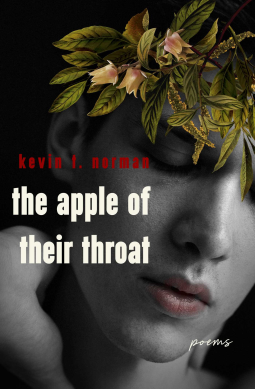
The poems in this volume are lovely; Norman’s language is simple but evocative. He tells his readers how he came to poetry and speaks of the emotion that inspires his writing: “People often ask me, / Why are some of your poems so sad? / And I always reply, / So I don’t have to be.”
Kevin Norman writes of love as a desperate desire and acknowledges the power and bravery of the divine feminine. Norman’s poems are an homage to the heart. He reflects on finding completeness with your other half and the promise of forever. There are so many beautiful thoughts in the collection, such as: “I sometimes wonder if the stars look down / and think we are the ones who are shining, / and if they make a wish each time we fall / in love;” and: “Our lips crushed kisses into wine / and I got drunk / on the possibility of forever;” and also: “Put a pen in my hand and I will write you / a world. Poetry is alchemy / and every word a substitute / for I love you.” Alchemy, indeed.


Leave a comment