Muffin Wallopers!

My sister and I are proud Muffin Wallopers and set aside time every Sunday to engage in pursuits associated with this title. “What is a Muffin Walloper?” you ask. Allow me to enlighten you.

Per WordGenius.com, “A “muffin-walloper” is an unmarried woman who gathers with friends to gossip. In the Victorian era, these conversations often happened over tea and cakes — hence the muffin part of the phrase.” Now, my sister and I are both happily married women. And we don’t actually gossip during these Sunday afternoon sessions. We brew ourselves cups of tea, make nice little snacks, and sit down with our phones, pens, notebooks, and a highlighter or two and discuss our current “Sister Read,” a book we have chosen to read together. We tried to host an online book group and invited other Muffin Wallopers to join us, but no one participated, so we decided to go solo (duo?). The phones are a necessity because I live in Western Massachusetts, and she lives in Coastal Maine.

Since summer, we have been reading Philippa Gregory’s Normal Women: Nine Hundred Years of Making History. This book has been both enlightening and absolutely infuriating. Spoiler alert: absolutely nothing has changed regarding women’s rights, roles, safety, or status in nine hundred friggin years. We are holding our final discussion for this book on Monday 12/9 after we wrap up the Afterword (postponed due to my daughter’s baby shower on 12/8…yay baby! My youngest grandson is due in January, and I cannot wait to meet him. In the meantime, I shall continue to spoil his brother and sister.)

We have agreed to take the rest of December off to work on our December TBRs. I shared mine in a previous post. (see the link here: https://nicolekperkins.com/2024/12/01/december-tbr/ if you are interested in taking a look) By an amusing consequence, we both decided to read The Old Magic of Christmas by Linda Raedisch. I expect we will have a phone call to discuss it once we have finished it. I’m currently reading it; I have no idea what Sister is reading at present. Besides Normal Women, that is.

January 1st will see us begin our next Sister Read, The Woman They Could Not Silence:  One Woman, Her Incredible Fight for Freedom, and the Men Who Tried to Make Her Disappear by Kate Moore. (Henceforth I shall refer to this book as TWTCNS because like all kickass titles it’s very long.) I have read Kate Moore’s incredible and horrifying book The Radium Girls: The Dark Story of America’s Shining Women.  My sister has not, and I did suggest this as our next book, but we both own a copy of TWTCNS because I forgot I had a Kindle copy and bought it in paperback. Guess who got a free paperback copy of TWTCNS?

The Woman They Could Not Silence tells the story of Elizabeth Packard, jailed in an insane asylum by her husband for being inconvenient. (Minor spoiler, Elizabeth Packard was not mentally ill.) From Goodreads:

“1860: As the clash between the states rolls slowly to a boil, Elizabeth Packard, housewife and mother of six, is facing her own battle. The enemy sits across the table and sleeps in the next room. Her husband of twenty-one years is plotting against her because he feels increasingly threatened – by Elizabeth’s intellect, independence, and unwillingness to stifle her own thoughts. So Theophilus makes a plan to put his wife back in her place. One summer morning, he has her committed to an insane asylum.

The horrific conditions inside the Illinois State Hospital in Jacksonville, Illinois, are overseen by Dr. Andrew McFarland, a man who will prove to be even more dangerous to Elizabeth than her traitorous husband. But most disturbing is that Elizabeth is not the only sane woman confined to the institution. There are many rational women on her ward who tell the same story: they’ve been committed not because they need medical treatment, but to keep them in line – conveniently labeled “crazy” so their voices are ignored.

No one is willing to fight for their freedom and, disenfranchised both by gender and the stigma of their supposed madness, they cannot possibly fight for themselves. But Elizabeth is about to discover that the merit of losing everything is that you then have nothing to lose.”

For the last few months my husband and brother-in-law have been watching Sunday afternoon football to the not-so-muffled sounds of their wives’ raging over topics discussed by Philippa Gregory in her book. I think by the time Sister and I are done reading TWTCNS our long-suffering husbands are going to hope we read something much lighter in topic, like True Crime.

 I will post a review on Normal Women after Sister and I have our final discussion so I can share her thoughts on the books as well. For those of you who may have already looked it up, it is a monster of a book, covering a lot of material, some of it very hard to read.

Take care Friends, and I’ll be back soon.

Version 1.0.0
Version 1.0.0

Goodreads 2023 Reading Challenge!

It’s that time again! A new year to start a new reading challenge! Oh, yeah, and those resolution things that I never keep. But that’s not important. What is important is that it’s time to set my new Goodreads Challenge! I may be more than a little obsessed with this. As a book lover, though, I suppose it is entirely acceptable. And if it’s not, I don’t much care.

Last year I set a goal of 125 books and fell short. I managed to complete 107 books. I admit I spent too many evenings yelling at my television during Bruins games instead of reading, but one must support the team, yes? In light of that, I set this year’s goal a bit lower at 115 books. High enough to be a challenge, but not so high that I get discouraged. As of today (1/3/23) I haven’t finished a book, though I have three in progress. My current reads are: Lucia: A Venetian Life in the Age of Napoleon by Andrea Di Robilant; Charlotte Perkins Gilman: A Biography by Cynthia J. Davis; and Henry and June: From “A Journal of Love” -The Unexpurgated Diary of Anaïs Nin by Anais Nin. I love Gilman’s The Yellow Wallpaper in all its Gothic insanity. And on this topic, I recently came across Monica Robinson’s Peeling the Yellow Wallpaper on Instagram and I must get my hands on a copy. Goodreads describes Robinson’s book as “an experimental chapbook of poetry, prose, and art inspired by the classic gothic short story “The Yellow Wallpaper” by Charlotte Perkins Gilman. This chapbook explores concepts of estrangement, grief, bodily disconnect, and motherhood, as well as paying homage to the original inspiration by exploring malpractice and inaccessibility in women’s healthcare both in our past and in the current age.” After I read it, I’ll post a comparison on Gilman’s story and Robinson’s interpretation.

Of the 107 books that I read last year there were some standouts that I highly enjoyed. Here they are, in no particular order (excluding my #1 book of the year, which I will list last): Daughters of Sparta by Claire Heywood: “For millennia, men have told the legend of the woman whose face launched a thousand ships–but now it’s time to hear her side of the story. Daughters of Sparta is a tale of secrets, love, and tragedy from the women behind mythology’s most devastating war, the infamous Helen and her sister Klytemnestra. Daughters of Sparta is a vivid and illuminating reimagining of the Siege of Troy, told through the perspectives of two women whose voices have been ignored for far too long.” This book was a fantastic retelling of the well-known story of the fall of Troy as it was told by the men who won; Heywood gives us the lives of the women who were there.

Strange the Dreamer and Muse of Nightmares by Laini Taylor. Strange the Dreamer: “The dream chooses the dreamer, not the other way around—and Lazlo Strange, war orphan and junior librarian, has always feared that his dream chose poorly.” Muse of Nightmares: “Lazlo faces an unthinkable choice—save the woman he loves, or everyone else?—while Sarai feels more helpless than ever. But is she? Sometimes, only the direst need can teach us our own depths, and Sarai, the Muse of Nightmares, has not yet discovered what she’s capable of.” This was an incredible fantasy duology, and exactly what I needed this summer as I was undergoing chemotherapy. Taylor took me away from the clinic and into a world peopled by ghosts and gods, wandering the streets of a lost desert city. Beautiful, haunting, and exciting. I loved it so much that as soon as I finished Strange the Dreamer I gave it to my husband and told him he had to read it. (He liked it too)

Orwell’s Roses by Rebecca Solnit: ” “In the year 1936 a writer planted roses.” So begins Rebecca Solnit’s new book, a reflection on George Orwell’s passionate gardening and the way that his involvement with plants, particularly flowers, and the natural world illuminates his other commitments as a writer and antifascist, and the intertwined politics of nature and power.” I am not a huge Orwell fan; I read Animal Farm in high school, and that was pretty much enough for me. I don’t even recall how this book wound up on my radar–it could have been from Olive at ABookOlive on YouTube. Or maybe the cover caught my eye at Barnes & Noble (it’s gorgeous). Regardless, Solnit’s essays are exquisite, and I highly recommend this book, even if you are as much of an Orwell fan as I am. In fact, thanks to Solnit’s book, I have decided to explore more of Orwell’s work this year.

My Evil Mother by Margaret Atwood: “Life is hard enough for a teenage girl in 1950s suburbia without having a mother who may—or may not—be a witch. A single mother at that. Sure, she fits in with her starched dresses, string of pearls, and floral aprons. Then there are the hushed and mystical consultations with neighborhood women in distress. The unsavory, mysterious plants in the flower beds. The divined warning to steer clear of a boyfriend whose fate is certainly doomed. But as the daughter of this bewitching homemaker comes of age and her mother’s claims become more and more outlandish, she begins to question everything she once took for granted.” Who doesn’t love Margaret Atwood? (If you don’t, please don’t tell me, let me love her in blissful ignorance.) This was such a fun short story. Atwood shows up again on this list with her short story The Penelopiad: “In a splendid contemporary twist to The Odyssey, Margaret Atwood has chosen to give the telling of it to Penelope and to her twelve hanged maids, asking: “What led to the hanging of the maids, and what was Penelope really up to?” In Atwood’s dazzling, playful retelling, the story becomes as wise and compassionate as it is haunting, and as wildly entertaining as it is disturbing. With wit and verve, drawing on the story-telling and poetic talent for which she herself is renowned, she gives Penelope new life and reality—and sets out to provide an answer to an ancient mystery.” As I mentioned, I love Margaret Atwood. The Handmaid’s Tale is a classic, of course (and it earned me an A+ in a writing course in college, when I wrote a query for it for a mock publishing project, so I love it extra much); her MaddAddam trilogy is my favorite of her works, but these two stories come in at a very close second.

Next up is Amanda Lovelace’s Unlock Your Storybook Heart: “the third & final installment in her feminist poetry series, “you are your own fairy tale.” this is a collection about being so caught up in the fable that is perfectionism that you miss out on your own life. be honest: when was the last time you stopped to take in the everyday enchantment all around you?” I am the proud owner of all of Amanda Lovelace’s books, and they are stunning. Lovelace is the type of poet I aspire to be. Her work touches your heart and sears your soul. I dare you to read her work and not have it change you.

The Push by Ashley Audrain: “A tense, page-turning psychological drama about the making and breaking of a family–and a woman whose experience of motherhood is nothing at all what she hoped for–and everything she feared.” I read this in one sitting, it was so gripping. It’s dark and disturbing, and when the unthinkable happens you are left as lost as Blythe. Incredible thriller.

Pandora’s Jar: Women in the Greek Myths by Natalie Haynes: “…in Pandora’s Jar, Natalie Haynes – broadcaster, writer and passionate classicist – redresses the imbalance [of mythology told by men]. Taking Greek creation myths as her starting point and then retelling the four great mythic sagas: the Trojan War, the Royal House of Thebes, Jason and the Argonauts, Heracles, she puts the female characters on equal footing with their menfolk. The result is a vivid and powerful account of the deeds – and misdeeds – of Hera, Aphrodite, Athene and Circe. And away from the goddesses of Mount Olympus it is Helen, Clytemnestra, Jocasta, Antigone and Medea who sing from these pages, not Paris, Agamemnon, Orestes or Jason.” I did a post on this book earlier, describing how I fell into a rabbit hole of literature and paused in my reading of this to read Euripides’ play The Trojan Women. I read Haynes’ A Thousand Ships in 2021 and LOVED it; I am now a die-hard fan of Natalie Haynes and follow her on Instagram and have added pretty much all of her books to my To Read list on Goodreads.

All the Murmuring Bones by A.G. Slater: “A spellbinding tale of dark family secrets, magic and witches, and creatures of myth and the sea; of strong women and the men who seek to control them.” This was AMAZING. A midnight ride through the countryside dodging faeries, ghosts, kelpies, a lecherous fiancé, and a scheming grandmother: what more could you ask for in a fantasy tale?

All of these were incredible books, and I thoroughly enjoyed them. But hands down, the absolute best book I read in 2022 was Joy McCullough’s Blood Water Paint: “A debut novel based on the true story of the iconic painter, Artemisia Gentileschi: Her mother died when she was twelve, and suddenly Artemisia Gentileschi had a stark choice: a life as a nun in a convent or a life grinding pigment for her father’s paint. She chose paint.” Gentileschi’s artwork is magnificent. My favorite of her work is Mary Magdalene as Melancholy, painted in 1625. It is superlative; the sadness in the Magdalene’s face is so human, so very real. McCullough has created an incredible story in verse, highlighting very real events from Gentileschi’s life (I do need to include a trigger warning; Gentileschi was sexually assaulted by a fellow painter). Ironically, Artemisia Gentileschi was the subject of today’s newsletter from Gillian Rose Rodriguez’s Mythic Imaginarium. You can sign up for Rodriguez’s newsletter at https://gillianroserodriguez.com/ (It’s one of my favorite newsletters, I highly recommend it)

I notice that I have a fair helping of classic Greek-themed works on this list. That wasn’t necessarily by design, though I have always loved Greek mythology, ever since I first read the highly illustrated D’Aulaires’ Book of Greek Mythology in Mrs. Harvey’s fourth grade class. I loved that book so much, despite its overwhelming misogyny (and that is through no fault of the D’Aulaires), that I purchased copies for each of my children. That book is what first introduced me to the Pagan path that I now follow; I remember reading the myths in that book when I was nine and wishing that people still worshipped Artemis. Thirty-six years later I celebrate Her festival days.

And that, my friends, brings us to the end of this post. If you are interested in challenging yourself this year, you can sign up for the Goodreads challenge at https://www.goodreads.com/challenges If you would like to follow me on Goodreads, I’m always happy to make new reading friends. You can find me at https://www.goodreads.com/author/show/12594094.Nicole_Kapise_Perkins

Happy reading!
Rabbit Holes

Hello to you on this beautiful May Day! I hope the weather wherever you are is as lovely as it is here in Western MA. I took my morning tea outside to enjoy while listening to the sparrows in my maple tree cheep, chirp, holler, and screech (the latter two occurred when Momo came out to join me. Apparently my cat was not as welcome a guest as I was.

It’s been a couple weeks since my last post; I haven’t read through much of my haul from the last library sale, and another one is coming up on the 7th. I will of course be there with multiple bags. I have been having fun with the two cookbooks I picked up, both of which had been on my Amazon list for quite a while. My new-to-me books are patiently waiting for me to get to them, but I’ve been a bit busy with other books. Like the proverbial Alice, I’ve found myself falling into rabbit holes and I’m not in any real hurry to find my way out.

Rabbit Hole #1: Pandora’s Jar by Natalie Haynes & The Trojan Women by Euripides

I LOVED Natalie Haynes’ A Thousand Ships. I read it in one sitting, leaving all of the day’s chores to languish while I wandered through women’s lives in ancient Greece. I gave that book 5 stars on Goodreads, and I rarely do that. Because that book was so good, I preordered Haynes’ Pandora’s Jar as soon as I saw the announcement on Instagram. I gave this book 4 stars on Goodreads, but I may go back and change it to 5. Haynes’ style of writing in this book made me think of Rosalind Miles’ Who Cooked the Last Supper (my favorite nonfiction book), though the subject matter is quite different. Haynes gives us several popular myths, then reviews them from a feminine viewpoint, asking why history has been so quick to accept the stories as they were presented rather than considering both sides of the story. (Personally, I think one reason can be found in the word HIStory but that’s just me)

In the chapters on Helen, Clytemnestra, and Penelope, Haynes frequently cites Euripides’ 415 BCE play The Trojan Women, which I had never read. By the fourth mention of the play, I decided I needed to order it from the library; by the sixth mention of it I remembered that I still have my college copy of Euripides Ten Plays because I have a rather disturbing fascination with the play Medea (another vilified woman Haynes studies in her book–the rabbit hole just kept getting deeper and deeper). Happily, The Trojan Women was included in Ten Plays. Unfortunately, his play The Phoenician Women is not, and Haynes cites that once throughout her study of Jocasta, so I will still need to do some searching. So, after reading and highlighting my way through Natalie Haynes’ fantastic book I dove into Euripides. As I have a to-read pile that is easily two feet high I only allowed myself to read The Trojan Women.

The Trojan Women begins after Troy has fallen, all of its heroes are dead, and the surviving women are waiting to be taken to Greece as slaves. Cassandra’s mad rant is artistic perfection: she revels in her doom knowing that there is no escape for her, and aware that no one is believing a word she says, and in that is her triumph. Helen is unrepentant and lays all of the blame for the war at Hecuba’s feet because she had the audacity to give birth to Paris; Hecuba is mourning the loss of her sons, her daughters, her city, and her status, and after she is presented with the unthinkable, responds with dignity befitting her role as a Queen and mother. I can understand why this play was rarely performed; the death of Andromache’s son is absolutely gut-wrenching.

If you are so inclined to read any of Natalie Haynes’ work, and I highly recommend it, be ready to tumble into the rabbit hole of linked mythos and scholarly works. Pat Barker’s The Women of Troy is another book of a similar vein that I read recently; I did not realize it was book 2 of a series, but it is easy to read as a standalone. I’m going to look up book 1, The Silence of the Girls so I have a better foundation for when book 3 comes out.

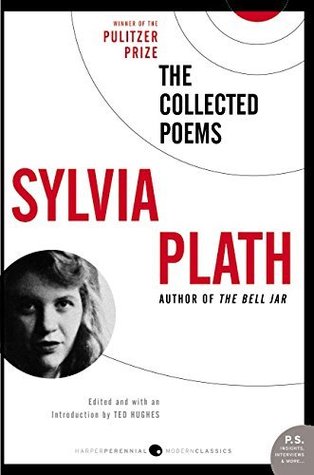
Rabbit Hole #2: The Collected Poems by Sylvia Plath & Red Comet: The Short Life and Blazing Art of Sylvia Plath by Heather Clark

Before I begin to speak about how amazing I found much of Plath’s poetry, let me give you a bit of backstory. I attended Greenfield Community College from 2003 to 2009 as a Liberal Arts English major. After a longer break than I anticipated I returned to college to finish my Bachelor’s Degree in Literary Studies and Creative Writing. I spent a year at Bay Path University then transferred to UMass Amherst. My BA took three years. That’s nine years of college altogether. During those nine years and many many literature classes, I read exactly one poem by Sylvia Plath. Ariel is probably her best-known poem; I thought it was “nice,” liked the imagery that she used, and wound up with no opinion of Plath, good or bad. What I did learn about Sylvia Plath was: She was a poet who wrote Ariel about a morning horseback ride while contemplating suicide; she wrote The Bell Jar about a young woman that loses her mind; and she killed herself. If this doesn’t give you an idea of how underrepresented female writers are in higher education, then I don’t know what will.

I love poetry. I write it and I read as much of it as I can get my hands on. For two years I have had a subscription to Poetry Magazine published by the Poetry Foundation. If you are a poetry fan, I cannot recommend a subscription enough. $12 a year gets you 11 beautiful volumes of poetry and essays on poetry. For the cost I expected a thin periodical, certainly not the well-crafted chapbook of poetry I received. However, I digress…

As much as I enjoy poetry, it did not occur to me to look up any of Sylvia Plath’s work so I could gain an educated understanding of her craft. I can thank BookBub for that. Here comes another digression: BookBub has an amazing little daily newsletter with fantastic deals on ebooks. Like $1.99 for the Complete Poems of Sylvia Plath fantastic. I expected a hundred and fifty-or so pages that I would get through in an afternoon ebook of Sylvia Plath, not a 341-page ebook of Sylvia Plath. I had no idea she even wrote that much. (See comment above about underrepresentation.) I was absolutely blown away. Did I love it? No. Honestly, there were many poems I didn’t care for at all. Others were absolutely amazing. Her use of imagery is second to none; Plath painted with words. Murals, sweeping landscapes of heartache, anger, love, pain, searching for who she was, striving to be who she thought others wanted her to be; Sylvia Plath’s work is powerful in a way that others aim for and fail. I now have a sincere appreciation for Sylvia Plath’s work. Ironically, prior to reading her poetry, Heather Clark’s biography of Sylvia Plath made its way onto my Goodreads list after seeing it show up on my favorite BookTuber’s channel. I found it at my library this week and took the behemoth home. This chonker is 937 pages and weighs more than my cat. I am currently on chapter 2. Sylvia and I have a journey ahead of us.

So, there you have a little bit of what I’ve been reading lately. I am also reading Liar, Temptress, Soldier, Spy by Karen Abbott with my fellow Muffin Wallopers for our book group on Facebook. I’ll share a review of that when we are finished. It’s an interesting and entertaining book, and I am definitely enjoying it.

If you are interested in Poetry Magazine, here is the link for the Poetry Foundation: https://www.poetryfoundation.org/poetrymagazine/subscribe

For some can’t-miss ebook deals, subscribe to BookBub’s daily newsletter here: https://www.bookbub.com/welcome

And finally, for some great book reviews and reading inspirations, visit abookolive on YouTube https://www.youtube.com/c/abookolive

Happy reading!