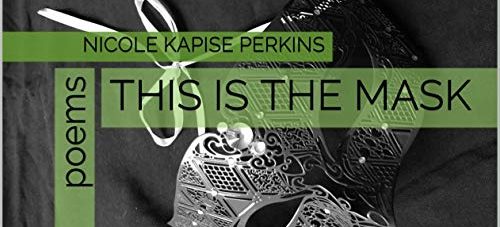
Somehow it is March. This month will see the change of the season as we finally (!) move into spring. It is the season of new beginnings, growth, and change. I can’t wait!
I feel as though February left me scrambling. I didn’t accomplish any of my goals for the month and made zero progress on any of my projects. I did write to some new people for InCoWriMo that I want to keep in touch with (March goal 1: keep up with my correspondence) and I finished my February TBR list as well as a couple extra books. (March goal 2: write and post review of TBR books as I finish them)
I am a little disappointed that I didn’t make any progress on my professional or personal goals, but I have decided to give myself some grace. I have wasted far too many years being angry with myself for not being perfect and doing everything I feel I am “supposed” to do. Why should I feel that I am less than if I do not do everything perfectly? (Childhood trauma does great things to your mind, let me tell you) At almost fifty I can finally look at myself in the mirror and say, “You are good enough.” My poor husband has been telling me this for over twenty years. The man is a saint.
So, March has arrived, and I am starting fresh. Didn’t make February’s goals? Try again. I have my calendar blocked out with projects, and my book club, self-care days, and things that I like to do. (March goal 3: Sunday afternoon walks. Does this make me old? I mean, I am almost fifty…) My word for the month is “Nurture” and I intend to. I will nurture my talent, my soul, and myself.
My March TBR reflects this, not with self-help books (which I love to read, by the way; the authors are all so nice. …I never take their advice…) but in observing Women’s History Month. This country is a dumpster fire—give me strong intelligent women for guidance and inspiration! On this month’s TBR is…

So Here I Am: Speeches by Great Women to Empower and Inspire by Anna Russell: So Here I Am brings together empowering speeches by women throughout history up to the present day. This is a celebration of women speaking up; within politics, science, human rights, TV and media – discussing everything from free love, anti-war, discoveries, race, gender and women’s rights. With evocative and powerful illustrations from Brazilian artist, Camila Pinheiro, this anthology of great women – whose own achievements speak for themselves – is timely and important. This shot of inspiration serves as a reminder that despite all adversity, nevertheless, she persisted. Speakers include: Sojourner Truth; Marie Curie; Emmeline Pankhurst; Helen Keller; Sylvia Rivera; Manal Al Sharfi; Malala Yousafzai; Michelle Obama; Alicia Garza.

Spinning Straw into Gold: What Fairy Tales Reveal About the Transformations in a Woman’s Life by Joan Gould: What’s your favorite fairy tale? Whether it’s “Cinderella,” “Beauty and the Beast,” “Hansel and Gretel,” or another story, your answer reveals something significant about you, your experiences, and your soul. In this penetrating book, Joan Gould brings to the surface the hidden meanings in fairy tales and myths, and illuminates what they can tell you about the stages in your own life. As Gould explores the transformations that women go through from youth to old age–leaving home and mother, the first experience of sexuality, the surprising ambivalence of marriage, the spiritual work required by menopause and aging–her keen observations will enrich your awareness of your inner life. Full of archetypal figures known to us all, Spinning Straw into Gold also includes stories from the lives of ordinary women that clarify the insights to be gained from the beloved tales that have been handed down from one generation to the next.

Queens of a Fallen World: The Lost Women of Augustine’s Confessions by Kate Cooper: While many know of Saint Augustine and his Confessions, few are aware of how his life and thought were influenced by women. Queens of a Fallen World tells a story of betrayal, love, and ambition in the ancient world as seen through a woman’s eyes. Historian Kate Cooper introduces us to four women whose hopes and plans collided in Augustine’s early adulthood: his mother, Monnica of Thagaste; his lover; his fiancée; and Justina, the troubled empress of ancient Rome. Drawing upon their depictions in the Confessions, Cooper skillfully reconstructs their lives against the backdrop of their fourth-century society. Though they came from different walks of life, each found her own way of prevailing in a world ruled by men. A refreshingly complex and compelling portrait of Augustine, Queens of a Fallen World is the riveting story of four remarkable women who set him on course to change history. (NKP: I’m not particularly interested in Augustine, but the women that made him who he was deserve to be known)
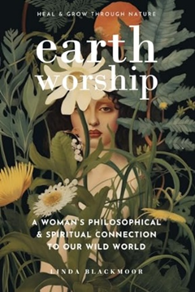
Earth Worship: A Woman’s Philosophical & Spiritual Connection to Our Wild World by Linda Blackmoor: Earth Worship weaves together the ancient threads of feminine wisdom, deep ecological philosophy, and the transformative magic of spirituality to guide readers on a profound journey of reconnection with the Earth. It is an ode to the enchanting and intricate relationship between women and the natural world, a bond that is both sacred and essential for our collective healing and enlightenment. It is a call to awaken to the divine feminine energy that flows through all of life, urging us to reclaim our rightful place as guardians and nurturers of our planet. Earth Worship delves into the heart of nature’s mysteries, offering a rich tapestry of stories, rituals, and reflections that illuminate the spiritual and philosophical pathways through which women can forge a deeper, more meaningful connection with the natural world. Drawing on the wisdom of ancient cultures, the insights of modern ecological thought, and the timeless teachings of the Earth itself, this book serves as a compass for those seeking to navigate the complexities of modern life while staying rooted in the profound truths that nature imparts. It is not merely a book to be read; it is an experience to be lived, a journey to be undertaken with an open heart and a willing spirit, ready to be transformed by the profound lessons that only the Earth can teach. (Synopsis from Amazon.com)
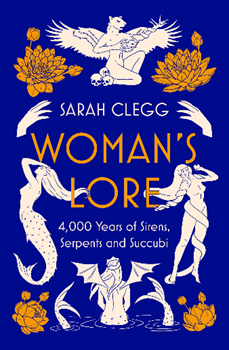
Woman’s Lore: 4,000 Years of Sirens, Serpents, and Succubi by Sarah Clegg: Demonic temptresses – from siren-mermaids to Lilith – are well known today, and their mythology focuses around the seductive danger they pose to men. But the root of these figures can be traced back 4,000 years and in their earliest incarnations they were in fact demons worshipped and feared like Lamashtu, the horrific talon-footed, serpentine monster, who strangled infants and murdered pregnant women, or the Gello, the ghost of a girl who had died a virgin and so killed expectant mothers and their babies out of jealousy. This history of a demonic tradition from ancient Mesopotamia to the present day – from Lamashtu and Gello, to Lamia and Lilith, and mermaids and vampires – shows how these demons were co-opted by a male-centered society, before being recast as symbols of women’s liberation. We also learn what this evolution can tell us about the experience of women and the danger of childbirth, changing attitudes towards sexuality and the movement for women’s rights.
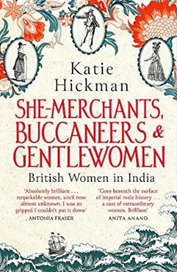
She-Merchants, Buccaneers & Gentlewomen: British Women in India by Katie Hickman: Women made their way to India for exactly the same reasons men did – to carve out a better life for themselves. In the early days, India was a place where the slates of ‘blotted pedigrees’ were wiped clean; bankrupts given a chance to make good; a taste for adventure satisfied – for women. They went and worked as milliners, bakers, dress-makers, actresses, portrait painters, maids, shop-keepers, governesses, teachers, boarding house proprietors, midwives, nurses, missionaries, doctors, geologists, plant-collectors, writers, travelers, and – most surprising of all – traders. As wives, courtesans and she-merchants, these tough adventuring women were every bit as intrepid as their men, the buccaneering sea captains and traders in whose wake they followed; their voyages to India were extraordinarily daring leaps into the unknown.
The history of the British in India has cast a long shadow over these women; Memsahibs, once a word of respect, is now more likely to be a byword for snobbery and racism. And it is true: prejudice of every kind – racial, social, imperial, religious – did cloud many aspects of British involvement in India. In this landmark book, celebrated chronicler, Katie Hickman, uncovers stories, until now hidden from history: here is Charlotte Barry, who in 1783 left London a high-class courtesan and arrived in India as Mrs William Hickey, a married ‘lady’; Poll Puff who sold her apple puffs for ‘upwards of thirty years, growing grey in the service’; Mrs Hudson who in 1617 was refused as a trader in indigo by the East Indian Company, and instead turned a fine penny in cloth; Julia Inglis, a survivor of the siege of Lucknow; and Flora Annie Steel, novelist and a pioneer in the struggle to bring education to purdah women. (All book synopses and photos from Goodreads.com unless otherwise noted) There you have it! My sister and I will also be finishing The Woman They Could Not Silence by Kate Moore this month. This “Sister Read” went by much faster than the last; granted, it is a smaller book, but it also reads really quickly. It is also extremely relevant to present circumstances in the US. Which is appalling, as the events in this book took place in the 1860s. It reiterates the fact that history does repeat itself, and if we do not learn from the past there will be no future.
 This is the Mask