As I am still mostly confined to the couch recovering from surgery, this seemed like the perfect opportunity to load another update on my bookish goings-on. This is going to be another big one, so fortify yourself with your beverage of choice, settle in to a comfy seat, and here we go…

Wolves in Shells by Kimberly Ann Priest: (3 stars) Kimberly Ann Priest’s “Wolves in Shells” is a story about survival. It chronicles Priest’s escape from an abusive marriage and her journey to find herself in the aftermath. It is a story of seeking home, for as Priest says: “Home/ is something to fight for until/ it’s predator-free.” Everyone has the right to feel safe in their home, whatever their definition of home is. “To love a home is to let it evolve/ like a body, to participate, to ask what it wants to be.” “Says the Mollusk” reminds us that home is wherever we feel complete: “I don’t want to go home-/ not forever, / but still/ I want to feel/ that spiraling sound/ in my body/ when you touch me.” Her poem “Among the Fingernail Clams” gave me pause. Often, we think that the important things are the big, noteworthy events: the promotion, the new car. We should never lose sight of the fact that the simple things are equally as rewarding, that living quietly is nothing to be ashamed of. “–the shallows/ may not be a realm/ of power/ but here the fettered/ teem against the shoreline/ considering.” Parts of the collection are deeply upsetting, as a story of survival will often be. Parts are inspiring, and a story of survival always is.
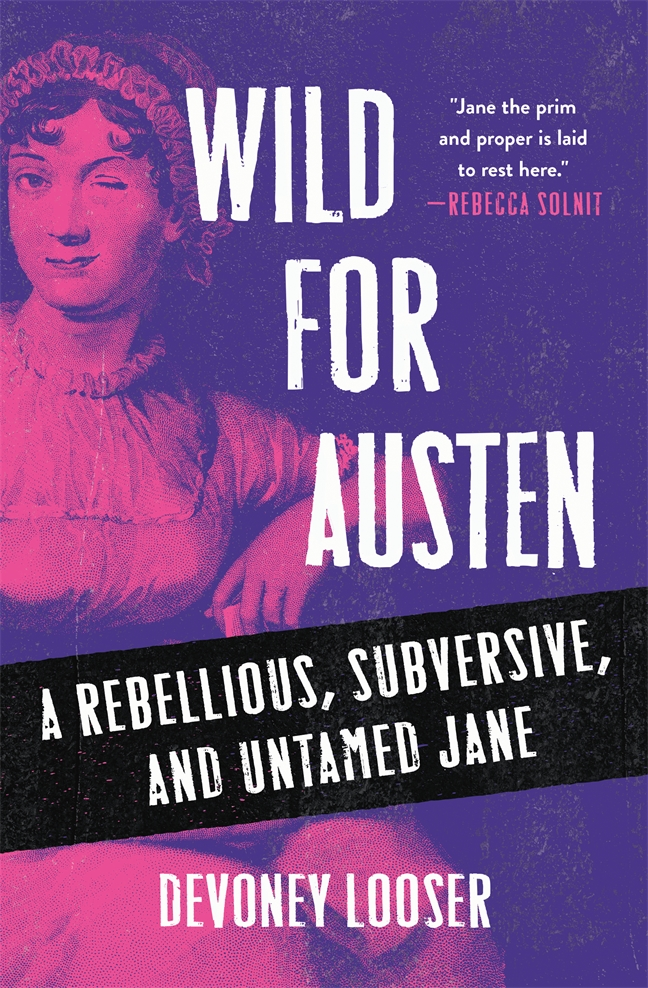
Wild for Austen by Devoney Looser: (4 stars) I have a confession: I don’t like Jane Austen’s books. Okay, that’s not entirely true. I absolutely love “Persuasion.” I have two copies of the book, and two versions of the film. (The 1995 one with Amanda Root and Ciaran Hinds is the best. This is a hill I will die upon.) That being said, I am interested in Jane Austen as a writer. Her books are still wildly popular today and new film adaptations are coming out regularly. So, while I may not necessarily like her work, I definitely respect it. Devoney Looser’s biography is a well-researched presentation of this master of storytelling. Looser sets out to disabuse Austen readers of the notion that she was a demure, meek, quiet little lady writer penning sweet romances. “We must shed for good the old, tired stereotypes of safety and simplicity that still cling to Austen. We can, and should, continue to investigate new and better avenues through which to grasp her powers as a writer-and her power over us.”
I don’t know if Austen would have called herself a feminist (the concept of feminism as we know it did not exist in Austen’s time), but as Looser points out, “Austen’s Juvenilia written…when its author was between eleven and seventeen years old, consists of 74,000 words of unpredictable, raucous, proto-feminist snark. […] The dazzling thing about Austen’s Juvenilia is that it has absolutely no truck with young women speaking softly.”
Looking at Austen through Devoney Looser’s lenses gives me a greater appreciation of the “Why” behind Austen’s stories: why she created her characters with the personalities they have, why she wrote the type of stories that she crafted. I highly recommend this book for Austen fans, or for people that appreciate the longevity of her vision.

The Pleasures of Wintering by Erin Niimi Longhurst: (3 stars) Part memoir, part “how-to” guide, Erin Niimi Longhurst’s lovely book “The Pleasures of Wintering” expounds on the beauty of this often-reviled season (I am guilty of this myself). Winter is dark, and cold, and generally unpleasant, but it doesn’t have to be. It is a season for turning inward, for hot mugs of tea and soup, for curling up under cozy blankets and reading or binge-watching favorite television shows. Longhurst offers several ways to thrive in this challenging season, including simple rituals of self-care and emotional healing, creativity, and introspection. This book is simply written but not juvenile; it is created to draw readers into its warmth. This book is charming. It has gentle, practical advice and beautiful photos. Overall, a delightful read, one I will be recommending to others as winter creeps closer.
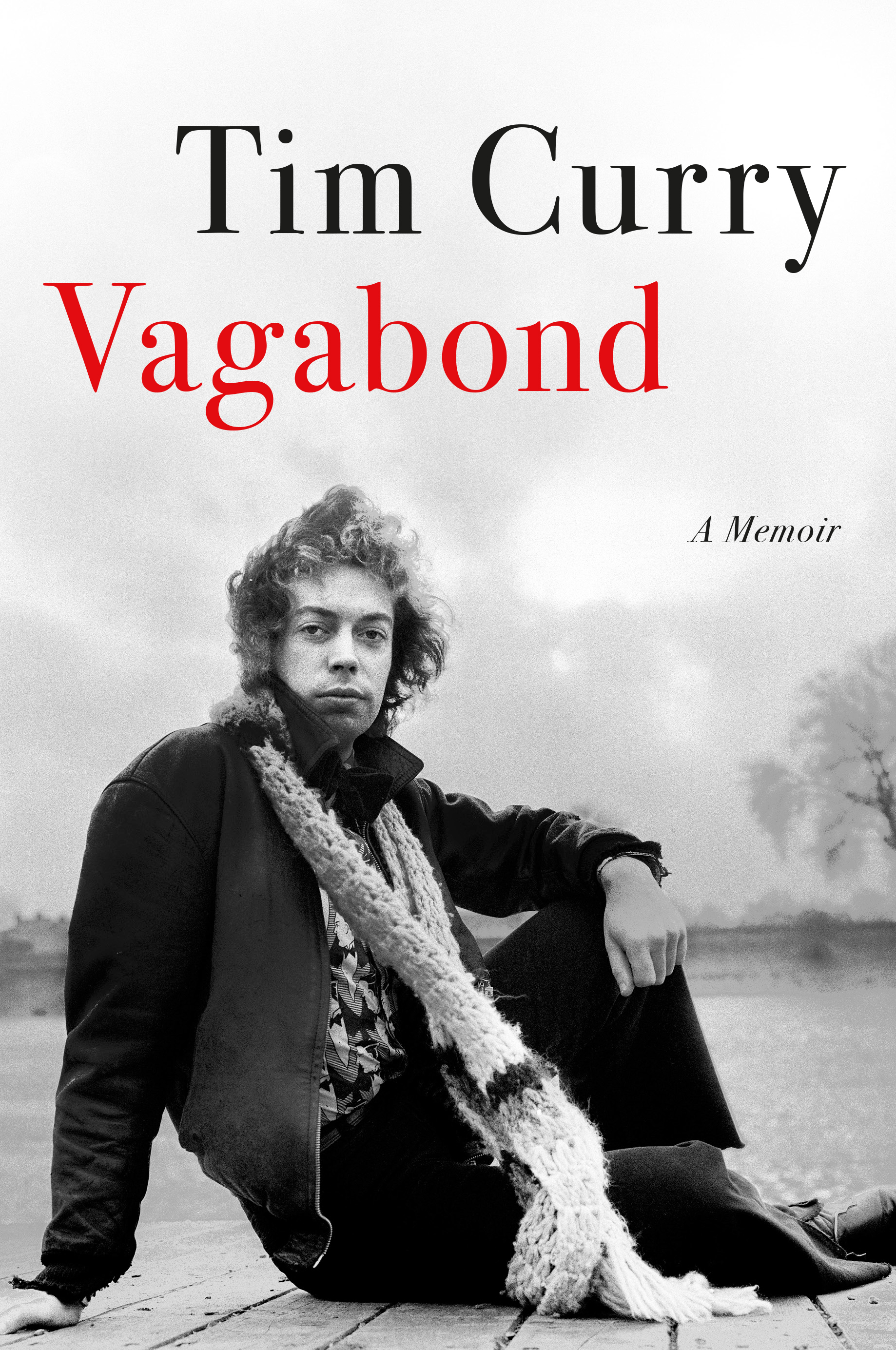
Vagabond by Tim Curry: (4 stars) Tim Curry is my favorite actor; I have seen all of his films (including the not-so-great ones), and if I didn’t love the film, I definitely loved his performance. He brings such depth to the characters he plays through his gestures, expressions, and his tone of voice. His memoir is a fascinating journey through the stages of his career, from secondary school through university and out into the world of triumphs and tragedies. He tells of lucky breaks, gut-wrenching failures, plans that panned out and ones that fell flat. Add to this a devastating stroke in 2012 and you have a story of determination fueled by wit, humor, and a genuine love of acting.
One of the things I found most interesting in this memoir related to something I have often wondered about, namely how a celebrity feels when approached by fans that think they know the actor because they have seen their movies/TV shows, etc. I adore Curry as the Lord of Darkness, but I am quite sure he has no grand plans to plunge the world into darkness, and I hope to god he doesn’t act like Pennywise (!). He clearly appreciates his fans, but also makes it clear that he doesn’t owe them anything. The aggression celebrities sometimes face must be rather daunting; it’s a testament to how much they love their craft that they keep going.
I read Vagabond in a day, it was that good. (I stayed up way past my bedtime to do so, and have no regrets). Curry’s writing style is breezy, witty, and fully engaging. This is a must-read for any of Tim Curry’s fans. It will introduce you to the person that occupies the minds of your favorite characters.
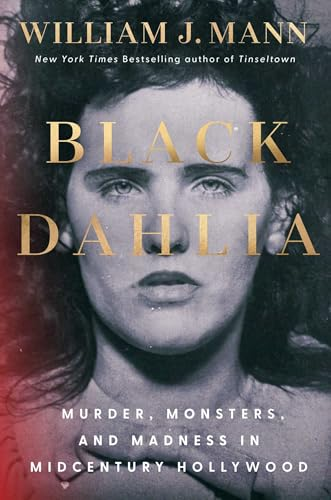
Black Dahlia by William J Mann: (4 stars) William Mann’s “Black Dahlia” s an interesting and informative (if gruesome) book. I don’t read a lot of true crime, but this was definitely a good one to dive into. Mann’s research is meticulous, and cleared up some misunderstandings I had regarding this cold case. To begin with, I was under the impression that Elizabeth Short was an actress; she was neither an actress nor a model, in fact she was a drifter, perhaps seeking to make her way in Los Angeles but not knowing how. I was also unaware of the details of her murder; horrific doesn’t begin to describe it. Despite evidence to the contrary as found by the coroner, I hope she passed quickly. Elizabeth Short’s murder has yet to be solved, it probably never will be. A major contributing factor to this is politics. Detectives in the LA Police Department spent hundreds of hours investigating, only to have the county Sherriff’s department run roughshod over their investigation, tamper with evidence, pay off witnesses, and leave a grieving family without closure. Detectives Harry Hansen and Finis Brown are the heroes of this story: they gave their all despite the roadblocks the Sheriff’s office placed in their way. That they never solved the case bothered them long after their retirement.
I appreciate that Mann doesn’t set out to solve this case. In his own words, this is an examination of Elizabeth Short’s life, what may have led up to her death, and what happened after. He may have his own thoughts about who the culprit was, but he doesn’t say. He lets his readers make their own decisions. I am also very grateful that William Mann doesn’t engage in any victim blaming, as the press did all those years ago when Elizabeth Short was identified as the victim. He approaches Short’s actions as a witness himself, describing the people she met and how she spent her time. He questions what may have made her make some of her decisions, but never once implies that her death was her own fault. It’s a refreshing change.
The world may never know who killed Elizabeth Short, but William Mann’s “Black Dahlia” makes sure that it will never forget who she was.

Sisters in Death by Eli Frankel: (4 stars) I read Eli Frankel’s “Sisters in Death” on the heels of William Mann’s “Black Dahlia,” and was again pulled into a well-researched and engaging, if disturbing, exploration of a true crime cold case. Most people will recognize the moniker “Black Dahlia,” though they may have many misconceptions about the woman behind the image created by the press. Elizabeth Short wasn’t an actress or a model, and according to her friend Anne Toth, was not a femme fatal or a sex worker. She was simply one of the may women that headed to Los Angeles seeking something that she couldn’t find back home (in Short’s case, Medford Massachusetts). She met a terrible death by an unknown assailant, and her murder is unsolved to this day. Thanks to the sensationalist press, her memory lives on, though her friend Anne Toth stated that no one ever called her Black Dahlia.
Leila Welsh is a complete unknown, except perhaps in Kansas City where the well-known and much-loved and respected elementary school teacher was murdered in her own bedroom steps away from her sleeping mother and brother. How are these two women connected? Leila Welsh never went to Medford or Los Angeles, and Elizabeth Short never went to Kansas City. Both women died gruesome deaths, and their murders are still unsolved. Similarly, investigations into their murders were hampered by corrupt politics while city detectives tried their utmost to solve the cases. Their connection, as Frankel illustrates, is a man named Carl Balsiger. Elizabeth Short went on a few dates with Balsiger in Los Angeles. Leila Welsh grew up in a neighborhood close to Balsiger’s, and they spent summers at the same country club, and attended the same college. Carl Balsiger was one of the many suspects in the Elizabeth Short investigation; however, he was not a suspect in Leila Welsh’s murder. In fact, thanks to corrupt politicians, Leila’s brother George was hauled into court twice to stand trial for her murder despite there being no evidence to support the accusation.
Eli Frankel tells readers about Leila Welsh from childhood to her early adulthood. He describes her murder (trigger warning: it is very graphic, proceed with caution), and he details the political fracas that not only nearly killed her brother but also let the investigation of her murder just…peter out. Without sensationalist press to feed the flames, public outrage over Leila welsh’s murder faded away. Neighbors still lived in fear, George Welsh and his mother moved to Texas to start over, law enforcement officials in Kansas City were shuffled around, some suspended, and no one was brought to justice.
Frankel describes parallels between Leila Welsh’s and Elizabeth Short’s deaths, and explores why Balsiger was considered a suspect in Short’s murder. This book asks as many questions as it answers. It’s a suspenseful whodunit, definitely worth reading. Caveat: if you read it in tandem with a book about Elizabeth Short, you will find some repetition; Frankel researches the lives of both women thoroughly.

The Improbable Victoria Woodhull by Eden Collinsworth: (3 stars) How to describe Victoria Woodhull? Daring? Audacious? Driven? She was all of these and more, and Eden Collinsworth presents readers with a fascinating biography of a woman who dared to push the boundaries of Victorian society. I knew Victoria Woodhull had worked as a spiritualist, and had started an investment firm and run for president. I did not know that she had also started a newspaper. It stands to reason that she had been a suffragette, however, Collinsworth points out that Woodhull’s participation in the movement may have been more about furthering her own agenda rather than about securing rights for all women. She was a master at reinventing herself; when she could no longer draw customers in with her psychic abilities (real or fraudulent), she became an investment broker, finagling support from financial moguls like Cornelius Vanderbilt. She and her sister founded a newspaper dedicated to topics such as the suffrage movement, free love, sex education, and legalized prostitution among other subjects. Following her unsuccessful run for president Woodhull faced various financial setbacks which resulted in her moving to England to reinvent herself yet again.
Collinsworth tells Victoria Woodhull’s story in a clear and concise manner. There is a lot of material to present, and Collinsworth’s text is not weighed down by speculation or tangents. We read about a woman that was far before her time, and even if she didn’t do everything she set out to do, she gave it a shot.

Economica by Victoria Bateman: (5 stars) This book will have a special place on my shelf with Rosalind Miles’ “Who Cooked the Last Supper” and Philippa Gregory’s “Normal Women.” Victoria Bateman explores centuries of women’s contributions to human society, from the first “hunter-gatherer” societies to the employment and wage gaps of today. She takes a deep dive into societies in which women were equal, often sacred beings, illustrates how that equality was shattered, and explains how women have continued to support and shape societies and the success of those societies based on how women and their work are valued (or not in many cases). Women comprise at least half of the human population (probably a bit more, actually) and yet we have had to fight for the right to have the ability to work outside the home (while still doing 90% of the housework and childcare), the ability to go to school, (elementary and high school for some young girls, never mind college). Woman founded businesses are scrutinized and then celebrated when they fail. To this day, we still don’t have agency over our own damn bodies. Books like “Economica” show just how valuable we women are, how intelligent and capable we are, and how very flawed society is. I very strongly recommend this book. It should be required reading in colleges.
Well friends and fellow booklovers, we are caught up for now. I still have several volumes of poetry patiently waiting to be reviewed, and when those are done, I will share them with you as well. Some are for NetGalley, and some are for Querencia Press. As always, all thoughts on the books are my own, these posts are not sponsored (apart from the generous gift of the books by the publishers via NetGalley), and all images are from Goodreads. Thank you again for reading, and I hope you find these posts interesting and/or informative. Take care!
 This is the Mask