(This is also a book on my Summer Reading List, so you’re getting a 2 for 1 update!) David Gate’s essay and poetry collection “A Rebellion of Care” is beautiful. Gate writes from the heart, giving readers pieces of himself as he contemplates his life and loves. He reminds us that “joy is an act of rebellion/against the established order,” and urges his readers to “Make art & music/ because music & art/ are love letters to the living/ addressed to us all.” I printed his poem “Stardust” to hang over my desk to remind myself to sparkle each day, and Part 5 of his collection, titled “I Pour Out the Contents of my Notes App in an Attempt to Create Connection” is wildly creative (and I admit I want to try a similar form myself). Gate tells us that laughing with old friends is living in the truest sense. Perhaps the most profound takeaway I took from his book (besides “Stardust”) is this reminder: “You may not be responsible/ for the source of your pain/ but you are responsible/ for everywhere it goes.” As someone with childhood trauma, I want to keep this reminder close to me. I don’t want others to feel my pain and anger; I want them to sparkle as I am learning to. I urge people to read this beautiful book. It will touch your heart. You may cry, you may become angry, or you may pause in your reading to ask yourself what care you need to give yourself. Listen to what your heart says.
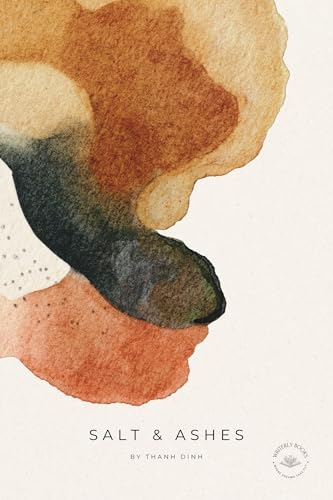
I absolutely loved Thanh Dinh’s “The Smallest God Who Ever Lived,” so I was very excited to read “Salt & Ashes.” Unfortunately, this book didn’t resonate with me the way “Smallest God” did. I will not say I didn’t like “Salt & Ashes,” there were some beautiful lines and truly moving thoughts. One line I have already returned to several times says “Remember that only in the aftermath of the quake,/ You can feel the Earth move”
“Salt & Ashes” tells a different story from Dinh’s other book, coming from different experiences. I believe it is a deeply personal narrative from Dinh, and I appreciate her honesty and vulnerability. She reminds readers that sometimes we have no choice but to accept what life hands us: “And there comes a time when people learn/How futile living on pure imagination can be–” The truth is often painful to hear, but if we want to fully experience our lives, we have to listen.
Jen Schneider’s On (Pantry) Stock & (Kitchen) Timers is a unique collection of a stream-of-consciousness essays and poems that you wouldn’t think would work but does in an enchanting, eye-catching, made-you-look kind of way. Schneider’s words are a collage of thought that walks readers through a maze of sensation/emotion/confusion/questing. This collection deserves a re-read to fully take in what Schneider says, but even after a second reading I found myself pausing, starting a page over, considering what Schneider wrote, how to interpret her idea. Read this book and experience Schneider’s creative art for yourself.
Some of the poems in Alix Perry’s collection Tomatoes Beverly flow beautifully, creating scenes in the mind’s eye. Others are somewhat disjointed and difficult to follow. This may be intentional; poetry is art, interpreted differently by the creator and the reader. Perry opens with a sage reminder for their readers: “Things I should know by now:/ whether to take the news with/ a grain of salt or a spoonful of sugar;/ when to lie and when to brag;/ how to celebrate anything at all. […] Breathe/ shallow to whisper, deeper/ to take blame./ Onerous is the task/ of feigned restraint.” “gravity is/ the weight of all the stories we don’t know/ how to tell,” Perry tells us. Their method of immersing themselves in music for each separate piece is a brilliant idea: by fully allowing themselves to be influences by what they hear, Perry creates unique pieces that retain their own identity while subtlety uniting the collection as a whole.
“unconditional love lets you cry flowers” ~Brianna Pastor
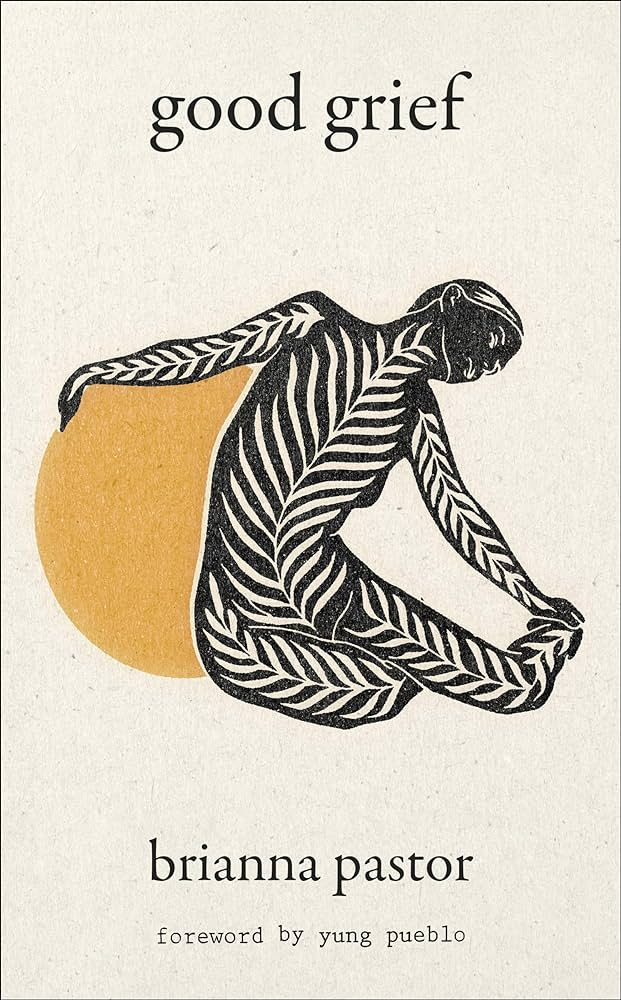
Brianna Pastor’s collection “Good Grief” is a jewel of a book. Her poems are deeply personal, but resonate with her readers, creating a sense of camaraderie, letting people know that while their pain is unique to them, they are not alone. Someone else has felt what you feel, someone else has lived your fears and sadness; your feelings are relevant. You matter. “i loved my sadness because it was honest,” Pastor says. She reminds us that “sometimes you walk, and you won’t get there in time. sometimes you run, and it has already passed you, sometimes you get there at exactly the right time, and exactly the right speed, and it still does not happen. when it is for you, it will be for you.” As someone who lives with major depressive disorder, I empathize with Pastor’s thought: “i dread the day these demons come back for me they have gone away to pursue better things but can never find what they’re looking for so here they come, back to me, a place where they are not wanted–for they always stop by unannounced and don’t understand the concept of manners in another person’s home” Truly, I loved this book. Beautifully written, sensitive and moving, it shows the depth of a person’s soul, and the struggle to stay strong.
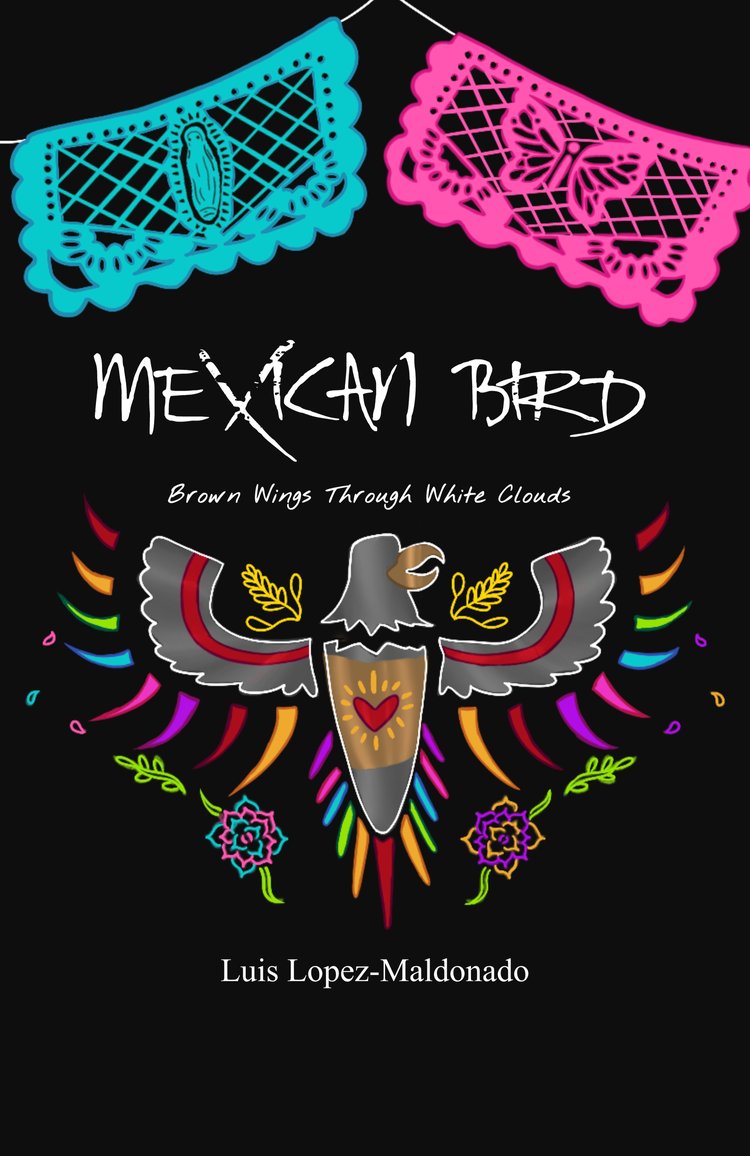
Mexican Bird by Luis Lopez-Maldonado tells a heart-rending, painfully beautiful story. It is a reality I as a white heterosexual woman will never experience; Lopez-Maldonado’s pain, hope, desire, sorrow, and need come through every line, illustrating the life of a beautiful soul, often marginalized and misunderstood, but wholly worthy of reverence.
This book explodes into your psyche. Wytovich takes her readers by storm, pulling them into a maelstrom of emotion and language and sensation. “My name is werewolf, death-cup, noise,” she screams charging through hordes of grinning demons. Ghost girls watch from garden shadows as you daintily sip poisoned tea; we dine with witches on thornapple, mushrooms, wild strawberries, and boiled spiders. “Three times I came to tea,” the mystical triad, three wishes, click your heels three times, and you too can read the omens. Wytovich illustrates with words, creating fantastical paintings: “She stood inside the four corners / securely in sunlight–smiling / a fairy princess against / my unwelcoming face / precious, with a quiet respect.” Wytovich’s writing brings to mind the work of Charlotte Perkins Gilman and Mary Oliver, but her voice is uniquely, angrily, her own. She questions suffering and disturbance and gives us an illusion of genteel femininity shielding ferocious womanhood. Yet there is beauty glowing behind her ferocity: “Awakened, a trailing mist / hugs my morning tea / an early love, shining.” in “On the Subject of Blackberries” Stephanie Wytovich has created a universe of thought. You cannot read her writing and be unaffected. It forces you to consider what is real and what we are told is false, though only the reader knows for sure.
Poet Katheryn Louise gifted me a special prelaunch copy of her beautiful collection Yet Still, She Shines. The anticipated release date is January 24, 2024, and I urge you to secure yourself a copy of this beautiful collection. Kathryn Louise’s Yet Still, She Shines is a masterpiece of imagery and emotion. She opens with a brilliant burst of summer, showering readers with color and heat. Dragonflies carry messages of hope to those willing to listen, love’s heat sears the heart as a midnight breeze caresses the cheeks, lovers find wholeness in each other’s strength. She contemplates forever, “Let’s read this next chapter slowly,” she suggests, so as not to waste a single honey-drenched moment. She reminds us that “without sorrow, nothing tastes sweet.” She leads her readers into the liminal spaces, “The space between what was / and what will be: / a beautiful place of calm, / of leaning in and listening, / of imagination and planning, / of surrendering/ and allowing.” Kathryn Louise brings light into “the darkest of places, the tiniest of spaces;” helping us to see that true love exists, and comes when we least expect it.
Kathryn Louise invites readers to recall the unfettered joy of childhood nonsense; she asks them to feel the rhythm of the waves, and reminds us all to cherish each fleeting moment of our lives, the winter sunsets, coffee drunk on the porch overlooking spring blossoms, to stay present and live now. Her words illustrate life, togetherness, the highs and hurts of love, and the pain of loss. You look into shadows and see the light on the other side, and you are awakened. She crafts such exquisite lines: “Just walk by my side / as we tackle / each little pain / from the past, / for we are but / mirrors for each other–“ Yet Still, She Shines is a truly beautiful collection of poetry, elegant in its simplicity and expression. I feel certain that this volume will be a meaningful addition to people’s poetry shelves.
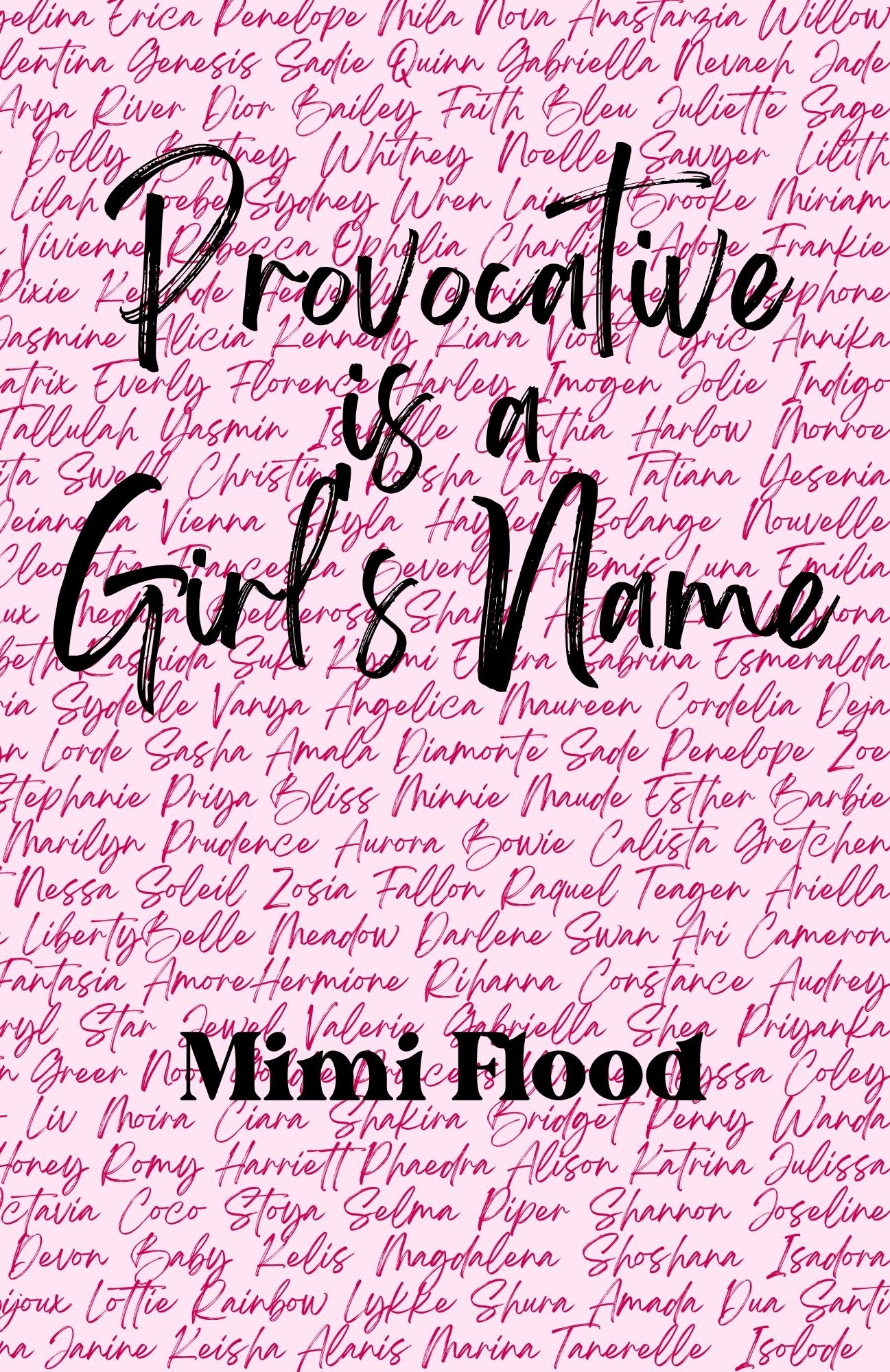
Mimi Flood’s amazing, powerful book Provocative is a Girl’s Name is a commanding, painful book. Flood’s words are raw, shocking, and truthful. There is anger, there is rage, and hatred, and there is love as well: love for who she is, love for her fellow women. As a sexual violence survivor, this was a hard book to read, and I advise readers to be aware. Flood doesn’t sugarcoat reality. She says what needs to be said proudly, in a voice that rings from the pages like a queen challenging the wrongs of the world. (ARC provided by Querencia Press)
Jessica Drake-Thomas’ Bad Omens is on my list of best books for the year. This poetry collection is steeped in mystery and folklore, with a dash of mythology and a hint of history. In other words, Drake-Thomas has managed to fit all of my favorite themes into her book. This is a very late posting on my blog as I read and reviewed this back in February. Since then I have read it twice more, and I love it even more than before.
She opens this collection with an audience with a soothsayer: “Speak to me/as if I’m covered in blood…or don’t speak/ at all. /Bring me a gift–/ mouthful of sour cherries, /black toad, /smooth rune-stones. / In return, / the knowledge / you’ve been denied…” She will guide you, give you knowledge, and with that knowledge the power you desire, you deserve. We walk with a dark goddess lamenting the light she has lost and praise Eve’s daring and the gifts she gave her daughters.
Readers walk the path generations of witches have traversed communing with nature and night; we are women, we are phoenixes, we are sirens and the weak-minded our prey. We practice alchemy in a bath perfumed by belladonna, serenaded by seabirds; later we will run with wolves. Drake-Thomas weaves mythology with Tarot on a journey to free herself from the oppression of one considered good because he was God-fearing; when a woman is called a witch, consider, who was the wicked one?
My favorite poem in her collection, The Empress Reversed, alludes to two things I love: the television show Penny Dreadful, and The Yellow Wallpaper by Charlotte Perkins Gilman (I will share the full poem at the end of this post, it’s so evocative). And this exquisite line from Ophiophagy: “I may be asleep when/ disaster arrives, but/ I’ll dream of dandelion pie & stars” (I have been working on a collection of golden shovel poems inspired by women writers, and I have included this line. There is magic in these words.)
In La Fee Verte a Tarot reader gives the narrator the Tower, a powerful card, one to be wary of, and she falls into a Wonderland of absinthe and arsenic, dancing faeries glowing with radium. In her book, Death comes on his pale horse and the Goddess waits at the crossroads–which will you choose?
I am absolutely in love with this book (in case you couldn’t tell). I am eagerly awaiting what magick Jessica Drake-Thomas conjures in her next book. This was an ARC given by Querencia Press and I am so grateful that they sent it. As promised, below, The Empress Reversed, by Jessica Drake-Thomas, from Bad Omens.
The Empress Reversed
There’s a brisk trade for photographs of dead women*,






 This is the Mask