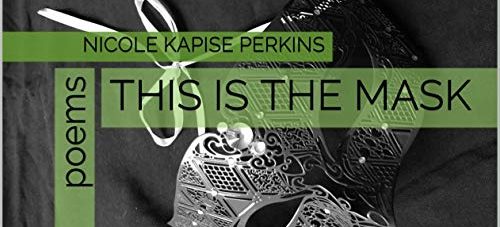
New Beginnings & my March TBR

Somehow it is March. This month will see the change of the season as we finally (!) move into spring. It is the season of new beginnings, growth, and change. I can’t wait!

            I feel as though February left me scrambling. I didn’t accomplish any of my goals for the month and made zero progress on any of my projects. I did write to some new people for InCoWriMo that I want to keep in touch with (March goal 1: keep up with my correspondence) and I finished my February TBR list as well as a couple extra books. (March goal 2: write and post review of TBR books as I finish them)

            I am a little disappointed that I didn’t make any progress on my professional or personal goals, but I have decided to give myself some grace. I have wasted far too many years being angry with myself for not being perfect and doing everything I feel I am “supposed” to do. Why should I feel that I am less than if I do not do everything perfectly? (Childhood trauma does great things to your mind, let me tell you) At almost fifty I can finally look at myself in the mirror and say, “You are good enough.” My poor husband has been telling me this for over twenty years. The man is a saint.

            So, March has arrived, and I am starting fresh. Didn’t make February’s goals? Try again. I have my calendar blocked out with projects, and my book club, self-care days, and things that I like to do. (March goal 3: Sunday afternoon walks. Does this make me old? I mean, I am almost fifty…) My word for the month is “Nurture” and I intend to. I will nurture my talent, my soul, and myself.

            My March TBR reflects this, not with self-help books (which I love to read, by the way; the authors are all so nice. …I never take their advice…) but in observing Women’s History Month. This country is a dumpster fire—give me strong intelligent women for guidance and inspiration! On this month’s TBR is…


So Here I Am: Speeches by Great Women to Empower and Inspire by Anna Russell: So Here I Am brings together empowering speeches by women throughout history up to the present day. This is a celebration of women speaking up; within politics, science, human rights, TV and media – discussing everything from free love, anti-war, discoveries, race, gender and women’s rights. With evocative and powerful illustrations from Brazilian artist, Camila Pinheiro, this anthology of great women – whose own achievements speak for themselves – is timely and important. This shot of inspiration serves as a reminder that despite all adversity, nevertheless, she persisted. Speakers include: Sojourner Truth; Marie Curie; Emmeline Pankhurst; Helen Keller; Sylvia Rivera; Manal Al Sharfi; Malala Yousafzai; Michelle Obama; Alicia Garza.


Spinning Straw into Gold: What Fairy Tales Reveal About the Transformations in a Woman’s Life by Joan Gould:  What’s your favorite fairy tale? Whether it’s “Cinderella,” “Beauty and the Beast,” “Hansel and Gretel,” or another story, your answer reveals something significant about you, your experiences, and your soul. In this penetrating book, Joan Gould brings to the surface the hidden meanings in fairy tales and myths, and illuminates what they can tell you about the stages in your own life. As Gould explores the transformations that women go through from youth to old age–leaving home and mother, the first experience of sexuality, the surprising ambivalence of marriage, the spiritual work required by menopause and aging–her keen observations will enrich your awareness of your inner life. Full of archetypal figures known to us all, Spinning Straw into Gold also includes stories from the lives of ordinary women that clarify the insights to be gained from the beloved tales that have been handed down from one generation to the next.


Queens of a Fallen World: The Lost Women of Augustine’s Confessions by Kate Cooper: While many know of Saint Augustine and his Confessions, few are aware of how his life and thought were influenced by women. Queens of a Fallen World tells a story of betrayal, love, and ambition in the ancient world as seen through a woman’s eyes. Historian Kate Cooper introduces us to four women whose hopes and plans collided in Augustine’s early adulthood: his mother, Monnica of Thagaste; his lover; his fiancée; and Justina, the troubled empress of ancient Rome. Drawing upon their depictions in the Confessions, Cooper skillfully reconstructs their lives against the backdrop of their fourth-century society. Though they came from different walks of life, each found her own way of prevailing in a world ruled by men. A refreshingly complex and compelling portrait of Augustine, Queens of a Fallen World is the riveting story of four remarkable women who set him on course to change history. (NKP: I’m not particularly interested in Augustine, but the women that made him who he was deserve to be known)
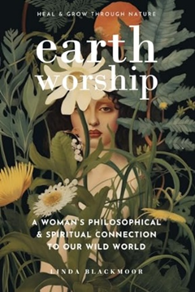
Earth Worship: A Woman’s Philosophical & Spiritual Connection to Our Wild World by Linda Blackmoor: Earth Worship weaves together the ancient threads of feminine wisdom, deep ecological philosophy, and the transformative magic of spirituality to guide readers on a profound journey of reconnection with the Earth. It is an ode to the enchanting and intricate relationship between women and the natural world, a bond that is both sacred and essential for our collective healing and enlightenment. It is a call to awaken to the divine feminine energy that flows through all of life, urging us to reclaim our rightful place as guardians and nurturers of our planet. Earth Worship delves into the heart of nature’s mysteries, offering a rich tapestry of stories, rituals, and reflections that illuminate the spiritual and philosophical pathways through which women can forge a deeper, more meaningful connection with the natural world. Drawing on the wisdom of ancient cultures, the insights of modern ecological thought, and the timeless teachings of the Earth itself, this book serves as a compass for those seeking to navigate the complexities of modern life while staying rooted in the profound truths that nature imparts. It is not merely a book to be read; it is an experience to be lived, a journey to be undertaken with an open heart and a willing spirit, ready to be transformed by the profound lessons that only the Earth can teach. (Synopsis from Amazon.com)
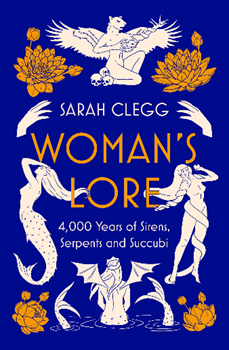
Woman’s Lore: 4,000 Years of Sirens, Serpents, and Succubi by Sarah Clegg: Demonic temptresses – from siren-mermaids to Lilith – are well known today, and their mythology focuses around the seductive danger they pose to men. But the root of these figures can be traced back 4,000 years and in their earliest incarnations they were in fact demons worshipped and feared like Lamashtu, the horrific talon-footed, serpentine monster, who strangled infants and murdered pregnant women, or the Gello, the ghost of a girl who had died a virgin and so killed expectant mothers and their babies out of jealousy. This history of a demonic tradition from ancient Mesopotamia to the present day – from Lamashtu and Gello, to Lamia and Lilith, and mermaids and vampires – shows how these demons were co-opted by a male-centered society, before being recast as symbols of women’s liberation. We also learn what this evolution can tell us about the experience of women and the danger of childbirth, changing attitudes towards sexuality and the movement for women’s rights.
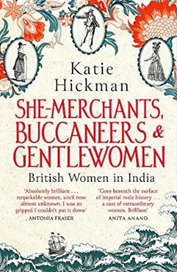
She-Merchants, Buccaneers & Gentlewomen: British Women in India by Katie Hickman: Women made their way to India for exactly the same reasons men did – to carve out a better life for themselves. In the early days, India was a place where the slates of ‘blotted pedigrees’ were wiped clean; bankrupts given a chance to make good; a taste for adventure satisfied – for women. They went and worked as milliners, bakers, dress-makers, actresses, portrait painters, maids, shop-keepers, governesses, teachers, boarding house proprietors, midwives, nurses, missionaries, doctors, geologists, plant-collectors, writers, travelers, and – most surprising of all – traders. As wives, courtesans and she-merchants, these tough adventuring women were every bit as intrepid as their men, the buccaneering sea captains and traders in whose wake they followed; their voyages to India were extraordinarily daring leaps into the unknown.
The history of the British in India has cast a long shadow over these women; Memsahibs, once a word of respect, is now more likely to be a byword for snobbery and racism. And it is true: prejudice of every kind – racial, social, imperial, religious – did cloud many aspects of British involvement in India. In this landmark book, celebrated chronicler, Katie Hickman, uncovers stories, until now hidden from history: here is Charlotte Barry, who in 1783 left London a high-class courtesan and arrived in India as Mrs William Hickey, a married ‘lady’; Poll Puff who sold her apple puffs for ‘upwards of thirty years, growing grey in the service’; Mrs Hudson who in 1617 was refused as a trader in indigo by the East Indian Company, and instead turned a fine penny in cloth; Julia Inglis, a survivor of the siege of Lucknow; and Flora Annie Steel, novelist and a pioneer in the struggle to bring education to purdah women. (All book synopses and photos from Goodreads.com unless otherwise noted)             There you have it! My sister and I will also be finishing The Woman They Could Not Silence by Kate Moore this month. This “Sister Read” went by much faster than the last; granted, it is a smaller book, but it also reads really quickly. It is also extremely relevant to present circumstances in the US. Which is appalling, as the events in this book took place in the 1860s. It reiterates the fact that history does repeat itself, and if we do not learn from the past there will be no future.

Goodreads Challenge!

Slightly delayed, but we are still in January for about eight more hours, so…Goodreads Challenge update!

Last year I managed to beat my goal of 145 books, finishing at 152. This year I have set a goal of 150 books. I have completed nine so far, seven of which were poetry eBooks with an average of 150 pages, give or take. I have some hefty books on my planned TBRs for the next few months, March especially, so we’ll see how quickly I get through them. I am a fast reader naturally, but I do not just breeze through a book for the sake of getting it finished. I do take the time to read thoughtfully and make notes or copy things into my Commonplace Book. Many of my nonfiction books look like little porcupines with sticky tab quills.

My reading time will also be slightly reduced as I am setting aside time in the evenings to write because my poetry manuscript is not going to finish itself (though it would probably require far less editing if it did). How is it that something that sounds so meaningful when you first write it sounds like a four year old telling a story when you go back and read it a week later? I mean no disrespect to four year olds: my Finch is an excellent storyteller. His Mόraί, on the other hand, is a slightly off-kilter poet.

I recently shared a post about my February TBR, so I won’t review it here. My March reading list will be in the theme of Women’s History Month. Sister and I are expecting to have TWTCNS finished by late March, and we have chosen one of the books on my TBR to be our next Sister Read.

Are you on Goodreads? Let’s connect! You can find me at https://www.goodreads.com/author/show/12594094.Nicole_Kapise_Perkins . What are you reading right now? Do you have a reading goal for this year? Let me know. In the meantime, be well, and keep reading!

February TBR & a Moral Dilemma

February is fast approaching and I’m thinking about books! I didn’t finish my January TBR as of this writing, and I will not unless I stay home and do nothing but read for the next three days (one can dream), so I will have to move those books to another month, or the end of February is there is time. Ordinarily I would just move the books to the following month, but I placed my February library orders last week based off random picks from page 124 of my Goodreads list and all of them have come in already! Thanks CWMARS, you’re the best!

Here is my February TBR (all synopses from Goodreads.com, per usual):

Microjoys by Cyndie Spiegel: Microjoys are a practice of uncovering joy and finding hope at any moment. They are accessible to everyone, despite all else . When we hone the ability to look for them, they are always available. Microjoys are the hidden wisdom, long-ago memories, subtle treasures, and ordinary delights that surround A polka-dot glass on a thrift store shelf. A dear friend’s kindness at just the right time. The neighborhood spice shop. A beloved family tradition. The simple quietude of being in love. A cherished chai recipe.
Cyndie Spiegel first began taking note of microjoys during the most difficult year of her life—when she experienced back-to-back unprecedented and devastating losses—and she found that these fleeting moments of hope helped her move through each day with a semblance of comfort and a lot more joy.
Through beautifully written narrative essays and prompts, Cyndie shares the microjoys that have kept her going through tough times and shows us how we can learn to see the microjoys in our own lives. Microjoys don’t change the truth of loss or make grief any more convenient, but they allow us to temporarily touch joy, keeping us buoyed and moving forward, one moment at a time.

The Unmaking of June Farrow by Adrienne Young: In the small mountain town of Jasper, North Carolina, June Farrow is waiting for fate to find her. The Farrow women are known for their thriving flower farm—and the mysterious curse that has plagued their family line. The whole town remembers the madness that led to Susanna Farrow’s disappearance, leaving June to be raised by her grandmother and haunted by rumors. It’s been a year since June started seeing and hearing things that weren’t there. Faint wind chimes, a voice calling her name, and a mysterious door appearing out of nowhere—the signs of what June always knew was coming. But June is determined to end the curse once and for all, even if she must sacrifice finding love and having a family of her own. After her grandmother’s death, June discovers a series of cryptic clues regarding her mother’s decades-old disappearance, except they only lead to more questions. But could the door she once assumed was a hallucination be the answer she’s been searching for? The next time it appears, June realizes she can touch it and walk past the threshold. And when she does, she embarks on a journey that will not only change both the past and the future, but also uncover the lingering mysteries of her small town and entangle her heart in an epic star-crossed love.

Lies We Sing to the Sea by Sarah Underwood: Each spring, Ithaca condemns twelve maidens to the noose. This is the price vengeful Poseidon demands for the lives of Queen Penelope’s twelve maids, hanged and cast into the depths centuries ago. But when that fate comes for Leto, death is not what she thought it would be. Instead, she wakes on a mysterious island and meets a girl with green eyes and the power to command the sea. A girl named Melantho, who says one more death can stop a thousand. The prince of Ithaca must die—or the tides of fate will drown them all.

By Any Other Name by Jodi Picoult (I do own this one as an eBook): Young playwright Melina Green has just written a new work inspired by the life of her Elizabethan ancestor Emilia Bassano. But seeing it performed is unlikely, in a theater world where the playing field isn’t level for women. As Melina wonders if she dares risk failure again, her best friend takes the decision out of her hands and submits the play to a festival under a male pseudonym. In 1581, young Emilia Bassano is a ward of English aristocrats. Her lessons on languages, history, and writing have endowed her with a sharp wit and a gift for storytelling, but like most women of her day, she is allowed no voice of her own. Forced to become a mistress to the Lord Chamberlain, who oversees all theatre productions in England, Emilia sees firsthand how the words of playwrights can move an audience. She begins to form a plan to secretly bring a play of her own to the stage—by paying an actor named William Shakespeare to front her work.

Only four on the planned list—February is a little month, after all. All of these books are new to me; if you’ve read any, let me know what you thought! I will also be continuing to read The Woman They Could Not Silence with my sister, and Margaret Atwood’s Paper Boats if I finish my planned four before the end of the month. I picked up an autographed copy while out on a Sister Day last fall. We have another one coming up next week in Portsmouth, NH, I can’t wait!

Books I’m trying to wrap up by the end of the week are Ezra Pound’s Literary Essays and Virginia Woolf’s Writer’s Diary. Woolf’s diary is a bit of a slog, and her overt classicism overshadows the interesting and valuable points she makes about writing. I am very torn about reading Ezra Pound. He makes brilliant statements about the craft of writing, but his background makes me wish these were written by someone else. Last year I listened to a podcast that discussed if it is okay to appreciate work created by terrible people; the author was speaking of a musician whose work she loved, but as she became an adult and learned about what kind of person he was, listening to his music made her question her own morals. I feel the same way about my books by Marion Zimmer Bradley. She was a brilliant wordsmith and created a realm of fantasy that I spent many wonderful hours wandering, but she was a vile person. Ezra Pound’s background is equally upsetting.

A 2021 article from The New York Times, written by Jennifer Finney Boylan addresses the question of whether one can separate the art from the artist, and I do feel it is a weighty question. (https://www.nytimes.com/2021/11/03/opinion/music-pop-culture-justice.html) Disturbingly, we are seeing more and more creatives being held up for unacceptable behavior; I fail to understand why anyone thinks they are above the rules of law and common decency. But this is not what this post is about. This is about the fact that I am reading essays by Ezra Pound, and while his personal beliefs give me the ick, he was a gifted writer, and I appreciate his work.

What are you planning to read in February? Have you read any of these books? Let me know! Stay well, be blessed, and I’ll be back soon.

December TBR!

Hello Friends. I hope you have all been well. As usual I have left my poor blog to languish while I navigate life. My hope is to be here much more regularly and I have all kinds of ideas for future posts. This isn’t a proper post, just a quick check in to say hello and share the books I plan to read this month. I don’t have a big list this month, and in keeping with the upcoming holidays they are holiday and winter themed. I’ve jumped on the “reading ghost stories at Christmas” theme with an Isak Dinesen collection. (I never knew that was a thing)

Anyway, in no particular order: The Quiet Little Woman by Louisa May Alcott; Old Christmas by Washington Irving; The Old Magic of Christmas by Linda Raedisch; The Glass Wonan by Caroline Lea; and Winter’s Tales by Isak Dinesen. I may also reread a very sweet family favorite picture book called The Yule Tomte and the Little Rabbits by Ulf Stark.