Poetry is an art form that is personal to both the writer and the reader; each has their own interpretation of the words and thoughts that are written. As a poet, I understand that readers may not necessarily relate to my words in the same manner that I do. That being said, I believe that readers of poetry should take something away from the poet’s words. Unfortunately, “The body is where it all begins” didn’t resonate with me at all. I can’t say that it is not well-written, and other readers might relate to Marcy Rae Henry’s work, but it was not for me.
Gruesome as it may sound, I love the Borden mystery (and I wholly believe that Lizzie did, in fact, murder her father and stepmother.) I was really looking forward to this book; unfortunately it didn’t really convey any emotion or suspense. The writing is very stilted, and the characters very flat. I have no doubt Fanning did her research, there are plenty of confirmed references to the case included in the book, but it didn’t hold my interest at all.
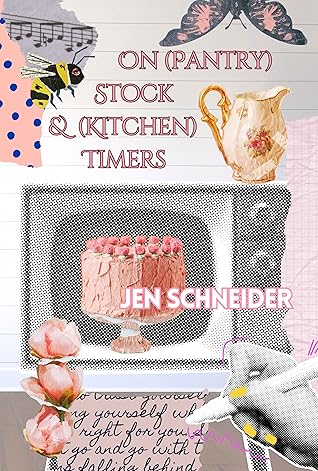
Jen Schneider’s On (Pantry) Stock & (Kitchen) Timers is a unique collection of a stream-of-consciousness essays and poems that you wouldn’t think would work but does in an enchanting, eye-catching, made-you-look kind of way. Schneider’s words are a collage of thought that walks readers through a maze of sensation/emotion/confusion/questing. This collection deserves a re-read to fully take in what Schneider says, but even after a second reading I found myself pausing, starting a page over, considering what Schneider wrote, how to interpret her idea. Read this book and experience Schneider’s creative art for yourself.
There are books you love, and then there are books that become a part of you, that you pick up over and over because you want to hold them, because you want to feel their weight and touch the pages covered in the words that mean so much to you. The covers are soft, ragged-edged and worn because you have read these books again and again, from cover to cover, or from wherever you opened them at that moment. You read to the end, or just a paragraph, pages maybe, or a single line. You know the words, but each time you read them they reverberate within you as though a bell has rung in your heart.
We all have favorite books, but what are your all-time favorites? The ones that have a special shelf all their own, the ones that you would choose to pack and be perfectly happy reading over and over on a deserted island if you were to happen to find yourself in such a situation with unlimited reading time, but, alas, a limited library? Here, friends, are my all-time favorite novels: (all photos found on Google)
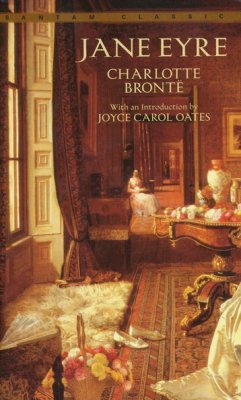
Jane Eyre by Charlotte Brontë: If I was told I had to choose just one book, only one, one single, solitary favorite, Jane Eyre would be it. …maybe. (Letters from Westerbork is a close runner up, barely a fingertip’s distance behind in the race to the book I won’t live without. More on this book in a later post) I have six copies of Jane Eyre, plus a graphic novel. I have books inspired by Jane Eyre: Rebecca by Daphne du Maurier, Jean Rhys’ Wide Sargasso Sea, and A Girl Walks Into a Book: What the Brontës Taught Me about Life, Love, and Women’s Workby Miranda K. Pennington, and have read several others. I own three versions of the film, and if you ask me who the sexiest Rochester is, Orson Welles, Ciaran Hinds, or William Hurt, my answer is yes. (NKP: the day after I drafted this post, I discovered Jane & Edward: A Modern Reimagining of Jane Eyre by Melodie Edwards at Dollar Tree. Yes, I bought it.)
I first read Jane Eyre when I was in my early twenties; I don’t recall what made me pick it up at the library, though I do recall remembering that it was referenced in Daddy-Long-Legs. I supposed if Jean Webster liked it, I might as well give it a go. To say I loved it would be an understatement. I read it twice in the two weeks I had it checked out, and renewed it. Jane is such a powerful character, not only in the way that nineteenth century literary heroines were, but as a real person: she is flawed, angry, spiteful, willful; she is bitter about the injustices handed to her and dreams of love and happiness. And she is fiercely intelligent and believes in herself and what she deserves. Add in a curmudgeonly, brooding, love-struck-though-deceitful leading man and a madwoman in the attic (literally) and you have a perfect recipe for an amazing Gothic novel. (I will admit it does drag in one particular area, but I am willing to overlook that in favor of the rest of the book.)
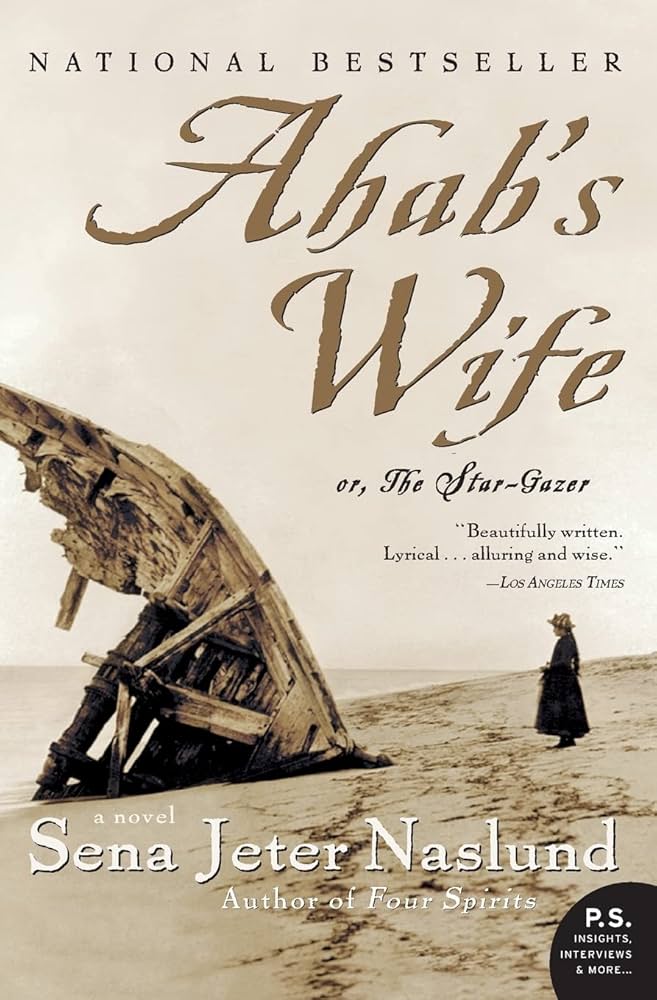
Next, Ahab’s Wife by Sena Jeter Naslund. This is a truly gorgeous story, full of color, sound, texture, and life. Una Spenser is a character very like Jane Eyre: intelligent, passionate about life, seeking knowledge and truth. She makes mistakes, she redeems herself and others, she reinvents herself as she needs to. She suffers loss, heartbreak, abandonment, and literal shipwreck, and she soars like the eagles she observes from her lighthouse tower. Naslund writes real people into her narrative: artist and mathematician Phebe Folger, astronomer Maria Mitchell, and writer and activist Margaret Fuller, and pulls in the narrative of the 1820 wreck of the whaling ship Essex. You could try to call this a companion novel to Moby Dick, but that would be doing this book a disservice: Melville doesn’t even give Ahab’s wife a name; Naslund gives her a vibrant, beautiful life.
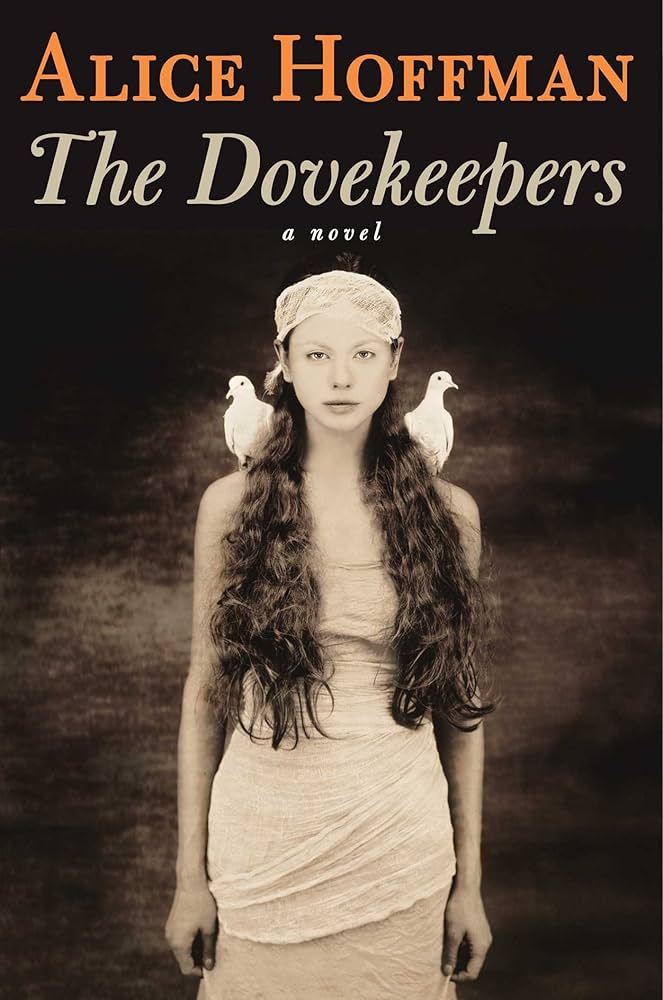
The third book on my “I-could-probably-live-without-but-don’t-want-to-try” list is The Dovekeepers by Alice Hoffman. Alice Hoffman is one of my favorite writers. I don’t bother to request her new books from the library, I just buy them. She is that good. The Dovekeepers brings readers to the final years of the Jewish stronghold of Masada during the Roman conquest of, well, everywhere. Told through the voices of four women, this book transcends time. You ask yourself what you would do for love. When faced with what could potentially be the end of forever, how would you approach each day? What would you do to see another sunrise? What spells would you weave, what histories would you make up for your listeners? Historians and archeologists are divided on what really happened at the fall of Masada in 74 AD; Flavius Josephus claimed that the Romas held the citadel siege for years, and finally entered to find the bodies of over 900 Jewish “rebels” (is one a rebel for wishing to live your life as a free person instead of a slave?); archeologists have found evidence to show that the siege may have lasted only weeks, and no evidence of mass murder/suicides. The ghosts of Masada keep their secrets, and Yael, Revka, and Yonah keep theirs.
OLYMPUS DIGITAL CAMERA
And finally, A Tree Grows in Brooklyn by Betty Smith. I have read and reread this beautiful coming of age story so much that pages are falling out. I had to put a rubber band around it when Bestie asked to borrow it so pages wouldn’t get lost. (I bought her a beautiful hardcover edition for Christmas) Readers meet Francie when she is eleven, and spend six years alongside her in the tenements of Williamsburg, Brooklyn. We see her striving for her distant, hardworking mother’s approval, never understanding that her mother would quite literally kill for her children if need be; we see her unwavering love for her deeply flawed, charming, devil-may-care father; we browse library bookshelves with her as she dreams of reading all of the books in her small world; we see her dreams and determination, her love of learning and her wish to fly free and discover a world away from poverty. To say this book is a heartening, wholesome story feels a little twee, but this really is the best way to describe it. It makes you laugh, it makes you cry, and it makes you appreciate all that you have. (As an aside, this book was hugely popular with soldiers stationed overseas during WW2; Betty Smith said she received more fan mail from soldiers than civilians regarding this book.) The 1945 film cuts out much of the novel, but keeps the heart of the story, and I highly recommend watching it (after you read the book, of course).
This has been a monster of a post, which is why I have broken it into two parts. Leave a comment with your favorite novels; I’ll definitely check them out!
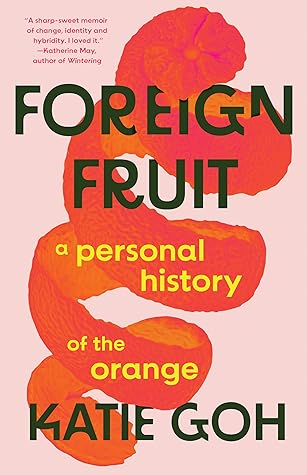
Foreign Fruit by Katie Goh is an outstanding book. I was expecting a microhistory about oranges, or citrus fruit as a whole; I was not expecting an incredibly well-researched social history about culture, society, belonging, searching for one’s place in the world, biases, acceptance, food cultivation, and environmentalism (among other topics). Goh’s book takes readers from Ireland and Malaysa to China, Italy via the Silk Road, France, Russia, and the United States. Readers witness the destructive oppression of Dutch and British colonialism, Communist tyrants, and violent racism. I had never heard of the Los Angeles Riot of 1871, in which nineteen Chinese immigrants were murdered, and no one was held accountable.
Readers are also introduced to the wonders of citrus cultivation; I was also unaware that similar to apples, citrus seeds will not grow true to the parent plant: if you plant a clementine seed you will get some kind of variety of citrus, possibly even a clementine (but don’t count on it). Goh tells us of the origins of many of the citrus varieties we are familiar with today, how the fruit rose to such popularity (aside from being delicious), and its cultural significance in many cultures.
In a fashion similar to Crying in H Mart and My Berlin Kitchen, Goh describes a childhood of feeling like an outsider, growing up in Ireland as the child of an Irish mother and a Chinese-Malaysian father. Her love of her heritage is evident despite her inner struggle to see just where she fits in. Her descriptions of visits to her family in Malaysa are filled with warm childhood memories, and when she returns as an adult she is just as eager to embrace her culture and identity.
This book was a pleasure to read, engaging, informative, completely engrossing. I highly recommend this as a memoir, a microhistory, and as a study of society.
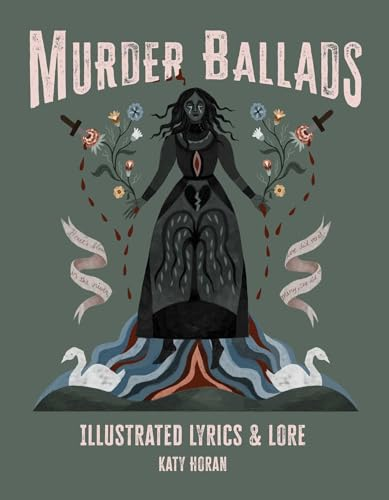
Murder Ballads by Katy Horan is a treat for fans of Dark Folklore and Gothic themes (that’s a gruesome way to begin a review, isn’t it?). I was already familiar with “The Death of Queen Jane” and “The Twa Swans” thanks to Loreena McKennitt. Horan included a list of recordings, so readers can immerse themselves fully into the eerie beauty of these lyrics. Horan includes some backstory to each of the selected ballads; this led me down a rabbit hole of reading the expanded stories behind these ballads. Katy Horan doesn’t just present her readers with a collection of songs, but a unique volume of true crime as well. Apart from the two songs McKennitt produced, I would say my favorite is the rendition of “Where the Wild Roses Grow” performed by Nick Cave and Kylie Minogue. I definitely recommend this darkly beautiful collection to anyone who loves folklore, poetry, and the Gothic and Romantic literature of the nineteenth century. You will absolutely love it. Be warned, though, you will spend hours looking up music videos.
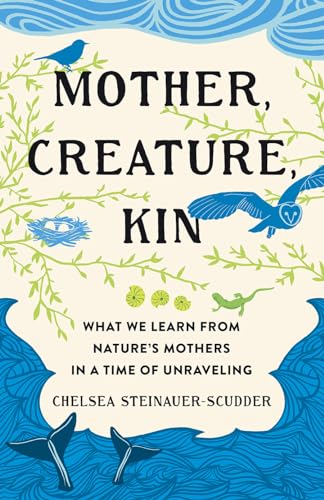
Chelsea Steinauer-Scudder’s beautiful book Mother, Creature, Kin brings to mind the essays of Barbara Kingsolver and Rebecca Solnit, and Diane Ackerman’s A Natural History of the Senses. Steinauer-Scudder explores such topics as climate change, motherhood, seeking (and finding) one’s center as well as one’s place in the world. She asks her readers to consider their roles within the world, reminding us that the greatest gift we can do for future generations is to leave the world a better place than we found it. She acknowledges the challenges in this, admitting her own failings while striving to do better. Mother, Creature, Kin is a book that everyone should read. It is illuminating and thought-provoking, at times heartbreaking, but pulsing with life.
Some of the poems in Alix Perry’s collection Tomatoes Beverly flow beautifully, creating scenes in the mind’s eye. Others are somewhat disjointed and difficult to follow. This may be intentional; poetry is art, interpreted differently by the creator and the reader. Perry opens with a sage reminder for their readers: “Things I should know by now:/ whether to take the news with/ a grain of salt or a spoonful of sugar;/ when to lie and when to brag;/ how to celebrate anything at all. […] Breathe/ shallow to whisper, deeper/ to take blame./ Onerous is the task/ of feigned restraint.” “gravity is/ the weight of all the stories we don’t know/ how to tell,” Perry tells us. Their method of immersing themselves in music for each separate piece is a brilliant idea: by fully allowing themselves to be influences by what they hear, Perry creates unique pieces that retain their own identity while subtlety uniting the collection as a whole.
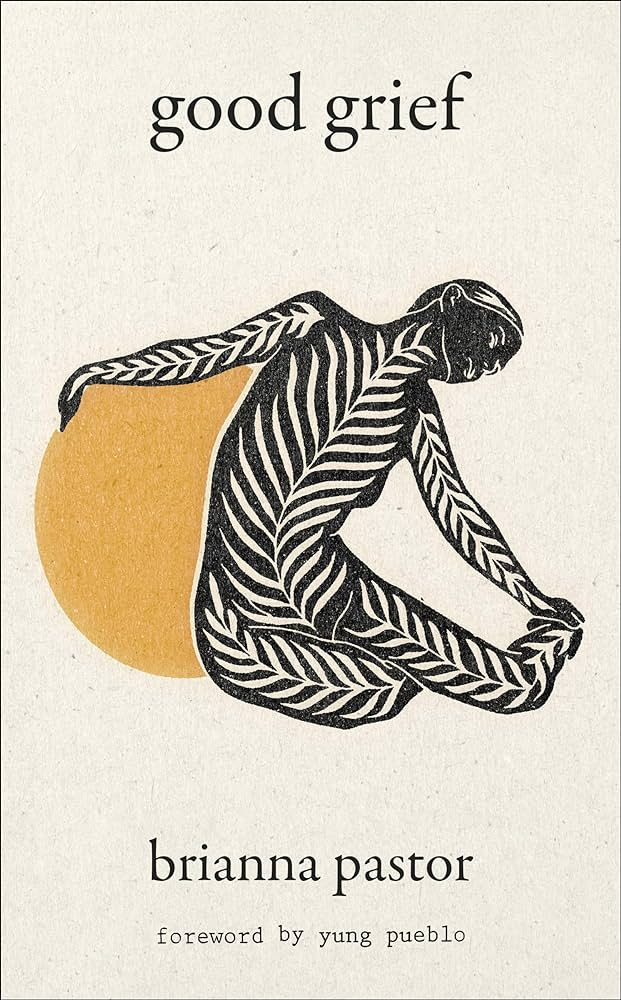
“unconditional love lets you cry flowers” ~Brianna Pastor
Brianna Pastor’s collection “Good Grief” is a jewel of a book. Her poems are deeply personal, but resonate with her readers, creating a sense of camaraderie, letting people know that while their pain is unique to them, they are not alone. Someone else has felt what you feel, someone else has lived your fears and sadness; your feelings are relevant. You matter. “i loved my sadness because it was honest,” Pastor says. She reminds us that “sometimes you walk, and you won’t get there in time. sometimes you run, and it has already passed you, sometimes you get there at exactly the right time, and exactly the right speed, and it still does not happen. when it is for you, it will be for you.” As someone who lives with major depressive disorder, I empathize with Pastor’s thought: “i dread the day these demons come back for me they have gone away to pursue better things but can never find what they’re looking for so here they come, back to me, a place where they are not wanted–for they always stop by unannounced and don’t understand the concept of manners in another person’s home” Truly, I loved this book. Beautifully written, sensitive and moving, it shows the depth of a person’s soul, and the struggle to stay strong.
This read very much like a writer telling a story based on true events. The prose poems were thoughtfully written and had beautiful descriptive wording, but the overall feel of the book was somewhat contrived.



 This is the Mask