Thank you NetGalley and Skyhorse Publishing for the ARC of Niva and Yotam Kay’s “The Abundant Kitchen!”
For a long time now, I have wanted to learn how to can my own vegetables and make my own jams and kombucha, but I am terrified I am going to give my family botulism. This book almost has me convinced I can make my own fermented and preserved foods. The instructions are step by step and include tips on what to look out for to prevent spoilage (or worse). Also, the recipes sound delicious! Rose-Honey Dairy-Free Yogurt? Yes, please. Rose-Lavender and Apple-Mint Kombucha? I’ll take two. And my whole household will appreciate homemade ginger beer. (Don’t even get me started on the mead!)
There is a recipe for pickled butternut squash…I have never heard of that. In fact, I wasn’t aware that you could pickle butternut squash. Beans, cucumbers, beets, onions, even watermelon rind I knew of. And of course, cabbage as sauerkraut and kimchi, both family favorites. At present, the only fermentation I am comfortable with is sourdough. I tend to have a sourdough starter in my refrigerator for a year or so, then end up killing the poor thing by not feeding it. (I take much better care of my cat, I promise.) The Kay’s Sourdough Honey Challah will be the first recipe I try with my new starter.
When I got to the section on making your own miso I knew I had to get a printed copy of this book. Trying to follow a recipe on a Kindle is tricky at best, and I like to add Post-It notes to my cookbooks with my thoughts (or notes on what I did wrong…). This book even has a section on curing meat, which my husband will love. In fact, I may need to buy two and gift one to my sister the chef.
This book is fantastic and will absolutely be added to my cookbook collection. Maybe I’ll even be brave enough to use it!
Thank you very much NetGalley and Andrews McMeel Publishing for the ARC of Amanda Lovelace’s newest collection “the witch doesn’t drown in this one”!
Amanda Lovelace has done it again (as if that is a surprise): she has plumbed the deepest parts of her heart and shared her pain, her anger, her hope, and her love with the world. Her poems tell the stories of women: our struggles, our fears and heartbreaks, our triumphs. She speaks so we can be heard: “if she were a wolf, no one/ would ignore her howls.”
Lest you think women are irrational, or overreacting, know this: “She is not angry/ about the state of/the world anymore/ She is/ simply filled/ to the/ f*cking/ brim/ with sorrow. –but don’t worry, the witch doesn’t/ drown in this one”
She reminds her readers of their strength, even when they are at their breaking point: “If you’re going to cry, then cry/ once you’re finished, / come back to shore and get back/ on the battleground / there is still a war to win, witch.” Keep fighting sisters, she says. Keep raging, and nurturing, and creating. We will not be pushed aside.
Thank you NetGalley and Ballantine Books for the ARC of “We the Women” by Norah O’Donnell and Kate Anderson Brower, it is much appreciated! “We the Women” offers fascinating snapshots of women history has tried to forget. Some of these women were familiar to me from my Women’s Studies classes in college as well as my own reading. Other women, such as the Revolutionary-era wax sculptor and spy Patience Lovell Wright; Civil War heroine Dr. Mary Edwards Walker; Susan and Susette La Flesche, advocates for First Nation Peoples; and the female teams of telephone switchboard operators of World War I, were completely new to me. How is it that these and many other women featured in this book are missing from history books? I minored in Women’s Studies and never heard of some of these women. What is wrong with this society where the work of women–some in service to this country–is completely passed over so we only learn about men and their achievements (or failures and wrongdoings)? Women make up more than half of the human race globally, and yet we and our foremothers continue to struggle to be seen in the shadows. Read this book, learn the names, and give these women their due. They helped to make this country, they helped win wars, they made lasting change.
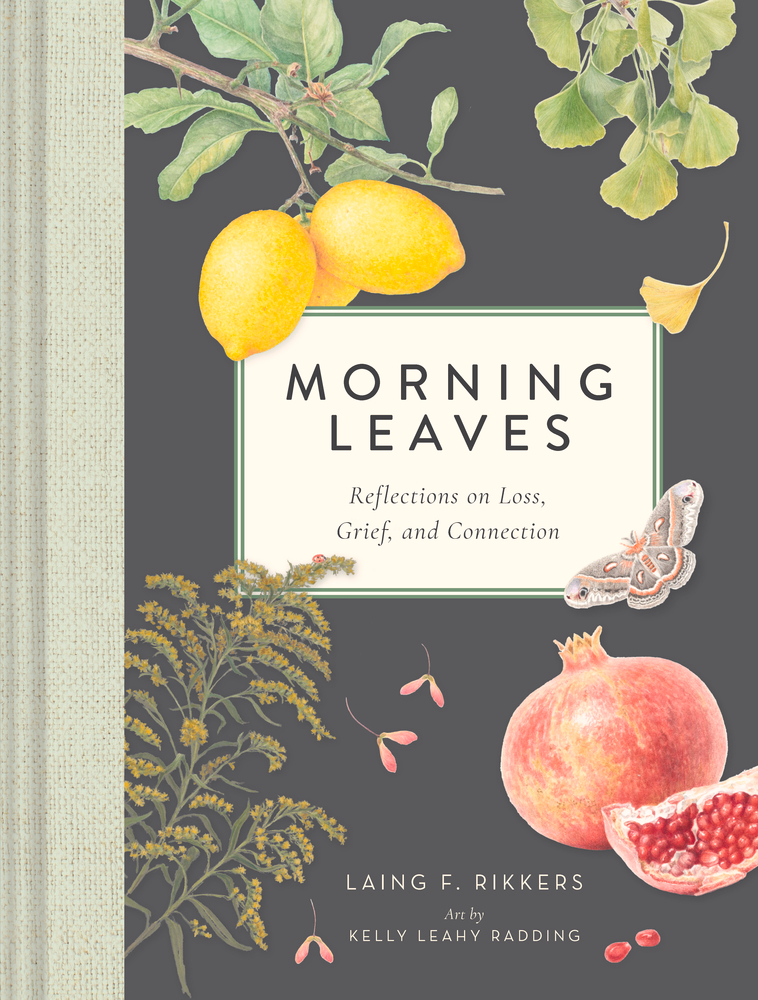
Thank you NetGalley and Red Hen Press for the ARC of Laing Rikkers’ lovely book “Morning Leaves.” I thought this was a beautiful book, though I would hesitate to call it poetry. It gave me more of an impression of being a collection of affirmations, which I do not think took away from the overall message of the book. Two pieces in particular struck me with the overall feel and imagery. “Plum Tree” and “Dogwood,” while not haikus, carry the same essence of those spare verses, the same graceful manner. One verse resonated quite deeply: “The breaks and stretch marks heal and scar, but they are still there. I know where they are.” “Black-Eyed Susan” is especially pertinent to women’s experiences everywhere: “You thought you could keep me down by/ covering me with inches of concrete. / I will crack your confidence and rise up/ right through the middle of your nonsense.” Well said, indeed. From “Cantaloupe: “I may appear dull. / There is nothing to prepare you for the splash/ of color, light, and love you will discover within.” The artwork by Kelly Leahy Radding is exquisite. Her illustrations bring to mind Edith Holden’s “Country Diary of an Edwardian Lady.” Really, this is a lovely book, very enjoyable.
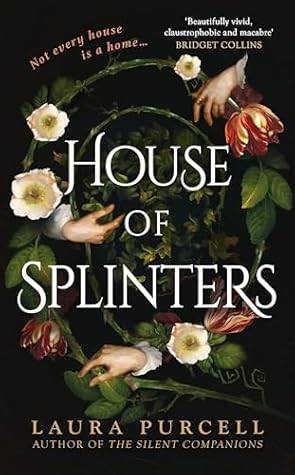
Thank you NetGalley and Blackstone Publishing for the review copy of Laura Purcell’s “The House of Splinters,” it is very appreciated. I have never read Laura Purcell’s writing before, and I can honestly say that I think she is a fantastic writer. She is very descriptive and writes really great scenes. The ancestral house The Bridge is described in perfect haunting detail and Purcell creates plenty of suspense as the story progresses. I did not expect the plot twist close to the end at all. I expected that was the explanation for all of the events surrounding the family, but then the unexplained supernatural events stepped back in, so I’m not sure exactly where the author was intending to take the story, and possibly decided to meld both paths? There is some brief dialogue regarding an ancestor executed for witchcraft whose story appears to be relevant to the plot, but there is no detailed explanation of her story other than what another character says she reads in a diary. I found myself wanting to her more of this woman’s story as I feel it might have made certain occurrences clearer. I felt that there were inconsistencies in the story, but overall it was a good book with plenty of suspense and action.
I received a review copy of this brilliant book from NetGalley and Scribner, and could not be more appreciative!
“…the pursuit of art…by artist or audience, is the pursuit of liberty.” -Ursula K. Le Guin
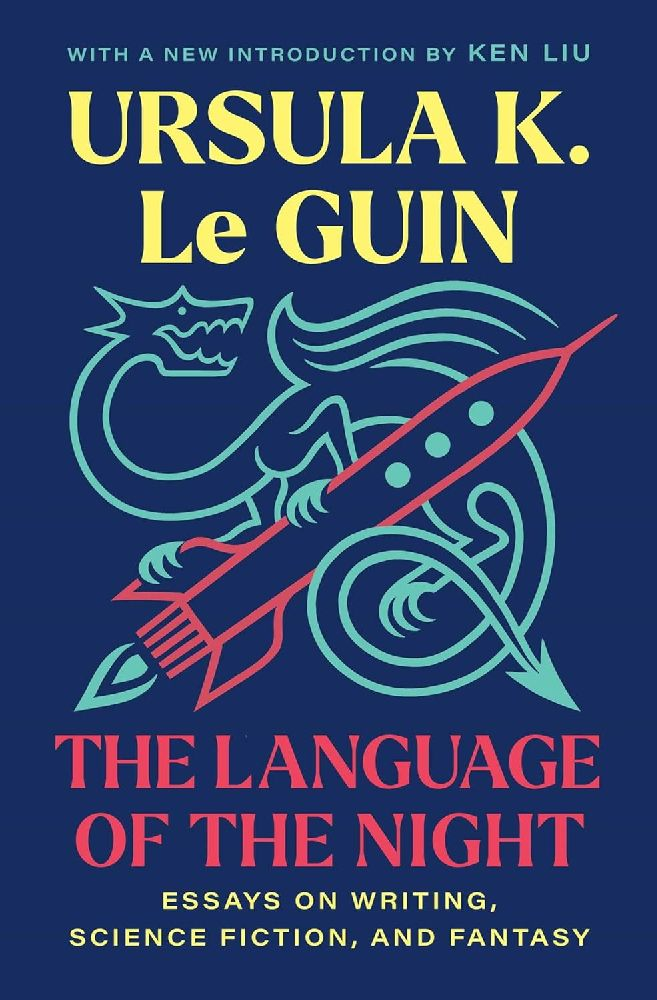
Ursula K Le Guin was a master storyteller. Her work has entertained and enthralled thousands of readers for six decades. I knew her primarily as a SciFi author; this collection of brilliant essays has introduced me to a new Ursula Le Guin, even more talented than I had imagined.
As the subtitle implies, Le Guin discusses her writing craft as well as her thoughts as a writer of SciFi and fantasy. She also discusses feminism, gender, politics, literary criticism, psychology, sociology, and so much more. I had requested this book as a writer looking to learn from one of the greats; I finished the book as a student of the Humanities. I was enthralled while reading her thoughts and took pages of notes. It has taken me too long to write this review; I honestly didn’t know where to begin.
Imaginative fiction is often considered to be frivolous, silly work that should be left behind as we become adults. (Try telling that to the hordes of Dark Fantasy and Romantasy fans of the world, I dare you.) Le Guin emphasizes the importance of imaginative fiction: “Those who refuse to listen to dragons are probably doomed to spend their lives acting out the nightmares of politicians. We like to think we all live in daylight, but half the world is always dark; and fantasy, like poetry, speaks the language of the night.” Allowing ourselves to experience the make-believe world enables us to manage the real world. If we can dream, we can do.
“The story […] is one of the basic tools invented by the human mind, for the purpose of gaining understanding. There have been great societies that did not use the wheel, but there have been no societies that did not tell stories.” Storytelling is the history of humankind, and its future. Without stories, we would not exist.
When discussing the value of faerie stories, Le Guin stresses “Children’s imaginative play is clearly a practicing at the acts and emotions of adulthood; a child who did not play would not become mature,” and “The use of imaginative fiction is to deepen your understanding of your world, and your fellow men, and your own feelings, and your destiny.” To read fiction is to imagine who we can be, Le Guin says.
Ursula Le Guin believed “…that maturity is not an outgrowing, but a growing up: that an adult is not a dead child, but a child who survived. I believe that all the best faculties of a mature human being exist in the child, and that if the faculties are encouraged in youth, they will act well and wisely in the adult, but if they are repressed and denied in the child they will stunt […] the adult personality.”
In discussing feminism, Le Guin said, “One of the great early socialists said that the status of women in a society is a pretty reliable index of the degree of civilization of that society.” I wonder what that person would think looking at today’s world. Le Guin doesn’t shy away from the faults within her own genre of choice: “Isn’t the “subjection of women” in SF merely a symptom of a whole which is authoritarian, power-worshipping, and intensely parochial?” In other words, art imitates life, and we need to do better. As Le Guin succinctly said, “I didn’t see how you could be a thinking woman and not be a feminist.”
“The Language of the Night” claims to be a book about writing, and it is. It is a book about writing as a means to authenticate life.
Let me begin by expressing my sincere thanks to NetGalley and all of the Publishers for the opportunity to read all of these books. I am truly grateful and love writing these reviews. I’m just rather lax in uploading them promptly. (Actually, that’s not entirely true; they are posted on NetGalley and Goodreads relatively quickly. Here, not so much.) There are a few here (!), so let’s dive in!
Same by Hannah Rosenberg (2 stars)
“Same” by Hannah Rosenberg is a celebration of simplicity. Her poem “Me as a Woman, Me as a Girl” closes with “I’ve been waiting my whole life to take car of someone like you,” emphasizing that may of us become the adults we needed in our lives when we were children. She speaks of her daughter in “Generational Drama”: “I can teach her hat she is a light,/ and that she doesn’t have to dim herself/ for anyone.”
“Old and Wild Things” reminds us that “with all of the things that make us wild and old,/ we are a thing of beauty, too.” Rosenberg tells us that we are our own heroes: “Suppose you thought, from that very first day,/ I’ve been the hero of my own story. I’ve been the/ one who’s saved my own life.”
A line from “I don’t know much about human biology” has stayed with me, and I feel that many people can appreciate this sentiment: “I don’t know much about human biology, but it is/ kind of comforting to know that inside, we’re all a mess.” Fitting words for this day and age, I think.
The World After Rain by Canisia Lubrin (2 stars)
“The World After Rain” is Canisia Lubrin’s elegy to her mother. Her poems give us the sensation of how it feels to be floundering, drowning in emotion when faced with such a loss. There is anger as well as sorrow in the poems, hurt and regret, such emotions as one feels following any kind of loss. When the floodgates of sorrow open, these kinds of poems are born.
A Bright and Borrowed Light by Courtney Kampa (2 stars)
Unfortunately, this collection did not really speak to me, and I cannot say why precisely. Some lines struck me as particularly noteworthy, such as “Beauty is what the soul has made suffice;” and “How little/ love is. How worth everything.” Brilliant, really. “How to Make Love in a Poem” is probably my favorite in the collection, less for the subject than for the word play. The poem “It’s You I Like” is a painful reminder of all that is wrong in a world where children have to practice safety drills in school. These poems are well-written, and I can recommend this collection, but it really wasn’t for me.
How About Now by Kate Baer (4 stars)
I am a decided Kate Baer fan. I own two of her other books and was gleefully excited to receive this ARC from NetGalley and Harper Collins (Thank you!). I loved this collection, as I expected I would. “Marriage Poem” is a close reflection of my own marriage, except my husband and I have 5 children. “Alice at Sixteen” is a blackout poem taken from Alice in Wonderland, and it is superb. Baer reflects on knowing oneself: “How simple it must be to wake up knowing/ who you are, what you want.” “One Day” is about the beautiful and very painful process of watching your children grow up. Benjamin Franklin once said, “Nothing is sure but death and taxes,” but I think Kate Baer said it better: “We can’t avoid it: mothers, death, and poetry.”
The Book of Alice by Diamond Forde (2 stars)
“The Book of Alice” by Diamond Forde is a collection of poems describing the shock of leaving home and heritage behind; the pain and paths of first love; and questioning the world as people clamber over the roadblocks of life. These poems recall the horrors and atrocities of slavery and its legacy in present-day lives. It is a history that needs to be remembered, and its victims and their descendants honored.
In Storm & Stillwater by Ifunanya Georgia Ezeano (2 stars)
I received this as an ARC from both NetGalley and Querencia Press! This collection fell rather flat for me. There were some beautifully written lines that I copied into my commonplace book; my favorite being “You remember you are not a soldier. You are/ just a wild child life is taming,” something I feel we should remember; we all need to be kinder to ourselves, and in doing so, we can be kinder to others. Unfortunately, overall, this book felt like a standard “angry poet finds catharsis in writing” collection. I didn’t dislike it, but I would like to see more originality.
Patchwork by Catarine Hancock (3 stars)
Catarine Hancock’s book “Patchwork” is a collection of heartfelt, hopeful poems. In them she reflects on relationships that blossom, bloom, and fade, showing both her vulnerability and her strength. She shares despair and hope, and reveals her journey back to her own self after sharing it with another person, the wrong person, for so long. Hancock’s poems are beautiful and moving. This is a lovely collection.
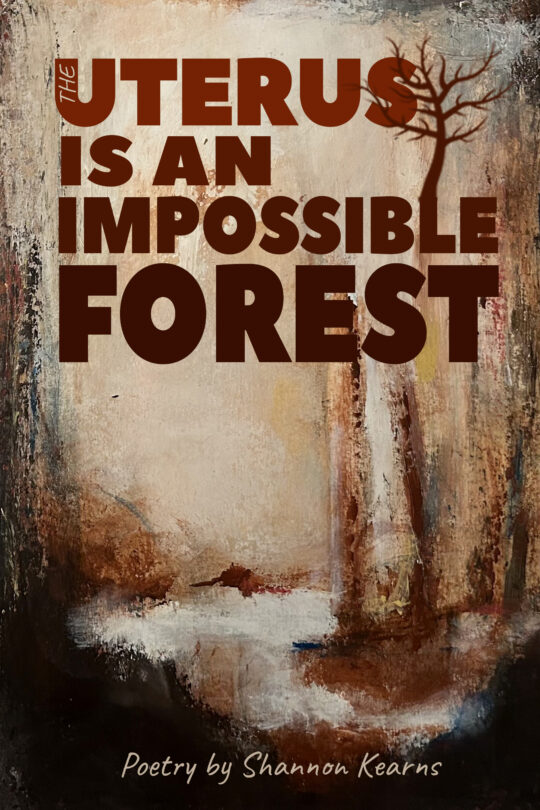
The Uterus is an Impossible Forest by Shannon Kearns (4 stars)
I loved Shannon Kearns’ “The Uterus is an Impossible Forest.” I feel that Kearns’ writing holds the same taut imagery as Sylvia Plath’s work as she writes about women’s experiences with Life. Kearns’ poems often have abstract formats; “Mad Woman” is brilliantly presented in a pattern of crossed out words, not exactly a blackout poem, but something more unique. The poem “Yellow” is reflective of Charlotte Perkins Gilman’s classic, and fits the aesthetic of Monica Robinson’s incredible “Peeling the Yellow Wallpaper.” “Alchemical Reaction” tells of the days (and nights) of early motherhood when your baby is a fragile, almost ephemeral treasure; “Hair” reminds me of combing my own daughter’s hair when she was a little girl with wheat-colored waves falling to her waist. Now she is a married mother of three. I copied “My Body is a Church” into my commonplace book in it’s entirety: “oh/ how I want/ to say yes/ not to a god/ or the many gods I have/ placed/ on my altar (god of shame, god of good, god of nothing)/ how I want to say/ yes/ to a garden/ of spindly yearning/ that desiccate/ the architecture/ of that good/ and that god/ and grow like ivy cracking marrow—”
Kearns’ words reflect the experiences of so many women: “I have been taught/ my yes is a tamed wind/ don’t let it topple./ I have given es over/ and over until all that’s left/ is a hollow egg,/ brittle and bearing.”
I cannot recommend this book enough. I received the ARC as an e-book; I will be purchasing this in print form to add to my collection. This is an outstanding collection. Read this.
The Garbage Poems by Anna Swanson (4 stars)
This collection should be read with Elisabeth Tova Bailey’s “The Sound of a Wild Snail Eating.” Different genres and contexts, but both are outstanding works of art created in the aftermath of chronic illness. Following a debilitating head injury that cost Swanson her entire way of life, she came up with the idea of creating poetry crafted from the rubbish she found lying around. In a manner after “found poems,” she created a narrative reflecting her hopes amid illness, willing herself back to health. I love this concept. I write found poems, but I take them from other poems, or lines from books. I would never have thought to gather up just stuff, and craft a poem of words collected off cans and bottles and packaging. Swanson is brilliant in this. The creative concept aside, Swanson’s poems are fantastic. I understand the print edition will also have illustrations by April White; I intend to look this up so I can experience the full effect of Swanson’s vision.
Lullabies for the Insomniacs by Ella Foutz (3 stars)
As someone with Major Depressive Disorder, I can sympathize with Ella Grace Foutz’s struggle with Bipolar Disorder. I feel very fortunate that I had a doctor who listened to my symptoms and didn’t tell me “it was all in my head,” (which is ironic considering it is in fact associated with the brain). I feel so grateful that I have never struggled as much as others have; Foutz’s story is harsh, raw, nerve endings on fire as she fights to quiet the noise, to find peace, to just sleep. As she illustrates in “Unicorn,” a problem with mental illness is that you don’t look sick, and if you don’t look sick, you must not be sick. Meanwhile your brain is zooming through the galaxy collecting trinkets like a crow as otherworldly songs sing a cacophony in your skull. She lays out the harsh reality in “Heritage”: “Being sick is not a superpower./ Dying on the inside is not some noble battle that must be fought/ for the greater good of the art. […] Madness is not a contingency of greatness/ Insanity is not a prerequisite for genius.” We are not far away from the days when someone with a mental illness was “insane” and shut away from the world in asylums. We are still living in a time where mental illness is considered a joke, fake, or it makes someone less than. Those of us that live with mental illness don’t choose this, and if we had a choice I can guarantee most of us would choose otherwise. Consider this: “I am not my mind”–a very useful mantra. /Except,/ Um./ of course I am.” While waiting for her diagnosis, Foutz struggled to separate herself from her illness. Eventually she comes to understand: her illness is part of her, but it does not define her.
Coffee Stains On My Books by Stefania Lucchetti (3 stars)
In “Coffee Stains On My Books,” Stefania Lucchetti weaves Greek mythology with episodes of modern life. I found some of Lucchetti’s pieces to be very moving; “Teenager” made me misty-eyed thinking about my own sixteen year old. “Words” describes what draws writers to their craft, the allure and the need to capture the words floating around us each day. “Art, faith, and hope” reads like a prayer itself: “There is nothing more powerful than hope. / Hope expressed as art, / hope expressed as faith, / hope expressed as magic / and art and faith and hope expressed as prayer. / This is the soul of magic.” Lucchetti has given her readers a lovely collection of modern-day mythology, reflective of any person’s thoughts, loves, and life.
Bramble by Susan Stewart (4 stars)
“Bramble” by Susan Stewart is a collection of poetry that walks readers through life events viewed as an allegorical briar thicket. Who in their life has not felt like they are fighting their way through briars at least once, pierced and scratched by thorns made up of events we can’t control? “Ps. 102” is a beautiful vignette of a moment, simply written, lovely in its simplicity. “Waterfall near Corchiano” describes a painting in exquisite detail, while “The Horseshoe Crab” is both melodious and melancholy. “Minor Musics” reads like an enchantment: “A bobbin, a needle, a thimble, and chalk. / If it’s too far to run, it’s too close to walk. / A needle, a thimble, chalk, and a bobbin. / The cheer of a robin, now what was that?” What kind of spell will this chant cast?
In “Lucretius,” Stewart reminds us that there is hope despite our tribulations: “…One thing will clarify another, / and dark night will not rob you of / your way…” I copied so much of this book into my commonplace book, I can’t really do it justice in my review. I found this book truly beautiful and thought-provoking. This is one I will turn to again and again.
Ajar by Margo Lapierre (4 stars)
Margo Lapierre’s “Ajar” is a view of life reflected through a prism. One poem brought Charlotte Perkins Gilman’s “The Yellow Wallpaper” to mind: “Psychosis is a living metaphor. / Late at night, the walls emanate radio music. / Patterns erupt like nerves.” It is only one small step from here to tearing the wallpaper off the free the music locked within. “Amethysts & Satellites” is the scattered thoughts of a mind too busy to focus on one point yet returns to that thought again and again despite the noise within. Lapierre paints words beautifully here: “…cranes erecting towers mine / amethysts from the cloud cover. / Rain. Let us have it.” And later, “Advice splinters into puddles, / the sky sits in her rain, / bellowing orange.” In “Mental Kaleidoscope: Where There’s Wood There’s Fire” she tells us “a cut mind coils / like tongue around cavity”
Lapierre’s poems are sharp; they catch you and force you to bear witness to life with mental illness: its highs and lows, and the dazzling sense of being between them. Lapierre has given her readers an invitation to look into her world with all its fractures and flaws: “When my name was dropped on my head in spotted sun- / shine, I mistook real for unreal and I haunted me…Each time as a child I refused to play the Ouija board, / it was to make sure nothing haunted me but me.”
I thought this was an incredible book. I have been recommending this book to all of my reader friends, and I definitely want to read more of Lapierre’s work.
If you have stuck around long enough to get to the end of this post, thank you!! More reviews are forthcoming; I just finished Ursula K. Le Guin’s phenomenal essay collection “The Language of the Night,” I am currently reading “Lone Yellow Flower” by Erika Gill (thank you Querencia Press!), and “Pride and Pleasure: The Schuyler Sisters in an Age of Revolution” by Amanda Vaill (thank you NetGalley), and have a dozen more ARCs waiting. I also think I have missed some reviews here; I need to check my NetGalley dashboard *sigh*
Anyway, this is just to say that there are plenty more reviews coming! I will also try to remember to post about the books my sister and I have read in our two-girl book club (Muffin Wallopers unite!) Thank you for visiting and for reading my ramblings. Stay safe, stay happy, and be well!
As I am still mostly confined to the couch recovering from surgery, this seemed like the perfect opportunity to load another update on my bookish goings-on. This is going to be another big one, so fortify yourself with your beverage of choice, settle in to a comfy seat, and here we go…
Wolves in Shells by Kimberly Ann Priest: (3 stars) Kimberly Ann Priest’s “Wolves in Shells” is a story about survival. It chronicles Priest’s escape from an abusive marriage and her journey to find herself in the aftermath. It is a story of seeking home, for as Priest says: “Home/ is something to fight for until/ it’s predator-free.” Everyone has the right to feel safe in their home, whatever their definition of home is. “To love a home is to let it evolve/ like a body, to participate, to ask what it wants to be.” “Says the Mollusk” reminds us that home is wherever we feel complete: “I don’t want to go home-/ not forever, / but still/ I want to feel/ that spiraling sound/ in my body/ when you touch me.” Her poem “Among the Fingernail Clams” gave me pause. Often, we think that the important things are the big, noteworthy events: the promotion, the new car. We should never lose sight of the fact that the simple things are equally as rewarding, that living quietly is nothing to be ashamed of. “–the shallows/ may not be a realm/ of power/ but here the fettered/ teem against the shoreline/ considering.” Parts of the collection are deeply upsetting, as a story of survival will often be. Parts are inspiring, and a story of survival always is.
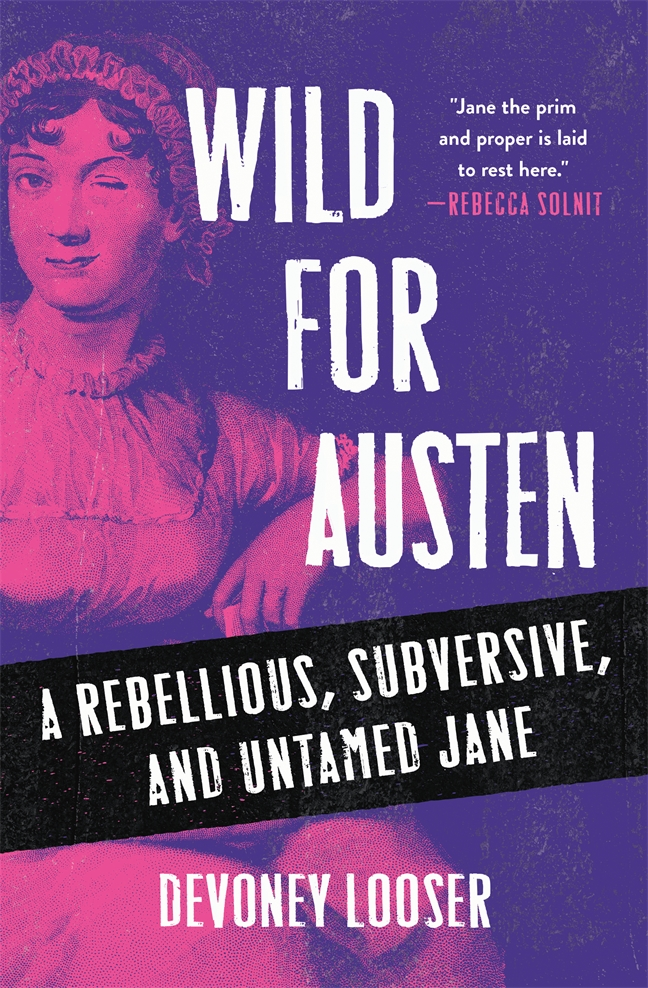
Wild for Austen by Devoney Looser: (4 stars) I have a confession: I don’t like Jane Austen’s books. Okay, that’s not entirely true. I absolutely love “Persuasion.” I have two copies of the book, and two versions of the film. (The 1995 one with Amanda Root and Ciaran Hinds is the best. This is a hill I will die upon.) That being said, I am interested in Jane Austen as a writer. Her books are still wildly popular today and new film adaptations are coming out regularly. So, while I may not necessarily like her work, I definitely respect it. Devoney Looser’s biography is a well-researched presentation of this master of storytelling. Looser sets out to disabuse Austen readers of the notion that she was a demure, meek, quiet little lady writer penning sweet romances. “We must shed for good the old, tired stereotypes of safety and simplicity that still cling to Austen. We can, and should, continue to investigate new and better avenues through which to grasp her powers as a writer-and her power over us.” I don’t know if Austen would have called herself a feminist (the concept of feminism as we know it did not exist in Austen’s time), but as Looser points out, “Austen’s Juvenilia written…when its author was between eleven and seventeen years old, consists of 74,000 words of unpredictable, raucous, proto-feminist snark. […] The dazzling thing about Austen’s Juvenilia is that it has absolutely no truck with young women speaking softly.” Looking at Austen through Devoney Looser’s lenses gives me a greater appreciation of the “Why” behind Austen’s stories: why she created her characters with the personalities they have, why she wrote the type of stories that she crafted. I highly recommend this book for Austen fans, or for people that appreciate the longevity of her vision.
The Pleasures of Wintering by Erin Niimi Longhurst: (3 stars) Part memoir, part “how-to” guide, Erin Niimi Longhurst’s lovely book “The Pleasures of Wintering” expounds on the beauty of this often-reviled season (I am guilty of this myself). Winter is dark, and cold, and generally unpleasant, but it doesn’t have to be. It is a season for turning inward, for hot mugs of tea and soup, for curling up under cozy blankets and reading or binge-watching favorite television shows. Longhurst offers several ways to thrive in this challenging season, including simple rituals of self-care and emotional healing, creativity, and introspection. This book is simply written but not juvenile; it is created to draw readers into its warmth. This book is charming. It has gentle, practical advice and beautiful photos. Overall, a delightful read, one I will be recommending to others as winter creeps closer.
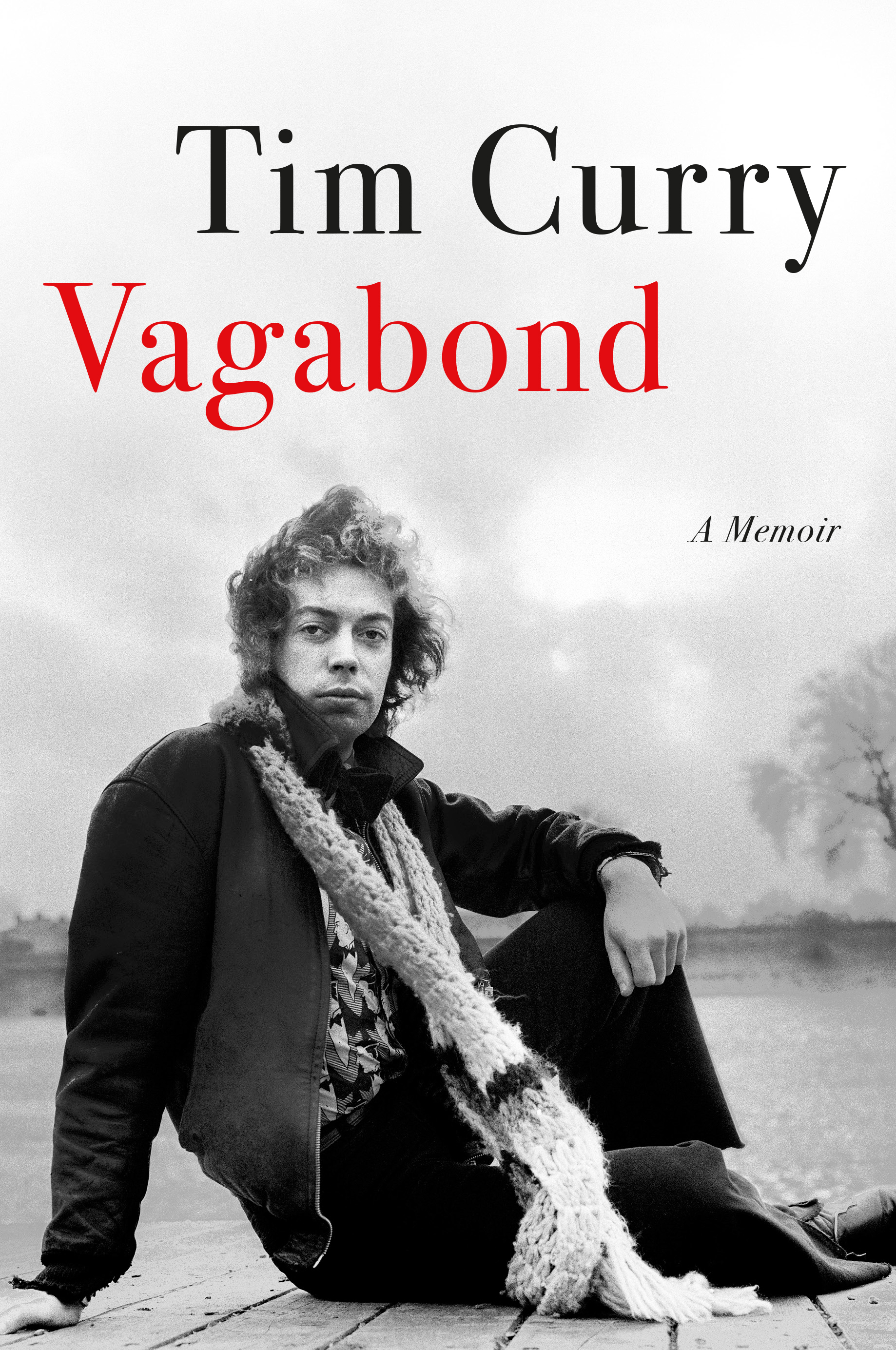
Vagabond by Tim Curry: (4 stars) Tim Curry is my favorite actor; I have seen all of his films (including the not-so-great ones), and if I didn’t love the film, I definitely loved his performance. He brings such depth to the characters he plays through his gestures, expressions, and his tone of voice. His memoir is a fascinating journey through the stages of his career, from secondary school through university and out into the world of triumphs and tragedies. He tells of lucky breaks, gut-wrenching failures, plans that panned out and ones that fell flat. Add to this a devastating stroke in 2012 and you have a story of determination fueled by wit, humor, and a genuine love of acting. One of the things I found most interesting in this memoir related to something I have often wondered about, namely how a celebrity feels when approached by fans that think they know the actor because they have seen their movies/TV shows, etc. I adore Curry as the Lord of Darkness, but I am quite sure he has no grand plans to plunge the world into darkness, and I hope to god he doesn’t act like Pennywise (!). He clearly appreciates his fans, but also makes it clear that he doesn’t owe them anything. The aggression celebrities sometimes face must be rather daunting; it’s a testament to how much they love their craft that they keep going. I read Vagabond in a day, it was that good. (I stayed up way past my bedtime to do so, and have no regrets). Curry’s writing style is breezy, witty, and fully engaging. This is a must-read for any of Tim Curry’s fans. It will introduce you to the person that occupies the minds of your favorite characters.
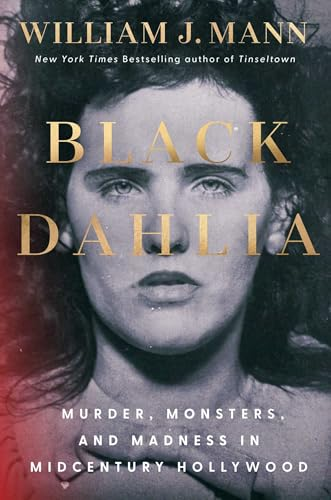
Black Dahlia by William J Mann: (4 stars) William Mann’s “Black Dahlia” s an interesting and informative (if gruesome) book. I don’t read a lot of true crime, but this was definitely a good one to dive into. Mann’s research is meticulous, and cleared up some misunderstandings I had regarding this cold case. To begin with, I was under the impression that Elizabeth Short was an actress; she was neither an actress nor a model, in fact she was a drifter, perhaps seeking to make her way in Los Angeles but not knowing how. I was also unaware of the details of her murder; horrific doesn’t begin to describe it. Despite evidence to the contrary as found by the coroner, I hope she passed quickly. Elizabeth Short’s murder has yet to be solved, it probably never will be. A major contributing factor to this is politics. Detectives in the LA Police Department spent hundreds of hours investigating, only to have the county Sherriff’s department run roughshod over their investigation, tamper with evidence, pay off witnesses, and leave a grieving family without closure. Detectives Harry Hansen and Finis Brown are the heroes of this story: they gave their all despite the roadblocks the Sheriff’s office placed in their way. That they never solved the case bothered them long after their retirement. I appreciate that Mann doesn’t set out to solve this case. In his own words, this is an examination of Elizabeth Short’s life, what may have led up to her death, and what happened after. He may have his own thoughts about who the culprit was, but he doesn’t say. He lets his readers make their own decisions. I am also very grateful that William Mann doesn’t engage in any victim blaming, as the press did all those years ago when Elizabeth Short was identified as the victim. He approaches Short’s actions as a witness himself, describing the people she met and how she spent her time. He questions what may have made her make some of her decisions, but never once implies that her death was her own fault. It’s a refreshing change. The world may never know who killed Elizabeth Short, but William Mann’s “Black Dahlia” makes sure that it will never forget who she was.
Sisters in Death by Eli Frankel: (4 stars) I read Eli Frankel’s “Sisters in Death” on the heels of William Mann’s “Black Dahlia,” and was again pulled into a well-researched and engaging, if disturbing, exploration of a true crime cold case. Most people will recognize the moniker “Black Dahlia,” though they may have many misconceptions about the woman behind the image created by the press. Elizabeth Short wasn’t an actress or a model, and according to her friend Anne Toth, was not a femme fatal or a sex worker. She was simply one of the may women that headed to Los Angeles seeking something that she couldn’t find back home (in Short’s case, Medford Massachusetts). She met a terrible death by an unknown assailant, and her murder is unsolved to this day. Thanks to the sensationalist press, her memory lives on, though her friend Anne Toth stated that no one ever called her Black Dahlia. Leila Welsh is a complete unknown, except perhaps in Kansas City where the well-known and much-loved and respected elementary school teacher was murdered in her own bedroom steps away from her sleeping mother and brother. How are these two women connected? Leila Welsh never went to Medford or Los Angeles, and Elizabeth Short never went to Kansas City. Both women died gruesome deaths, and their murders are still unsolved. Similarly, investigations into their murders were hampered by corrupt politics while city detectives tried their utmost to solve the cases. Their connection, as Frankel illustrates, is a man named Carl Balsiger. Elizabeth Short went on a few dates with Balsiger in Los Angeles. Leila Welsh grew up in a neighborhood close to Balsiger’s, and they spent summers at the same country club, and attended the same college. Carl Balsiger was one of the many suspects in the Elizabeth Short investigation; however, he was not a suspect in Leila Welsh’s murder. In fact, thanks to corrupt politicians, Leila’s brother George was hauled into court twice to stand trial for her murder despite there being no evidence to support the accusation. Eli Frankel tells readers about Leila Welsh from childhood to her early adulthood. He describes her murder (trigger warning: it is very graphic, proceed with caution), and he details the political fracas that not only nearly killed her brother but also let the investigation of her murder just…peter out. Without sensationalist press to feed the flames, public outrage over Leila welsh’s murder faded away. Neighbors still lived in fear, George Welsh and his mother moved to Texas to start over, law enforcement officials in Kansas City were shuffled around, some suspended, and no one was brought to justice. Frankel describes parallels between Leila Welsh’s and Elizabeth Short’s deaths, and explores why Balsiger was considered a suspect in Short’s murder. This book asks as many questions as it answers. It’s a suspenseful whodunit, definitely worth reading. Caveat: if you read it in tandem with a book about Elizabeth Short, you will find some repetition; Frankel researches the lives of both women thoroughly.
The Improbable Victoria Woodhull by Eden Collinsworth: (3 stars) How to describe Victoria Woodhull? Daring? Audacious? Driven? She was all of these and more, and Eden Collinsworth presents readers with a fascinating biography of a woman who dared to push the boundaries of Victorian society. I knew Victoria Woodhull had worked as a spiritualist, and had started an investment firm and run for president. I did not know that she had also started a newspaper. It stands to reason that she had been a suffragette, however, Collinsworth points out that Woodhull’s participation in the movement may have been more about furthering her own agenda rather than about securing rights for all women. She was a master at reinventing herself; when she could no longer draw customers in with her psychic abilities (real or fraudulent), she became an investment broker, finagling support from financial moguls like Cornelius Vanderbilt. She and her sister founded a newspaper dedicated to topics such as the suffrage movement, free love, sex education, and legalized prostitution among other subjects. Following her unsuccessful run for president Woodhull faced various financial setbacks which resulted in her moving to England to reinvent herself yet again. Collinsworth tells Victoria Woodhull’s story in a clear and concise manner. There is a lot of material to present, and Collinsworth’s text is not weighed down by speculation or tangents. We read about a woman that was far before her time, and even if she didn’t do everything she set out to do, she gave it a shot.
Economica by Victoria Bateman: (5 stars) This book will have a special place on my shelf with Rosalind Miles’ “Who Cooked the Last Supper” and Philippa Gregory’s “Normal Women.” Victoria Bateman explores centuries of women’s contributions to human society, from the first “hunter-gatherer” societies to the employment and wage gaps of today. She takes a deep dive into societies in which women were equal, often sacred beings, illustrates how that equality was shattered, and explains how women have continued to support and shape societies and the success of those societies based on how women and their work are valued (or not in many cases). Women comprise at least half of the human population (probably a bit more, actually) and yet we have had to fight for the right to have the ability to work outside the home (while still doing 90% of the housework and childcare), the ability to go to school, (elementary and high school for some young girls, never mind college). Woman founded businesses are scrutinized and then celebrated when they fail. To this day, we still don’t have agency over our own damn bodies. Books like “Economica” show just how valuable we women are, how intelligent and capable we are, and how very flawed society is. I very strongly recommend this book. It should be required reading in colleges.
Well friends and fellow booklovers, we are caught up for now. I still have several volumes of poetry patiently waiting to be reviewed, and when those are done, I will share them with you as well. Some are for NetGalley, and some are for Querencia Press. As always, all thoughts on the books are my own, these posts are not sponsored (apart from the generous gift of the books by the publishers via NetGalley), and all images are from Goodreads. Thank you again for reading, and I hope you find these posts interesting and/or informative. Take care!
I have done SO much reading the last couple weeks, and I LOVE it. This week has the potential for more reading as I am home recovering from minor surgery and have no agenda apart from reading and sleeping. It’s going to be a great week.
Practically all of the books I have finished lately were NertGalley ARCs, THANK YOU NetGalley and all of the publishing houses for giving me this opportunity. I have read books in genres I don’t normally read (i.e. True Crime) and have learned so much. I love doing this kind of stuff. I have a lot to share, so without further ado…
Poppy State by Myriam Gurba: (3 stars) I found this book to be very meandering. Gurba ultimately brings her wandering stream-of-consciousness thoughts full circle, but this book reads like a maze of ideas. While Gurba’s writing is very good, parts of this book felt like they didn’t quite fit the narrative she was presenting, almost as they were written as afterthoughts. The style overall reminded me of Maria Popova’s book “Figuring,” exploring different people and times to support the main focus of the book (Maria Mitchell for Popova, Gurba herself for this book). I won’t say that I did not like this book, but I feel that it is one that needs revisiting so a reader can fully appreciate all that Gurba is saying, and understand what she doesn’t say in text, but alludes to.
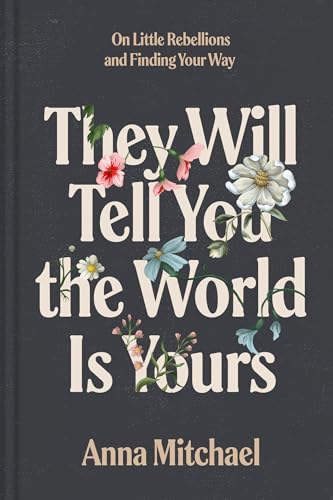
They Will Tell You the World is Yours by Anna Mitchael: (5 stars) “Why do we seek? Why has the world convinced us that a better version of ourselves is waiting to be found? Why should we think anything “out there” is better than the spirit we have lying in wait, in our own heart?” -Anna Mitchael I absolutely loved this book. It feels like Mitchael wrote this book to speak to me directly, holding my hand as we walked through every stage of a woman’s life from birth to girlhood to adulthood, weathering heartbreak and celebrating success, hurting, healing, laughing, loving, and longing every step of the way. In these pages Mitchael feels like the friend you have known all your life, is someone you have shared secrets with and have spent countless hours talking to, drinking gallons of tea over dozens of years, that one person that truly knows you because she shares the same sentiments, dreams, and fears: “They will not tell you the important things can be measured, but you will figure it out soon enough.” You learn to question your worth by how well you perform in relation to others. And when you do succeed, you are reminded that you still haven’t done enough: “They will say what’s good can always be made better.” One day, though, Mitchael reminds her readers, you will realize you are worthy, you will stand up and proclaim your worth to others: “The choice is clear, it has always been clear–their way or the highway. […] you thank them for their time and start moving toward the door, willing yourself to keep walking so you won’t be tempted to turn and take the title […] when your boss says ‘…we will find money for the raise, too’.” Mitchael reminds us to relish small joys: making pancakes for a friend, celebrating our birthday in our own way, a perfectly chilled glass of white wine, the warmth of your partner’s hand in yours. “They Will Tell You the World is Yours” is a beautiful book, one I will return to again and again. There is so much to be found in it, and it encourages us to pay attention to the details in our own lives that we may miss.
Bookends of Life by Sonja Koch & Dalys Finzgar: (1 star) This volume reads like a children’s book; each poem is made up of short little rhymes that feel very juvenile to me. I do not know what the focus group for this book is. If it is adolescents beginning an exploration of the Pagan or Wiccan path it may be a good introduction. For adults, it is too childish and saccharine.
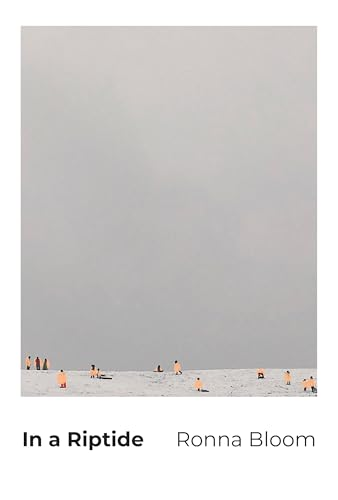
In a Riptide by Ronna Bloom: (3 stars) “I thought of the four people the Buddha met in his travels sick person, old person, dead person, happy person with nothing. And I felt like all of them.” –Ronna Bloom
This brief volume is a moving exploration of the emotions we experience and encounter as we move through our days. I feel that the author may have experienced a great deal of grief and writing this was part of her healing process. My favorite poem of this collection “One Night” reminds us that change is inevitable: “In one minute, I slept a whole night./ In one night, I slept a whole minute./ The world changed completely/ while I was gone.” She crafts such beautiful lines: “[…] you could be a lesson or a letter/ or an orphaned joy carried on the wind;” and “[…] the birds are flying through me/ in their beautiful green and blue birdsmaids’ dresses/ singing our song.” One line in particular has stayed with me, and I will probably pin it to my vision board: “I need to write closer to the truth, not the wished-for truth.” I have not read any of Ronna Bloom’s other books; I see on Goodreads that she has several others. Bloom is a writer I will be seeking out to learn from, both as a writer and as a student of the world. Until then, I will “unperson,” and perhaps find peace with myself.
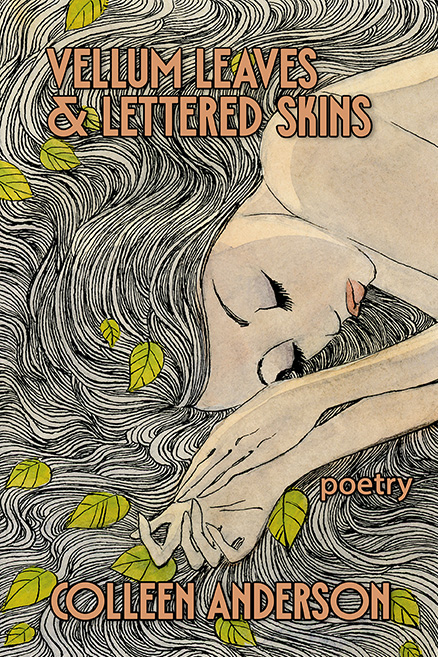
Vellum Leaves and Lettered Skins by Colleen Anderson: (5 stars) I absolutely love this book. Colleen Anderson has woven a tapestry of greed, love, longing, desire, despair, and magic. We are held captive in the tower with Rapunzel breathing in air dusty with books and fragrant with bouquets of appeasement. Anderson uses Rapunzel’s tower as an allegory for depression and the confines sufferers of this illness experience. All her life Rapunzel longs to break free from the tower, to escape and feel the fullness of a life lived free and discover who she is. “What am I when I stop growing,” she wonders; “will she cultivate a golden treasure/ consume my songs and aspirations/ or see me as an unsightly weed?” If Rapunzel can’t see herself as a whole person, will anyone? “My feet are nothing/ but stone, sediment,” Rapunzel says. She is frozen, fixed in place within the prison of the tower. My favorite poems in the collection are “Gorgon” and “Sedna,” modelled on two mythical women ill-used by man but refusing to be victims. Their anger fuels their power, punishing sinners in their wake. “Forgotten Language” reads like an enchantment being cast: “[…] mouse beetle butterfly bee/ learn to speak in ancient tongues/ scribe the language with stone and nail/ […] we breed in wild green, flowers/ seeds, live free, move mostly unseen/ winds serenade, leaf litter/ trees, hives hold our homes/ […] we speak with you/ a shade to the outside world/ you might never be free/ but we will listen/ to your plea” The witch’s words in “Let Me” build walls within the tower’s walls: “I will bring you bouquets, a feast for your eyes/ […] I cherish you too much/ […] I will bring you a cornucopia of fruit, colors, flavors: you will never want.” Except for her freedom. When Rapunzel is finally free of the tower, she is still lost, struggling to survive: “My way was lost/ before I ever found it […] I’m a leaf adrift on the wind/ will I stay afloat or drown/ spiraling beyond reach” After much trial and suffering, Rapunzel finds solace in the familiar, wondering if everything she lived through was worth it. “The wheel turns,” she realizes, “as I stand still.” It is not easy to escape the tower. As someone living with major depressive disorder, I recognize the struggle to find fulfillment, to realize I have escaped the tower, only to find myself enclosed once more. In her Dedication of this book, Colleen Anderson states “Those who are stuck in the towers of isolation cannot always reach out.” Often, we don’t even recognize we are held captive. However, like Rapunzel, we must find the strength to keep going. Colleen Anderson has written a brilliant, beautiful, painful book that should be cherished by everyone who reads it.
When the Night Agrees to Speak to Me by Ananda Devi, Kazim Ali (Translator): (4 stars) At the start I was reminded of “The Descent of Alette” by Alice Notley. The use of language, painting surreal vignettes of haunting images is captivating and elegant. In Poem 1 we “slip down the bank/ Foggy with pleasure/ In the silver tracks/ Of trampled snails/ […] (Your) ears strain to hear/ The voices of those absent/ Until the night at last/ Agrees to speak to you.” Poem 3 reminds us of the fleeting nature of time, asking us to consider “That my tomorrow be a yesterday/ Since nothing is left to accomplish/ Nothing to build of destroy/ Nothing has already become: Never” Devi speaks of the struggle to accept oneself, flaws, anger, and all that we are made of. “The one who sowed in me/ So many doubts so much craziness/ So much struggle so much anger/ So many barricades so much innocence/ It’s me, he says/ It’s just me.” She reminds us of precious things that should never be forgotten such as soft winds, petrichor during rainfall, a kiss. Ananda Devi writes of finding the courage to free ourselves from our own limiting beliefs and that we can replace lost faith. She unflinchingly describes the suffering of those living in what the willfully ignorant consider “Paradise,” blind to the needs of its citizens. “When the Night Agrees to Speak to Me” sears your psyche. It forces readers to confront loss and acknowledge their faults. It strikes at the heart of false perception and demands that we open our eyes and our hearts and feel what it means to be alive.
A History of Women in Piracy by Roxanne Gregory: (2 stars) I found this book to be somewhat disappointing. I love reading about the golden age of piracy, and Roxanne Gregory includes plenty of information regarding the world of piracy: it’s society, customs, privateers versus pirates, and much, much more. I think a more accurate title would have been History of Piracy,” as there is more information about piracy in general than females pirates in particular. As well, the women that Gregory highlights in the text are the famous women pirates that are well-known; I had hoped there would be some new personalities to meet. Altogether, this was well-written, just not what I expected it to be about.
Briggs Dictionary of Fairies by Katharine Briggs: (4 stars) This is an absolutely charming volume, and for writers of fantasy or faerie tales a solid reference book. It’s not a collection of faerie stories, but is exactly as the title states, a dictionary (or perhaps more of an encyclopedia) of the fair folk and the legends surrounding them. I found references to children’s rhymes that I had never known were developed from British faerie stories (including one I was sure the children’s musician Raffi had written), beasties that make kelpies look friendly, and ways to both welcome and ward off the fae folk. If you are looking for a collection of stories, this is not necessarily the book you may want to read (though there are some stories within this volume). As a lover and writer of fantasy, I think this is an excellent addition to my book collection!
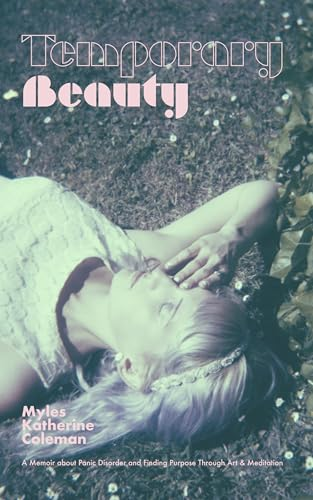
Temporary Beauty by Myles Katherine Coleman: (2 stars) I did not care for the style in which this book was written; the narrative goes in fits and starts, pieces seem to lack a connection. That being said, Coleman gives an honest presentation of living with crushing anxiety and panic disorder. I cannot imagine carrying such a mental weight, and yet Coleman faces each day and each challenge with a clear-eyed determination to succeed. I sincerely commend her bravery. I would like to see more from Coleman; perhaps her writing style will shine in another format.
Marie Antoinette by Melanie Burrows: (4 stars) I really enjoyed this biography of Marie Antoinette. I have read a couple other books about her, both well-written and researched, but I feel Melanie Burrows’ book gives the best impression of Marie Antoinette as a person. The woman herself comes through the text, giving readers a deep look at the queen. I felt that book gives readers the history of Marie Antoinette herself, rather than the history of France told through Marie Antoinette. Very informative and enjoyable book (if one can say such a thing about a book ending with execution…) [NKP: note the discrepancy in the Author’s name; on Goodreads and in NetGalley she is credited as Melaine Burrows]
Ode to Women by Silver Phoenix (1 star): This is categorized as poetry and verse; however it’s actually a small collection of brief stories with a handful of poems at the end. I didn’t find this to my liking; the writing style feels very juvenile to me, even in the sections titled “Love Stories and Poems for Middle-Aged Women.” I suppose an appropriate adjective to parts of this book would be “cute.” Not my style at all.
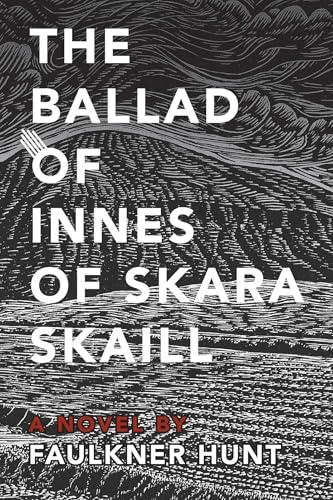
The Ballad of Innes of Skara Skaill by Faulkner Hunt; (1 star) I could not get into this book. I will admit that I do not read a great deal of fiction, mostly because I really need it to catch my attention right off the first page. Unfortunately, this book did not do so, and I was unable to focus on the story because I was uninterested in the characters and their lives. I feel there was an attempt at a mystery/adventure in this story, but it didn’t come to the fore; really as I was reading, I kept wondering when the author was going to finally get to the point.
Burn by Barbara Hamby: (3 stars) Barbara Hamby’s “Burn” is a collection of odes that discuss the ups and downs of life: its loves, losses, light moments, and times of despair. They are odes on what it means to be human, and how to be human. In “Ode of Being a Little Drunk at Parties,” she writes: “Oh, I get it, it’s hard to feel sorry for humans. We’re a hot mess,/ and by the time some of us figure it out,/ we’re playing our endgames;” and in her “Ode to Juno” she asks, “[…] how do I circumnavigate/ this ragged world, because the roads are rippling with brigands/ and fools, nymphs and satyrs playing possum,/ so where is the magic, my queen, where is the party, wine flowing/ and no one afraid of being turned into a snake?” I think my favorite poem in this collection is “Ode to My Old Kitchens.” Hamby speaks of everything I love about my own kitchen. It is a beautiful reminder that the kitchen truly is the heart of the home. I greatly enjoyed this collection, and I am interested in reading more of Barbara Hamby’s work.
I am going to finish this massive post here. I still have SEVEN more book reviews to share with you; that will come later this week. I feel I have inundated you enough for one day! Thank you for reading, and for your continuing interest in the stuff I do, it means the world to me. All images are from Goodreads, and all books were ARCs granted through NetGalley.
I have gotten VERY behind on posting reviews, both on books for my Summer Reading List (spoiler, I didn’t get to them all) and NetGalley books. This post will focus on the books I have read and reviewed for NetGalley; I’ll do another one on the Summer Reading List (mostly poetry and nonfiction. Does anyone have any tips on making oneself settle down and focus on fiction? I just can’t seem to do it anymore!)
Queen of All Mayhem by Dane Hucklebridge: 3 stars: Other than her name, and that she was an outlaw, I knew nothing of Belle Starr going into this book. The “Wild West” isn’t a subject I have spent much time on, so really, other than the names of the outlaws that made headlines and therefore history, I’m pretty ignorant of this entire piece of American history. In Queen of All Mayhem, Dane Hucklebridge brings this era to life brilliantly. is writing is engaging, his storytelling concise, though there were a couple parts where there was a great deal of exposition that perhaps could have been condensed, but it was relevant to the society in which Belle Starr lived. Hucklebridge takes his readers on Belle’s journey from a well-educated, cultured only daughter to her exploits as a Confederate spy, her rise to the title of Bandit Queen, and into what should have been her days of retirement and ease but were instead abruptly ended by an anonymous killer. Between her adventures she was a wife and mother, who longed for both the thrill of the heist and to hold her children close. Sadly, she had to send her son away to live with family for many years, and her daughter was in and out of Belle’s homes as well as family and friends’. Belle Starr is presented to readers as a multifaceted woman: intelligent, resourceful, sometimes foolhardy, loyal, always brave. She is a woman of legend, but Hucklebridge introduces readers to the woman behind the myth.
Working the Roots by Amanda Bennett: 2 stars: I am disappointed to admit that I could not really get into this book. I do like Bennett’s writing style, and her words have impact as I feel they were meant to. Poetry is a personal journey, after all. I wonder if my lack of connection to this work may be generational: I feel that I am much older than Bennett, and while some experiences of womanhood are universal, others are wildly different. I do recommend Working the Roots as I believe what Amanda Bennett has to say is of value, and I am sure that other readers will not only fully appreciate her work but see themselves in her words.
My Oceans by Christina Rivera: 2 stars: I was very much looking forward to Christina Rivera’s essay collection My Oceans. I was wondering if it might be similar in tone to Diane Ackerman’s or Elisabeth Tova Bailey’s writing. Sadly, I was disappointed. While Rivera has a wealth of knowledge to share, and has lived and worked in some incredible locations, her concerns for the environment appear to border on obsessive and are almost off-putting. Our planet is threatened; this is a fact proven by scientists. Climate change is destroying habitats and ecosystems, some may be beyond repair. The state of the planet is something everyone should be concerned about, and I do feel that everyone should do their part to preserve as many of our natural resources as possible. Thus, I and my family try to produce as little permanent waste as possible. We recycle; we reuse as much as we can. We are not perfect, and there is probably more we can do. I do wonder what kind of world my great grandchildren will inherit. I do not, however, wake up with nightmares about the micro plastics that are in my drinking water. I buy my children and grandchildren plastic brick building sets and do not flagellate myself with guilt for months after the fact. Christina Rivera is a talented writer, and her prose is well-worded. However, her anxiety absolutely leaps off the pages and takes attention away from her message. I finished her book, but it was a struggle, and felt a palpable sense of relief when I finished it. I do recommend this book, but I advise readers to step away from it every so often not because of the subject matter (though Rivera does share some truly gut-wrenching heartache and I honestly felt for her), but to just take a breather from her stress.
Groceries by Nora Claire Miller: 1 star: I expected this book to be poems reflecting on one’s relationship to the items around us, perhaps an allegory of possessiveness or capitalism, based on the synopsis. Instead I am not sure what Miller is trying to convey. I read a great deal of poetry in all its forms, so abstract or found poetry is not unusual to me. This volume is too scattered, lines begin and end abruptly without any continuity; overall, it feels messy. I have said in other reviews that poetry is a personal art. I know Miller has a message she is attempting to convey, and in her own mind she was probably successful. Readers are left floundering and frustrated.
Anthropological Study by Lauren Miller: 1 star: This book earned a one star rating from me. Lauren Miller’s poems are raw and personal, which I greatly respect. It takes a large amount of courage to put oneself on the page so honestly. I found many of the poems too disjointed; they seem to suddenly veer away into a different direction and discuss thoughts unrelated to the initial idea that was presented. Some feel as though they end too abruptly, as though Miller’s idea just stopped. Overall, I found these poems too unfocused to be enjoyable.
Unwed & Unbothered by Emma Duval: 4 stars: I thought Emma Duval’s Unwed & Unbothered was an excellent book. It’s not very long, but this small book holds a wealth of information. Duval showcases dozens of women in brief biographies, highlighting their work and accomplishments. I read a great deal of women’s history, and while I was familiar with many of the notable women she featured in her book, there were many, many others I had never heard of before. Duval’s book led me down a rabbit hole of research, and my TBR list now has an extra page of biographies. I absolutely recommend this book for anyone interested in history and women’s studies; really, I feel that everyone should read it. Too often women’s accomplishments and contributions are brushed under the rug. Emma Duval brings these women to the forefront and reminds readers that women are not silent bystanders. I feel that girls especially should read this book so they can remember that there is nothing they can’t do if they put their minds to it. I will be buying a copy of this for my seven-year-old granddaughter; I want her to always remember that she is an unstoppable force.
Between Two Rivers by Moudhy Al-Rashid: 4 stars: Between Two Rivers by Moudhy Al-Rashid is an incredible journey through centuries of Mesopotamian history. Al-Rashid offers readers a look at the beginning of recorded history, focusing on the development of writing from pictographs to written words. From inventories to laws to literature, the ancient Sumerians and later Akkadians left their mark (literally) on history. Archaeologists today are still unearthing clay tablets and ceramic seals bearing inscriptions of everything from goods exchanged to classroom writing exercises for apprentice scribes to paeons to the gods. Ancient Mesopotamia is credited with being the cradle of civilization, often because writing was developed there. I disagree with this idea as there are plenty of civilizations from history that did not have a writing system (some still existing today). I feel the combination of writing and agriculture is a stronger argument, though still not definitive. What has been proven is that the ancient people of the Middle East were the first to leave written records of their lives, and Moudhy Al-Rashid does a wonderful job of presenting these developments to readers. This book is a must-read for people interested in ancient societies (or for word nerds like me!)
Charles Dickens’ Secret Love Child by Brian Ruck: 1 star (I’d give it zero if I could): I could not get into this book. I will admit that I am not a huge Dickens fan; A Christmas Carol and A Tale of Two Cities are the only works of his that I like. The man was a master of storytelling, however, as his legacy of work and numerous fans will attest. Because of this I have read a number of books about Dickens; it is impossible to recognize the contribution he made to literature even if you don’t like his work. Brian Ruck lost me as soon as he suggested that Ellen Ternan was Dickens’ illegitimate child. Renowned Dickens scholars have all agreed and supported their research with evidence that Ternan was in fact Charles Dickens’ mistress, and that they had a child together. Ellen Ternan may have denied the relationship later in life, but letters and diaries survive confirming their relationship. Ruck uses language taken from some of Dickens’ letters to support his theory that Dickens had an affair with Ellen Ternan’s mother Frances Jarman Ternan and that Ellen was the resulting child. If anything, I think those snippets might indicate that Dickens had an affair with Frances and then years later began a relationship with her daughter. I am not a Dickens scholar, and I have no way to back up this theory; I am just reinterpreting what Ruck has interpreted himself. As well, Brian Ruck admits at the start of his book that he is not a historian or Dickens scholar, and his “proof” is very flimsy. All in all, I found this to be a biased and not well-supported study of Charles Dickens.
This was a very long post, thank you for sticking around! Some of these titles have just been published, and a few are coming out this month. Let me know if you read any of these; I would like to know your thoughts!











 This is the Mask