Whitney Hanson is an author I keep returning to. Her poetry is thoughtful and invites introspection. While her work doesn’t inspire a deep, soul-searching response in me, I do find myself pausing to consider what I read, often rereading and highlighting as I go. She makes me think about my own thoughts from a different angle, sometimes answering long-held questions. I recognize some of my own feelings in her work as well. As a person living with major depressive disorder, I empathized with her statement that “the worst part about having a sickness that/ exists only within my head isn’t that no/ one else can see it. it’s that i can’t see it/ either.” I am reminded that I am deserving of self-love when Hanson writes “the circle will only cease when i learn to/ forgive myself, when i can accept that i will/ never be perfect when i surrender in a war/ where the enemy is me;” and she gives everyone the valuable advice that “maybe getting better isn’t a cosmic shift it’s/ just waking up every day and trying.” I also relate to her thoughts about writing: “ […] i transform feeling/ into words i make my agony two/ dimensional so that it doesn’t hurt. it’s my/ magic.” I find catharsis in writing, as I am sure so many other writers do. Reading Whitney Hanson’s writing is like meeting a friend for coffee and a long heart to heart: comforting, safe, inviting you to unburden yourself without fear of judgement or abandonment. I have recommended her books to friends that don’t read poetry, because I knew they needed to hear what she had to say to them.
(This is also a book on my Summer Reading List, so you’re getting a 2 for 1 update!) David Gate’s essay and poetry collection “A Rebellion of Care” is beautiful. Gate writes from the heart, giving readers pieces of himself as he contemplates his life and loves. He reminds us that “joy is an act of rebellion/against the established order,” and urges his readers to “Make art & music/ because music & art/ are love letters to the living/ addressed to us all.” I printed his poem “Stardust” to hang over my desk to remind myself to sparkle each day, and Part 5 of his collection, titled “I Pour Out the Contents of my Notes App in an Attempt to Create Connection” is wildly creative (and I admit I want to try a similar form myself). Gate tells us that laughing with old friends is living in the truest sense. Perhaps the most profound takeaway I took from his book (besides “Stardust”) is this reminder: “You may not be responsible/ for the source of your pain/ but you are responsible/ for everywhere it goes.” As someone with childhood trauma, I want to keep this reminder close to me. I don’t want others to feel my pain and anger; I want them to sparkle as I am learning to. I urge people to read this beautiful book. It will touch your heart. You may cry, you may become angry, or you may pause in your reading to ask yourself what care you need to give yourself. Listen to what your heart says.
I was quite disappointed in this book. I love sharks, I think they are beautiful and fascinating creatures. I doubt we will ever fully understand their behaviors, so when a book like this comes along I am interested to see what has been learned. This book doesn’t really offer any insight. It reads like someone sharing a report based on papers they have read without fully understanding the original source. The writing style also lacks the crisp definition that one usually find in history and science books.
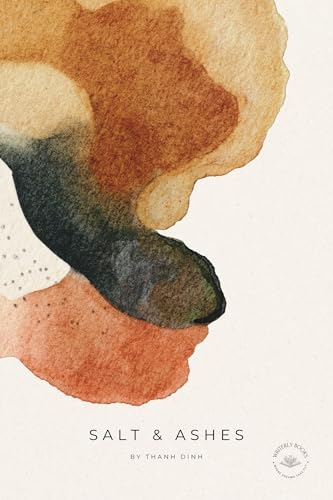
I absolutely loved Thanh Dinh’s “The Smallest God Who Ever Lived,” so I was very excited to read “Salt & Ashes.” Unfortunately, this book didn’t resonate with me the way “Smallest God” did. I will not say I didn’t like “Salt & Ashes,” there were some beautiful lines and truly moving thoughts. One line I have already returned to several times says “Remember that only in the aftermath of the quake,/ You can feel the Earth move”
“Salt & Ashes” tells a different story from Dinh’s other book, coming from different experiences. I believe it is a deeply personal narrative from Dinh, and I appreciate her honesty and vulnerability. She reminds readers that sometimes we have no choice but to accept what life hands us: “And there comes a time when people learn/How futile living on pure imagination can be–” The truth is often painful to hear, but if we want to fully experience our lives, we have to listen.
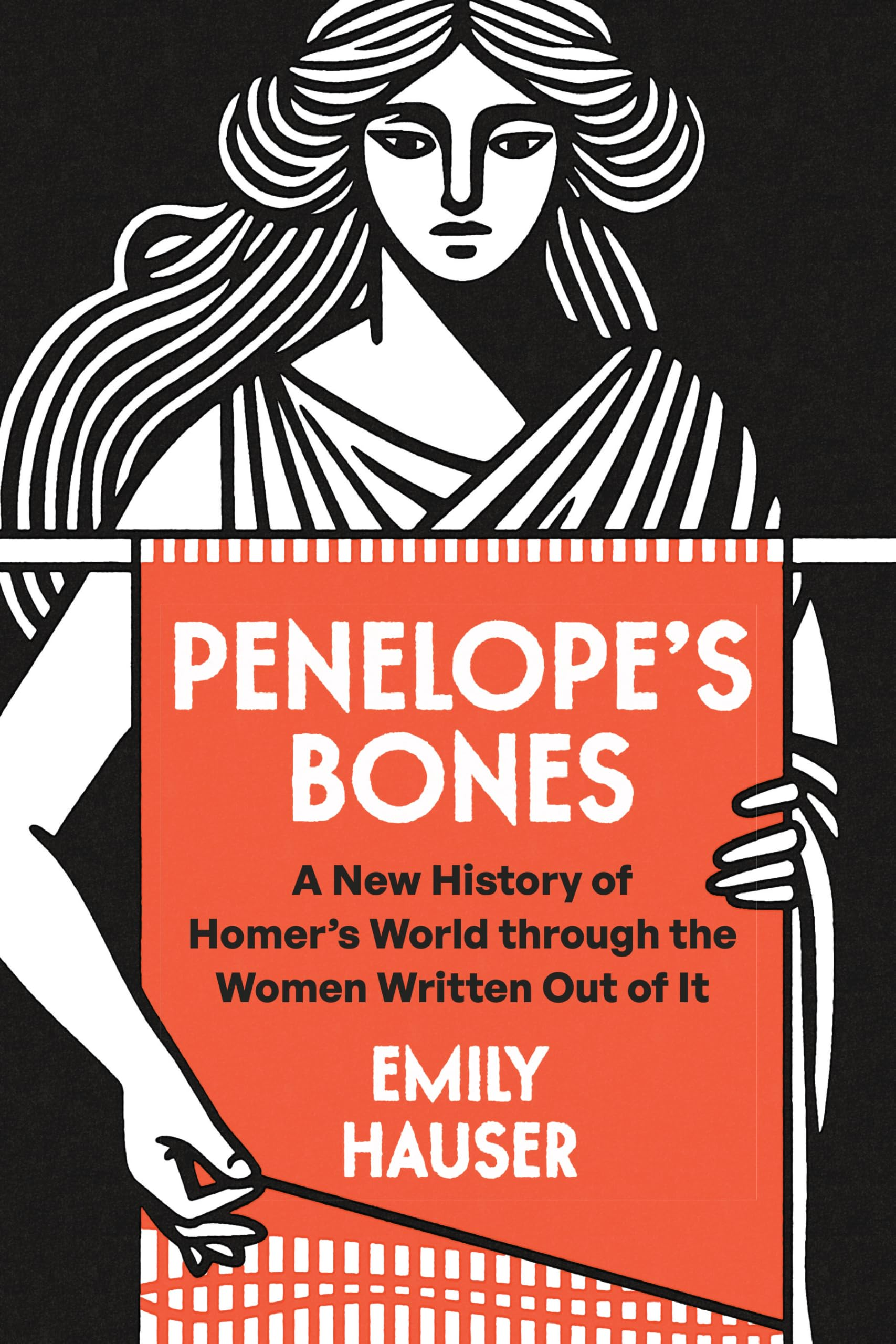
Emily Hauser’s brilliant book “Penelope’s Bones” has a place of note on the shelf beside my copies of Natalie Haynes’ “Pandora’s Jar” and Divine Might.” Hauser has presented her readers with a detailed study of figures from Homer’s works that hover in the background of his heroes’ lives: the women of legend. The women not deemed important enough to have their own epics, the women that worked so the men could ride to glory, the women that were captured, enslaved, crowned, and killed. This book is engaging and informative, offering different theories about women’s roles in ancient Greece thank ones that have been accepted as fact for centuries. Hauser supports her theories with archaeological studies that suggest what we have been taught to believe may not have been so. One thing that I appreciate about this book is that Hauser examines women from the mythos as living women from historical records. She doesn’t portray Briseis just as “Achilles’ slave” but considers what the background of a woman in her position might have been, what her life might have been like before her enslavement, and what happened after. “Penelope’s Bones” is a fascinating way of reexamining the Iliad and the Odyssey, allowing readers to look into the lives of women from a long-distant past.
As a writer and book lover, I was very excited to read Emily Hodgson Anderson’s “Shadow Work: Loneliness and the Literary Life.” While I thought this book was very good and definitely worth reading–especially for writers–I didn’t love it. Some sections failed to hold my interest; however, other sections had me pausing, considering, rereading, and highlighting. I read this as an e-book, and despite my somewhat flat rating, I will probably pick it up as a paperback because I feel that much of her commentary is very thought-provoking.
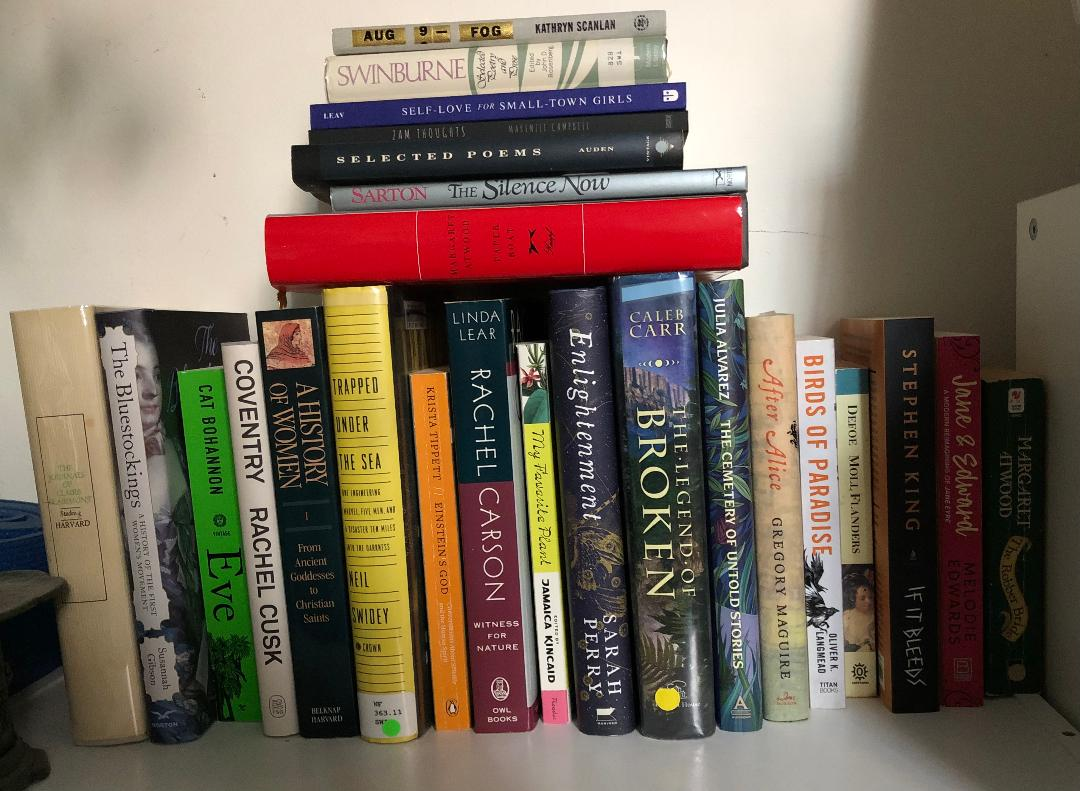
Hello Friends! Thank you to all of you who come back again and again to read my rambling book posts, I appreciate every one of you. This is the time of year that I post a monster list of books I plan to read over the summer, my self-appointed Summer Reading List. There are 14 weeks between Memorial Day and Labor Day, and I try to cram 30 books into them. I have fewer television distractions during this time as it’s not hockey season (wtf Bruins?!? I still love you, but seriously?), but I have grandies now, so we’ll see if I actually get all of these books completed. I have ten books selected for Fiction, Nonfiction, and Poetry. I don’t read them in any particular order; however, some of these books are ARCs from NetGalley (Thank you NetGalley!!) and do have due dates, so those will probably be at the top of the pile.
Without any further ado, NKP’s 2025 Summer Reading List (all synopses from Goodreds.com)
Fiction:
Enlightenment by Sarah Perry: Thomas Hart and Grace Macaulay have lived all their lives in the small Essex town of Aldleigh. Though separated in age by three decades, the pair are kindred spirits—torn between their commitment to religion and their desire to explore the world beyond their small Baptist community. It is two romantic relationships that will rend their friendship, and in the wake of this rupture, Thomas develops an obsession with a vanished nineteenth-century astronomer said to haunt a nearby manor, and Grace flees Aldleigh entirely for London. Over the course of twenty years, by coincidence and design, Thomas and Grace will find their lives brought back into orbit as the mystery of the vanished astronomer unfolds into a devastating tale of love and scientific pursuit. Thomas and Grace will ask themselves what it means to love and be loved, what is fixed and what is mutable, how much of our fate is predestined and written in the stars, and whether they can find their way back to each other.
Legend of Broken by Caleb Carr: Some years ago, a remarkable manuscript long rumored to exist was The Legend of Broken. It tells of a prosperous fortress city where order reigns at the point of a sword—even as scheming factions secretly vie for control of the surrounding kingdom. Meanwhile, outside the city’s granite walls, an industrious tribe of exiles known as the Bane forages for sustenance in the wilds of Davon Wood. At every turn, the lives of Broken’s defenders and its would-be destroyers Sixt Arnem, the widely respected and honorable head of the kingdom’s powerful army, grapples with his conscience and newfound responsibilities amid rumors of impending war. Lord Baster-kin, master of the Merchants’ Council, struggles to maintain the magnificence of his kingdom even as he pursues vainglorious dreams of power. And Keera, a gifted female tracker of the Bane tribe, embarks on a perilous journey to save her people, enlisting the aid of the notorious and brilliant philosopher Caliphestros. Together, they hope to exact a ruinous revenge on Broken, ushering in a day of reckoning when the mighty walls will be breached forever in a triumph of science over superstition.
The Cemetery of Untold Stories by Julia Alvarez: Alma Cruz has decided to end her writing career, but she fears she’ll end up like her friend, a successful novelist driven to madness by a book she never finished writing. So when she inherits a modest plot of land in the Dominican Republic, she decides to bury her dozens of unfinished manuscripts there. She wants them to rest in peace in the same land where her roots are. But unlike Alma, the protagonists of her stories still have plenty to say, and they find in Filomena, the reserved caretaker of the cemetery, an empathetic and attentive interlocutor. By sharing their stories, Bienvenida, the forgotten ex-wife of dictator Rafael Trujillo; Manuel Cruz, a doctor exiled during the regime, and Filomena herself will turn the cemetery into a magical place, a sanctuary where those who have been silenced will find the meaning they yearn for in the imperishable vitality of the untold stories.
After Alice by Gregory Maguire: When Alice toppled down the rabbit-hole 150 years ago, she found a Wonderland as rife with inconsistent rules and abrasive egos as the world she left behind. But what of that world? How did 1860s Oxford react to Alice’s disappearance? In this brilliant new work of fiction, Gregory Maguire turns his dazzling imagination to the question of underworlds, undergrounds, underpinnings — and understandings old and new, offering an inventive spin on Carroll’s enduring tale. Ada, a friend of Alice’s mentioned briefly in Alice’s Adventures in Wonderland, is off to visit her friend, but arrives a moment too late — and tumbles down the rabbit hole herself. Ada brings to Wonderland her own imperfect apprehension of cause and effect as she embarks on an odyssey to find Alice and see her safely home from this surreal world below the world. If Euridyce can ever be returned to the arms of Orpheus, or Lazarus can be raised from the tomb, perhaps Alice can be returned to life. Either way, everything that happens next is After Alice.
Birds of Paradise by Oliver Langmead: Many millennia after the fall of Eden, Adam, the first man in creation, still walks the Earth – exhausted by the endless death and destruction, he is a shadow of his former hope and glory. And he is not the only one. The Garden was deconstructed, its pieces scattered across the world and its inhabitants condemned to live out immortal lives, hiding in plain sight from generations of mankind. But now pieces of the Garden are turning up on the Earth. After centuries of loneliness, Adam, haunted by the golden time at the beginning of Creation, is determined to save the pieces of his long lost home. With the help of Eden’s undying exiles, he must stop Eden becoming the plaything of mankind. Adam journeys across America and the British Isles with Magpie, Owl, and other animals, gathering the scattered pieces of Paradise. As the country floods once more, Adam must risk it all to rescue his friends and his home – because rebuilding the Garden might be the key to rebuilding his life.
Jane & Edward by Melodie Edwards: A former foster kid, Jane has led a solitary life as a waitress in the suburbs, working hard to get by. Tired of years of barely scraping together a living, Jane takes classes to become a legal assistant and shortly after graduating accepts a job offer at a distinguished law firm in downtown Toronto. Everyone at the firm thinks she is destined for failure because her boss is the notoriously difficult Edward Rosen, the majority stakeholder of Rosen, Haythe & Thornfield LLP. But Jane has known far worse trials and refuses to back down when economic freedom is so close at hand. Edward has never been able to keep an assistant–he’s too loud, too messy, too ill-tempered. There’s something about the quietly competent, delightfully sharp-witted Jane that intrigues him though. As their orbits overlap, their feelings begin to develop–first comes fondness and then something more. But when Edward’s secrets put Jane’s independence in jeopardy, she must face long-ignored ghosts from her past and decide if opening her heart is a risk worth taking.
The Robber Bride by Margaret Atwood: Margaret Atwood’s The Robber Bride is inspired by “The Robber Bridegroom,” a wonderfully grisly tale from the Brothers Grimm in which an evil groom lures three maidens into his lair and devours them, one by one. But in her version, Atwood brilliantly recasts the monster as Zenia, a villainess of demonic proportions, and sets her loose in the lives of three friends, Tony, Charis, and Roz. All three “have lost men, spirit, money, and time to their old college acquaintance, Zenia. At various times, and in various emotional disguises, Zenia has insinuated her way into their lives and practically demolished them. To Tony, who almost lost her husband and jeopardized her academic career, Zenia is ‘a lurking enemy commando.’ To Roz, who did lose her husband and almost her magazine, Zenia is ‘a cold and treacherous bitch.’ To Charis, who lost a boyfriend, quarts of vegetable juice and some pet chickens, Zenia is a kind of zombie, maybe ‘soulless'” (Lorrie Moore, New York Times Book Review). In love and war, illusion and deceit, Zenia’s subterranean malevolence takes us deep into her enemies’ pasts.
If It Bleeds by Stephen King: A collection of four uniquely wonderful long stories, including a stand-alone sequel to The Outsider. News people have a saying: ‘If it bleeds, it leads’. And a bomb at Albert Macready Middle School is guaranteed to lead any bulletin. Holly Gibney of the Finders Keepers detective agency is working on the case of a missing dog – and on her own need to be more assertive – when she sees the footage on TV. But when she tunes in again, to the late-night report, she realizes there is something not quite right about the correspondent who was first on the scene. So begins ‘If It Bleeds’ , a stand-alone sequel to The Outsider featuring the incomparable Holly on her first solo case. Dancing alongside are three more long stories – ‘Mr Harrigan’s Phone’, ‘The Life of Chuck’ and ‘Rat’ .
Comfort Me with Apples by Catherynne Valente: Sophia was made for him. Her perfect husband. She can feel it in her bones. He is perfect. Their home together in Arcadia Gardens is perfect. Everything is perfect. It’s just that he’s away so much. So often. He works so hard. She misses him. And he misses her. He says he does, so it must be true. He is the perfect husband and everything is perfect. But sometimes Sophia wonders about things. Strange things. Dark things. The look on her husband’s face when he comes back from a long business trip. The questions he will not answer. The locked basement she is never allowed to enter. And whenever she asks the neighbors, they can’t quite meet her gaze… But everything is perfect. Isn’t it?
Moll Flanders by Daniel Defoe: Moll Flanders is born to a mother who has been convicted of a felony and who is transported to America soon after her birth. As an infant, Moll lives on public charity, under the care of a kind widow who teaches her manners and needlework. She grows into a beautiful teenager and is seduced at an early age. Abandoned by her first lover, she is compelled to marry his younger brother. He dies after a few years, and she marries a draper who soon flees the country as a fugitive from the law. She marries yet again and moves to America, only to find out that her husband is actually her half-brother. She leaves him in disgust and returns to England, where she becomes the mistress of a man whose wife has gone insane. He renounces his affair with Moll after a religious experience.
Nonfiction:
Clodia of Rome: Champion of the Republic by Douglas Boin: A pioneering political voice, with charisma and power that rivaled many of her male contemporaries, Clodia of Rome was a pivotal figure in the late Roman Republic until a murder trial, rife with corruption, catalyzed her fall from grace. Taking readers inside the courtroom to follow the trial and Clodia’s family’s tumultuous political history, Douglas Boin brings a modern perspective to a long-buried story, full of juicy details and fascinating anecdotes. With countless examples of the surprising roles that Roman women played, followed by the attempts of powerful men to erase their stories, Boin challenges the male-dominated narrative of classical antiquity. Clodia of Rome offers a new understanding of the radical modernity of first-century Rome—one that mirrors our own in its volatile conflicts between forces of change and those of reaction. (NetGalley ARC)
Rachel Carson: Witness for Nature by Linda Lear: Rachel Carson’s Silent Spring, published in 1962, did more than any other single publication to alert the world to the hazards of environmental poisoning and to inspire a powerful social movement that would alter the course of American history. This definitive, long-overdue biography shows how Carson, already a famous nature writer, became a reluctant reformer. It is a compelling portrait of the determined woman behind the publicly shy but brilliant scientist and writer.
My Favorite Plant: Writers and Gardeners on the Plants They Love by Jamaica Kincaid: The passion for gardening and the passion for words come together in this inspired anthology, a collection of essays on topics as diverse as beans and roses, by writers who garden and by gardeners who write. Among the contributors are Christopher Lloyd, on poppies; Marina Warner, who remembers the Guinée rose; and Henri Cole, who offers poems on the bearded iris and on peonies. There is also an explanation of the sexiness of castor beans from Michael Pollan and an essay from Maxine Kumin on how, as Henry David Thoreau put it, one “[makes] the earth say beans instead of grass.” Most of the essays are new in print, but Colette, Katharine S. White, D. H. Lawrence, and several other old favorites make appearances. Jamaica Kincaid, the much-admired writer and a passionate gardener herself, rounds up this diverse crew. A wonderful gift for green thumbs, My Favorite Plant is a happy collection of fresh takes on old friends.
Trapped Under the Sea: One Engineering Marvel, Five Men, and a Disaster Ten Miles Into the Darkness by Neil Swidey: In the 1990s, Boston built a sophisticated waste treatment plant on Deer Island that was poised to show the country how to deal with environmental catastrophe. The city had been dumping barely treated sewage into its harbor, coating the seafloor with a layer of “black mayonnaise.” Fisheries collapsed, wildlife fled, and locals referred to floating tampon applicators as “beach whistles.” But before the plant could start operating, a team of divers had to make a perilous journey to the end of a 10-mile tunnel-devoid of light and air-to complete the construction. Five went in; two never came out. Drawing on hundreds of interviews and thousands of documents, award-winning reporter Neil Swidey re-creates the tragedy and its aftermath in an action-packed narrative. The climax comes when the hard-partying DJ Gillis and his friend Billy Juse trade jobs at a pivotal moment in the mission, sentencing one diver to death and the other to a trauma-induced heroin addiction that eventually lands him in prison. Trapped Under the Sea reminds us that behind every bridge, highway, dam, and tunnel-behind the infrastructure that makes modern life possible-lies unsung bravery and extraordinary sacrifice.
Eve: How the Female Body Drove 200 Million Years of Human Evolution by Cat Bohannon: How did the female body drive 200 million years of human evolution? • Why do women live longer than men? • Why are women more likely to get Alzheimer’s? • Why do girls score better at every academic subject than boys until puberty, when suddenly their scores plummet? • Is sexism useful for evolution? • And why, seriously why, do women have to sweat through our sheets every night when we hit menopause?
These questions are producing some truly exciting science—and in Eve, with boundless curiosity and sharp wit, Cat Bohannon covers the past 200 million years to explain the specific science behind the development of the female sex: “We need a kind of user’s manual for the female mammal. A no-nonsense, hard-hitting, seriously researched (but readable) account of what we are. How female bodies evolved, how they work, what it really means to biologically be a woman. Something that would rewrite the story of womanhood. This book is that story. We have to put the female body in the picture. If we don’t, it’s not just feminism that’s compromised. Modern medicine, neurobiology, paleoanthropology, even evolutionary biology all take a hit when we ignore the fact that half of us have breasts. So it’s time we talk about breasts. Breasts, and blood, and fat, and vaginas, and wombs—all of it. How they came to be and how we live with them now, no matter how weird or hilarious the truth is.”
The Bluestockings: A History of the First Women’s Movement by Susannah Gibson: An illuminating group portrait of the eighteenth-century women who dared to imagine an active life of the mind and spirit for themselves. In eighteenth-century England, a woman who was an intellectual, read constantly, or wrote professionally was considered unnatural. But the Bluestockings did something coming together in glittering salons to discuss and debate as intellectual equals with men, they fought for women to be educated and to have a public role in society. They questioned the traditional womanly roles of wife, mother, and caregiver. In this intimate and revelatory history, Susannah Gibson delves into the extraordinary lives of these pioneering women, from Elizabeth Montagu, who established a salon that had everyone in society clamoring for an invitation, and her sister Sarah Scott, who set up a female utopian community, to Fanny Burney, the audacious novelist, and Catharine Macaulay, the prestigious English historian. Some rebelled quietly, while others defied propriety with adventurous and scandalous lives. The Bluestockings uncovers how these remarkable women slowly built up an eviscerating critique of the patriarchy the world was not yet ready to hear. 40 illustrations.
Einstein’s God: Conversations about Science and the HumanSpirit by Krista Tippett: Drawn from Krista Tippett’s Peabody Award-winning public radio program, the conversations in this profoundly illuminating book reach for a place too rarely explored in our ongoing exchange of ideas–the nexus of science and spirituality. In fascinating interviews with such luminaries as Freeman Dyson, Janna Levin, Parker Palmer, and John Polkinghorne, Krista Tippett draws out the connections between the two realms, showing how even those most wedded to hard truths find spiritual enlightenment in the life of experiment and, in turn, raise questions that are richly, theologically evocative.
Coventry: Essays by Rachel Cusk: Coventry encompasses memoir, cultural criticism, and writing about literature, with pieces on family life, gender, and politics, and on D. H. Lawrence, Françoise Sagan, and Elena Ferrante. Named for an essay in Granta (“Every so often, for offences actual or hypothetical, my mother and father stop speaking to me. There’s a funny phrase for this phenomenon in England: it’s called being sent to Coventry”), this collection is pure Cusk and essential reading for our age: fearless, unrepentantly erudite, and dazzling to behold.
The Journals of Claire Clairmont by Claire Clairmont, Edited by Marion Stocking: Claire Clairmont began her journals in 1814, when she accompanied Shelley and her half-sister, Mary Wollstonecraft Godwin, on their elopement to the continent. She continued to write them until after Byron and Shelley were dead and she was living as a governess with a wealthy family in Moscow. The journals present a detailed and fascinating picture of life with the Shelley family their discovery of the European landscape, wretched days in London dodging bailiffs and bill collectors, happy days of opera and ballet and endless conversations. Our knowledge of the Shelleys’ life in Italy is expanded by this intimate view of the brilliant society of artists, writers, musicians, actors, scholars, revolutionaries, and nobility who were their constant companions. The later entries provide an account of the daily life of an Englishwoman living in Russia during the exciting time of the Decembrist uprising. In The Journals of Claire Clairemont , Stocking has brought together five of Claire’s journals, all that is known of the now-lost Russian journal, and two leaflets of Miscellanea dealing with the years 1828 to 1830. The interruptions in the diaries are bridged by narratives that allow the reader to follow her life, as she develops from an effervescent schoolgirl into a self-possessed, attractive, and talented young woman. Appendices present reviews of theatrical performances seen by Claire and the Shelleys, biographical sketches of the varied personages they knew in Italy, a review by Mary Shelley (1826) describing people and life on the Continent as Claire and the Shelleys saw it, and the text of a manuscript fragment, possibly by Claire, containing thinly disguised romantic portrayals of the Shelleys and Jane and Edward Ellerker Williams. There is also a list of Claire’s voluminous and systematic reading.
A History of Women in the West: From Ancient Goddesses to Christian Saints edited by Georges Duby and Michelle Perrot: This volume brings women from the margins of ancient history into the fore. It offers fresh insight into more than twenty centuries of Greek and Roman history and encompasses a landscape that stretches from the North Sea to the Mediterranean and from the Pillars of Hercules to the banks of the Indus. The authors draw upon a wide range of sources including gravestones, floor plans, papyrus rolls, vase paintings, and literary works to illustrate how representations of women evolved during this age. They journey into the minds of men and bring to light an imaginative history of women and of the relations between the sexes.
Poetry:
Paper Boat: New and Selected Poems, 1961-2023 by Margaret Atwood: Tracing the legacy of Margaret Atwood—a writer who has fundamentally shaped the contemporary literary landscapes—Paper Boat assembles Atwood’s most vital poems in one essential volume. In pieces that are at once brilliant, beautiful, and hyper-imagined, Atwood gives voices to remarkably drawn characters—mythological figures, animals, and everyday people—all of whom have something to say about what it means to live in a world as strange as our own. “How can one live with such a heart?” Atwood asks, casting her singular spell upon the reader, and ferrying us through life, death, and whatever comes next. Walking the tightrope between reality and fantasy as only she can, Atwood’s journey through poetry illuminates our most innate joys and sorrows, desires and fears.
Self-Love for Small-Town Girls by Lang Leav: As women, we create lives with our bodies but often do not have autonomy over our own. We create worlds with our words yet struggle to be heard. Collectively, we yearn for the right to be treated with compassion and equity in our public and private spaces. The path to self-love is seldom a smooth one, especially for those who have further to travel. Self-Love for Small Town Girls is a book for anyone seeking the best and brightest version of themselves. Spanning decades of growth through self-analysis and introspection, Self-Love for Small Town Girls is Lang’s most personal and stunning collection to date.
2am Thoughts by Makenzie Campbell: The poetry of 2am Thoughts condenses an entire relationship with its untamed emotions and experiences to a single day. As the long hours of the night drag on, so does the love, heartache, and loss. When the dawn breaks, the morning sun brings acceptance, healing, and recovery.
The Silence Now: New and Uncollected Early Poems by May Sarton: The title of [Sarton’s] luminous new verse collection alludes to its underlying theme: old age. It’s a time when she has ‘more of everything to care for, to maintain.’ Her powers of observation have deepened: a cat’s footfall on the stairs ‘speaks of an eternal Now.’ In a beautifully simple language shorn of all artifice, she speaks directly and with wisdom about grief, loneliness, death, coming to terms with one’s life.
Swinburne: Selected poetry and prose by Algernon Swinburne: Apparently there is no synopsis or discussion on the book anywhere on the internet???
Selected Poems of W. H. Auden by W. H. Auden, edited by Edward Mendelson: This significantly expanded edition of W. H. Auden’s Selected Poems adds twenty poems to the hundred in the original edition, broadening its focus to better reflect the enormous wealth of form, rhetoric, tone, and content in Auden’s work. Newly included are such favorites as “Funeral Blues” and other works that represent Auden’s lighter, comic side, giving a fuller picture of the range of his genius. Also new are brief notes explaining references that may have become obscure to younger generations of readers and a revised introduction that draws on recent additions to knowledge about Auden. As in the original edition, the new Selected Poems makes available the preferred original versions of some thirty poems that Auden revised later in life, making it the best source for enjoying the many facets of Auden’s art in one volume.
Aug 9—Fog by Kathryn Scanlon: Fifteen years ago, Kathryn Scanlan found a stranger’s five-year diary at an estate auction in a small town in Illinois. The owner of the diary was eighty-six years old when she began recording the details of her life in the small book, a gift from her daughter and son-in-law. The diary was falling apart–water-stained and illegible in places–but magnetic to Scanlan nonetheless. After reading and rereading the diary, studying and dissecting it, for the next fifteen years she played with the sentences that caught her attention, cutting, editing, arranging, and rearranging them into the composition that became Aug 9–Fog (she chose the title from a note that was tucked into the diary). “Sure grand out,” the diarist writes. “That puzzle a humdinger,” she says, followed by, “A letter from Lloyd saying John died the 16th.” An entire state of mourning reveals itself in “2 canned hams.” The result of Scanlan’s collaging is an utterly compelling, deeply moving meditation on life and death. (NKP: I thought this was a work of nonfiction, but Goodreads classifies it as poetry)
A Rebellion of Care: Poems and Essays by David Gate: Something isn’t right. Every generation thinks that, but we have more cause than most. The way our society has been constructed is just not good for our bodies, nor our minds, nor our hearts. What possible chance do our souls have? Yet, amidst all of this, there is an unwavering desire to embrace life in all its facets. In his debut collection, popular Instagram writer David Gate inspires us to rally for what makes life worth creating art as a form of care, living beyond consumer impulse, loving our neighbors (even the weird ones), and more. This book invites readers to ponder the complexities of self, community, love, and resilience. Rejecting the notion that despair and positivity are our only available responses, Gate urges readers to foster deep friendships that challenge social orders and embrace questions of meaning and purpose. For, in his words, “saying something true in a world awash with lies is the first act of rebellion. (NetGalley ARC)
The Smallest God Who Ever Lived: Poetry of heartbreak, identity, and divine obsession by Thanh Dinh: The Smallest God Who Ever Lived is a searing, poetic journey through the fractured edges of the human spirit. In this haunting and lyrical collection, Thanh Dinh explores the soft devastation of grief, the raw intimacy of longing, and the fragile beauty of perseverance in a world that rarely offers sanctuary. Rooted in existentialist thought and aching vulnerability, these poems trace the quiet violence of living—of loving deeply, of being forgotten, of holding on to hope when everything else is slipping away. Dinh’s verse lingers in the silences, finds grace in the broken spaces, and breathes light into the darkest corners of the self. At the core of this collection is the idea that we become gods in our survival—not grand or omnipotent, but small, trembling gods of memory, emotion, and love. The voice here is both wounded and reverent, What does it mean to keep going when the world keeps burning? This is not just a book of poems; it is a prayer for the lost, a ballad for those who’ve endured, and a gentle anthem for those who still believe something soft and sacred remains. (NetGalley ARC)
Major Voices: 19th Century American Women’s Poetry edited by Shira Wolosky: There are a number of anthologies of nineteenth-century American women poets in print, but these tend to offer a very small sample of poems from a very large number of writers, often based around a specific topical concern. The Toby anthology, compiled and edited by Professor Shira Wolosky, will instead present a substantial number of texts by a select group of poets – focusing in depth on the major voices of that time. This anthology will thus allow the reader the opportunity to engage more deeply with the poetry; to see the range within each poet’s writings, and the relation among the poets. An introductory essay will identify central concerns, historical backgrounds, evolving patterns and poetic issues, as marked through the course of the century. The work of these poets provides a gripping view of the creativity of nineteenth-century American women that has been until recently almost entirely lost to literary history. Supremely relevant to today’s readers, this is poetry that began the efforts at the redefinition of self, of America, and of womanhood that continues to touch the lives and thoughts of so many today. The poets Lydia Sigourney, Julia Ward Howe, Francis Harper, Helen Hunt Jackson, Emily Dickinson, Alice & Phoebe Carey, Ella Wheeler Wilcox, Emma Lazarus and Charlotte Gilman.
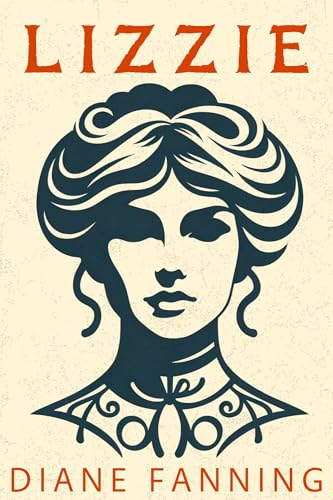
Gruesome as it may sound, I love the Borden mystery (and I wholly believe that Lizzie did, in fact, murder her father and stepmother.) I was really looking forward to this book; unfortunately it didn’t really convey any emotion or suspense. The writing is very stilted, and the characters very flat. I have no doubt Fanning did her research, there are plenty of confirmed references to the case included in the book, but it didn’t hold my interest at all.
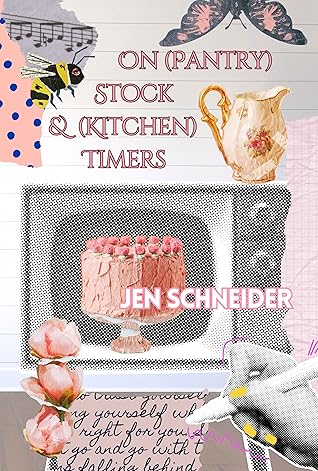
Jen Schneider’s On (Pantry) Stock & (Kitchen) Timers is a unique collection of a stream-of-consciousness essays and poems that you wouldn’t think would work but does in an enchanting, eye-catching, made-you-look kind of way. Schneider’s words are a collage of thought that walks readers through a maze of sensation/emotion/confusion/questing. This collection deserves a re-read to fully take in what Schneider says, but even after a second reading I found myself pausing, starting a page over, considering what Schneider wrote, how to interpret her idea. Read this book and experience Schneider’s creative art for yourself.
There are books you love, and then there are books that become a part of you, that you pick up over and over because you want to hold them, because you want to feel their weight and touch the pages covered in the words that mean so much to you. The covers are soft, ragged-edged and worn because you have read these books again and again, from cover to cover, or from wherever you opened them at that moment. You read to the end, or just a paragraph, pages maybe, or a single line. You know the words, but each time you read them they reverberate within you as though a bell has rung in your heart.
We all have favorite books, but what are your all-time favorites? The ones that have a special shelf all their own, the ones that you would choose to pack and be perfectly happy reading over and over on a deserted island if you were to happen to find yourself in such a situation with unlimited reading time, but, alas, a limited library? Here, friends, are my all-time favorite novels: (all photos found on Google)
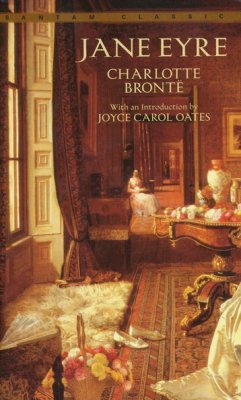
Jane Eyre by Charlotte Brontë: If I was told I had to choose just one book, only one, one single, solitary favorite, Jane Eyre would be it. …maybe. (Letters from Westerbork is a close runner up, barely a fingertip’s distance behind in the race to the book I won’t live without. More on this book in a later post) I have six copies of Jane Eyre, plus a graphic novel. I have books inspired by Jane Eyre: Rebecca by Daphne du Maurier, Jean Rhys’ Wide Sargasso Sea, and A Girl Walks Into a Book: What the Brontës Taught Me about Life, Love, and Women’s Workby Miranda K. Pennington, and have read several others. I own three versions of the film, and if you ask me who the sexiest Rochester is, Orson Welles, Ciaran Hinds, or William Hurt, my answer is yes. (NKP: the day after I drafted this post, I discovered Jane & Edward: A Modern Reimagining of Jane Eyre by Melodie Edwards at Dollar Tree. Yes, I bought it.)
I first read Jane Eyre when I was in my early twenties; I don’t recall what made me pick it up at the library, though I do recall remembering that it was referenced in Daddy-Long-Legs. I supposed if Jean Webster liked it, I might as well give it a go. To say I loved it would be an understatement. I read it twice in the two weeks I had it checked out, and renewed it. Jane is such a powerful character, not only in the way that nineteenth century literary heroines were, but as a real person: she is flawed, angry, spiteful, willful; she is bitter about the injustices handed to her and dreams of love and happiness. And she is fiercely intelligent and believes in herself and what she deserves. Add in a curmudgeonly, brooding, love-struck-though-deceitful leading man and a madwoman in the attic (literally) and you have a perfect recipe for an amazing Gothic novel. (I will admit it does drag in one particular area, but I am willing to overlook that in favor of the rest of the book.)
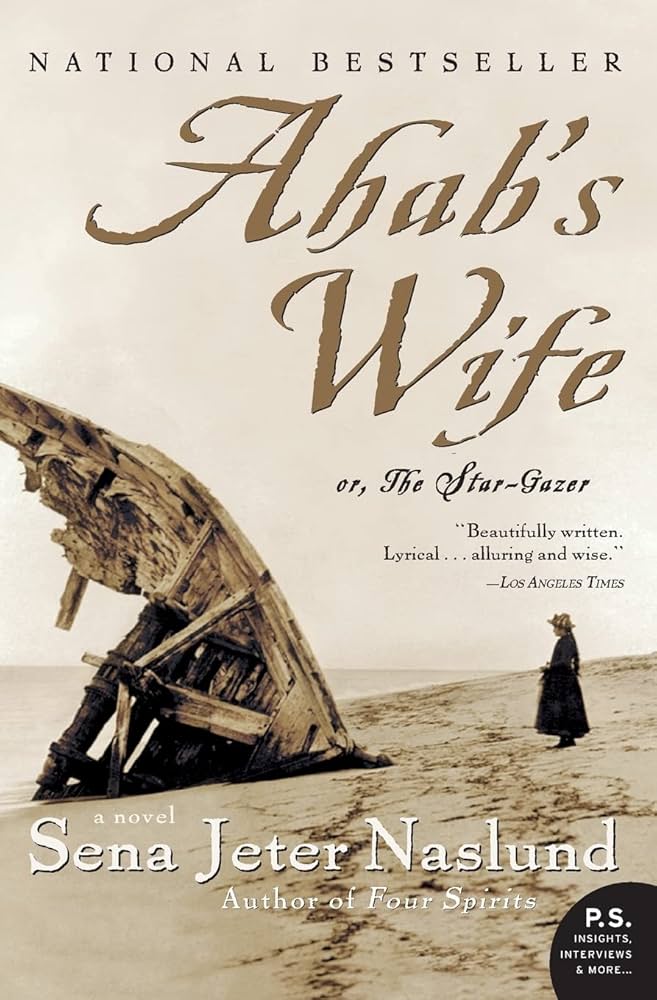
Next, Ahab’s Wife by Sena Jeter Naslund. This is a truly gorgeous story, full of color, sound, texture, and life. Una Spenser is a character very like Jane Eyre: intelligent, passionate about life, seeking knowledge and truth. She makes mistakes, she redeems herself and others, she reinvents herself as she needs to. She suffers loss, heartbreak, abandonment, and literal shipwreck, and she soars like the eagles she observes from her lighthouse tower. Naslund writes real people into her narrative: artist and mathematician Phebe Folger, astronomer Maria Mitchell, and writer and activist Margaret Fuller, and pulls in the narrative of the 1820 wreck of the whaling ship Essex. You could try to call this a companion novel to Moby Dick, but that would be doing this book a disservice: Melville doesn’t even give Ahab’s wife a name; Naslund gives her a vibrant, beautiful life.
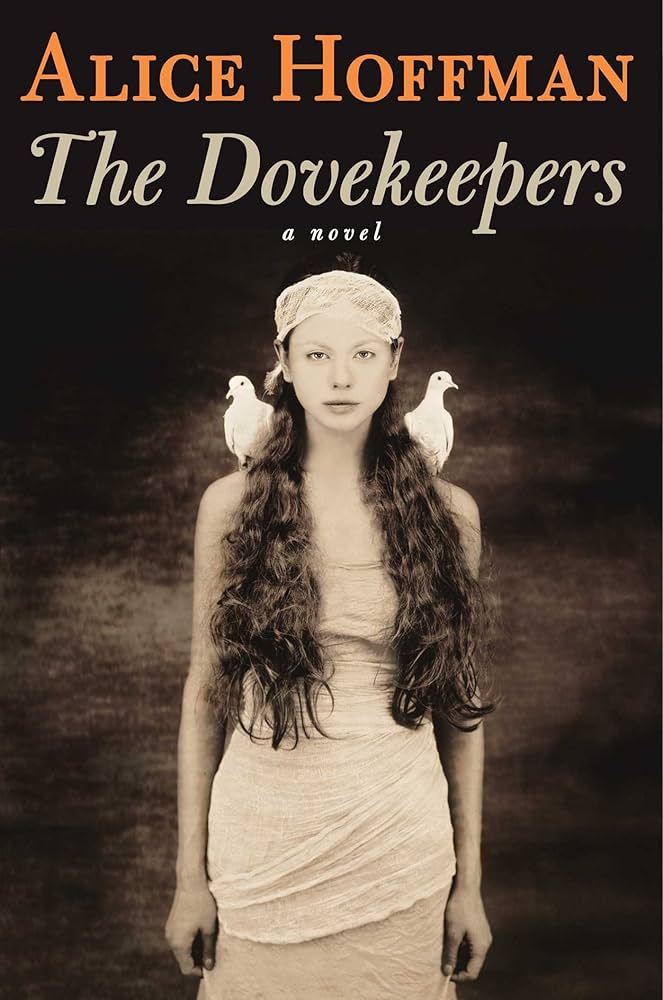
The third book on my “I-could-probably-live-without-but-don’t-want-to-try” list is The Dovekeepers by Alice Hoffman. Alice Hoffman is one of my favorite writers. I don’t bother to request her new books from the library, I just buy them. She is that good. The Dovekeepers brings readers to the final years of the Jewish stronghold of Masada during the Roman conquest of, well, everywhere. Told through the voices of four women, this book transcends time. You ask yourself what you would do for love. When faced with what could potentially be the end of forever, how would you approach each day? What would you do to see another sunrise? What spells would you weave, what histories would you make up for your listeners? Historians and archeologists are divided on what really happened at the fall of Masada in 74 AD; Flavius Josephus claimed that the Romas held the citadel siege for years, and finally entered to find the bodies of over 900 Jewish “rebels” (is one a rebel for wishing to live your life as a free person instead of a slave?); archeologists have found evidence to show that the siege may have lasted only weeks, and no evidence of mass murder/suicides. The ghosts of Masada keep their secrets, and Yael, Revka, and Yonah keep theirs.
OLYMPUS DIGITAL CAMERA
And finally, A Tree Grows in Brooklyn by Betty Smith. I have read and reread this beautiful coming of age story so much that pages are falling out. I had to put a rubber band around it when Bestie asked to borrow it so pages wouldn’t get lost. (I bought her a beautiful hardcover edition for Christmas) Readers meet Francie when she is eleven, and spend six years alongside her in the tenements of Williamsburg, Brooklyn. We see her striving for her distant, hardworking mother’s approval, never understanding that her mother would quite literally kill for her children if need be; we see her unwavering love for her deeply flawed, charming, devil-may-care father; we browse library bookshelves with her as she dreams of reading all of the books in her small world; we see her dreams and determination, her love of learning and her wish to fly free and discover a world away from poverty. To say this book is a heartening, wholesome story feels a little twee, but this really is the best way to describe it. It makes you laugh, it makes you cry, and it makes you appreciate all that you have. (As an aside, this book was hugely popular with soldiers stationed overseas during WW2; Betty Smith said she received more fan mail from soldiers than civilians regarding this book.) The 1945 film cuts out much of the novel, but keeps the heart of the story, and I highly recommend watching it (after you read the book, of course).
This has been a monster of a post, which is why I have broken it into two parts. Leave a comment with your favorite novels; I’ll definitely check them out!




 This is the Mask