I was quite disappointed in this book. I love sharks, I think they are beautiful and fascinating creatures. I doubt we will ever fully understand their behaviors, so when a book like this comes along I am interested to see what has been learned. This book doesn’t really offer any insight. It reads like someone sharing a report based on papers they have read without fully understanding the original source. The writing style also lacks the crisp definition that one usually find in history and science books.
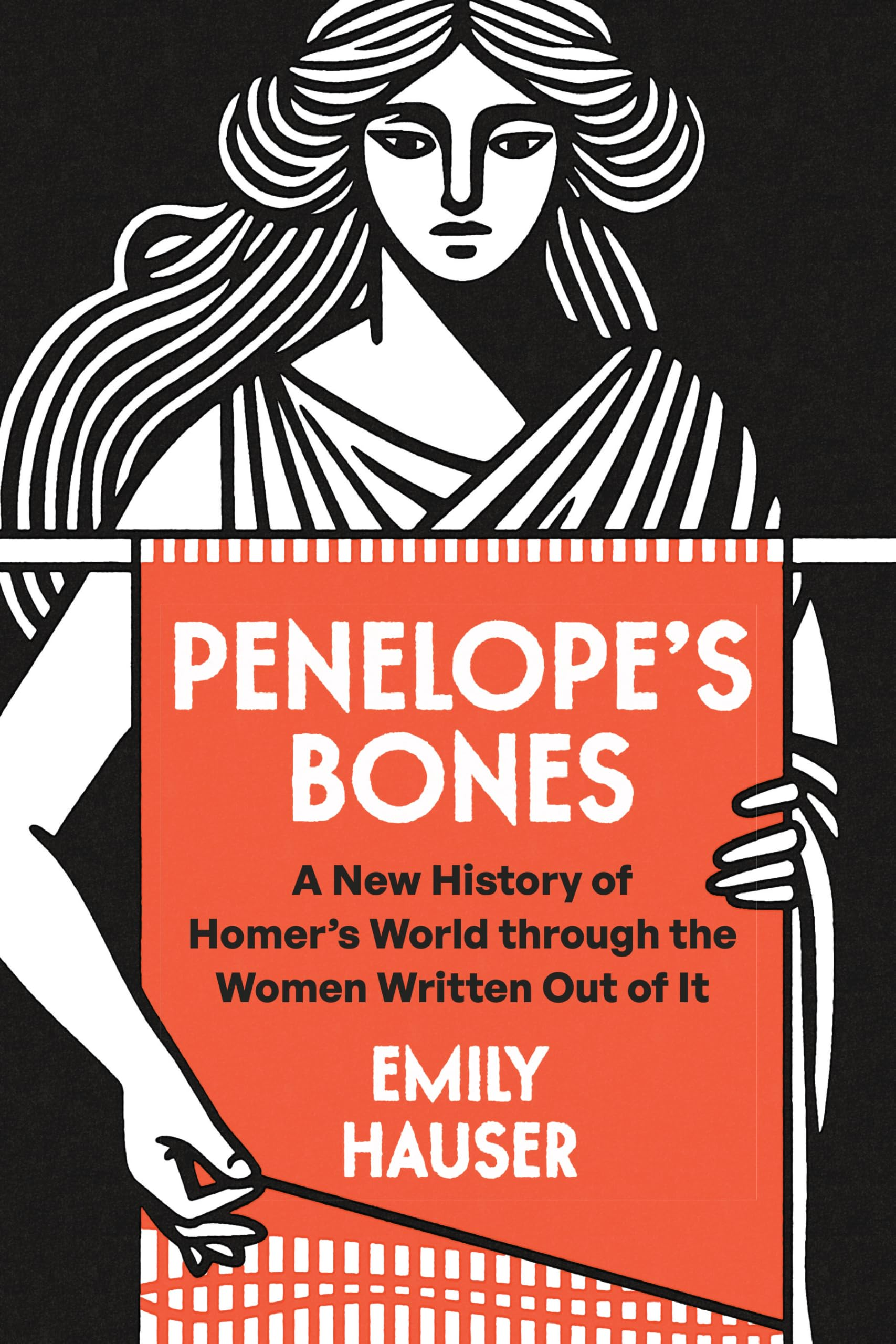
Emily Hauser’s brilliant book “Penelope’s Bones” has a place of note on the shelf beside my copies of Natalie Haynes’ “Pandora’s Jar” and Divine Might.” Hauser has presented her readers with a detailed study of figures from Homer’s works that hover in the background of his heroes’ lives: the women of legend. The women not deemed important enough to have their own epics, the women that worked so the men could ride to glory, the women that were captured, enslaved, crowned, and killed. This book is engaging and informative, offering different theories about women’s roles in ancient Greece thank ones that have been accepted as fact for centuries. Hauser supports her theories with archaeological studies that suggest what we have been taught to believe may not have been so. One thing that I appreciate about this book is that Hauser examines women from the mythos as living women from historical records. She doesn’t portray Briseis just as “Achilles’ slave” but considers what the background of a woman in her position might have been, what her life might have been like before her enslavement, and what happened after. “Penelope’s Bones” is a fascinating way of reexamining the Iliad and the Odyssey, allowing readers to look into the lives of women from a long-distant past.
As a writer and book lover, I was very excited to read Emily Hodgson Anderson’s “Shadow Work: Loneliness and the Literary Life.” While I thought this book was very good and definitely worth reading–especially for writers–I didn’t love it. Some sections failed to hold my interest; however, other sections had me pausing, considering, rereading, and highlighting. I read this as an e-book, and despite my somewhat flat rating, I will probably pick it up as a paperback because I feel that much of her commentary is very thought-provoking.
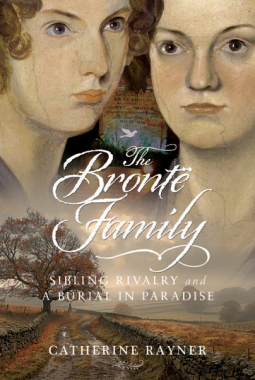
Jane Eyre is my absolute favorite book. I admire the work of all of the Brontes, and I often wonder what else they might have produced had they not died so young. This book is packed with information, some of it new to me and presented from a viewpoint I hadn’t considered previously. The only drawback to this book is that it reads very much like a dissertation. It is interesting, but not particularly engaging (unless you are a Bronte fan, and most readers of this book will be Bronte fans, I expect). I enjoyed this book overall, but it is not one I will read again.
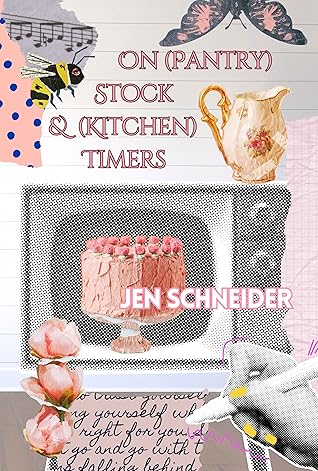
Jen Schneider’s On (Pantry) Stock & (Kitchen) Timers is a unique collection of a stream-of-consciousness essays and poems that you wouldn’t think would work but does in an enchanting, eye-catching, made-you-look kind of way. Schneider’s words are a collage of thought that walks readers through a maze of sensation/emotion/confusion/questing. This collection deserves a re-read to fully take in what Schneider says, but even after a second reading I found myself pausing, starting a page over, considering what Schneider wrote, how to interpret her idea. Read this book and experience Schneider’s creative art for yourself.
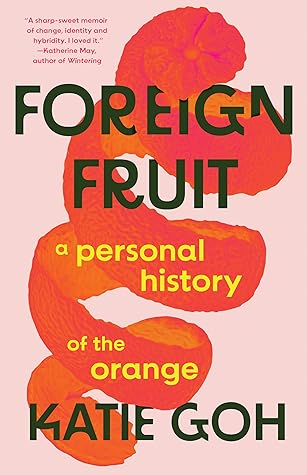
Foreign Fruit by Katie Goh is an outstanding book. I was expecting a microhistory about oranges, or citrus fruit as a whole; I was not expecting an incredibly well-researched social history about culture, society, belonging, searching for one’s place in the world, biases, acceptance, food cultivation, and environmentalism (among other topics). Goh’s book takes readers from Ireland and Malaysa to China, Italy via the Silk Road, France, Russia, and the United States. Readers witness the destructive oppression of Dutch and British colonialism, Communist tyrants, and violent racism. I had never heard of the Los Angeles Riot of 1871, in which nineteen Chinese immigrants were murdered, and no one was held accountable.
Readers are also introduced to the wonders of citrus cultivation; I was also unaware that similar to apples, citrus seeds will not grow true to the parent plant: if you plant a clementine seed you will get some kind of variety of citrus, possibly even a clementine (but don’t count on it). Goh tells us of the origins of many of the citrus varieties we are familiar with today, how the fruit rose to such popularity (aside from being delicious), and its cultural significance in many cultures.
In a fashion similar to Crying in H Mart and My Berlin Kitchen, Goh describes a childhood of feeling like an outsider, growing up in Ireland as the child of an Irish mother and a Chinese-Malaysian father. Her love of her heritage is evident despite her inner struggle to see just where she fits in. Her descriptions of visits to her family in Malaysa are filled with warm childhood memories, and when she returns as an adult she is just as eager to embrace her culture and identity.
This book was a pleasure to read, engaging, informative, completely engrossing. I highly recommend this as a memoir, a microhistory, and as a study of society.
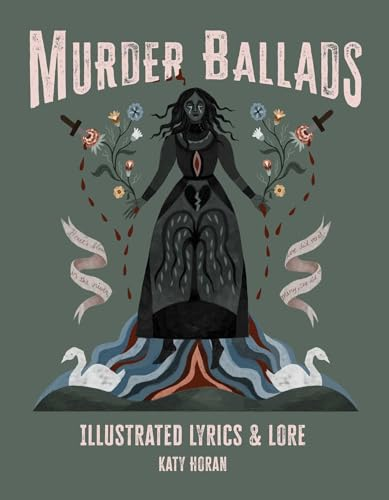
Murder Ballads by Katy Horan is a treat for fans of Dark Folklore and Gothic themes (that’s a gruesome way to begin a review, isn’t it?). I was already familiar with “The Death of Queen Jane” and “The Twa Swans” thanks to Loreena McKennitt. Horan included a list of recordings, so readers can immerse themselves fully into the eerie beauty of these lyrics. Horan includes some backstory to each of the selected ballads; this led me down a rabbit hole of reading the expanded stories behind these ballads. Katy Horan doesn’t just present her readers with a collection of songs, but a unique volume of true crime as well. Apart from the two songs McKennitt produced, I would say my favorite is the rendition of “Where the Wild Roses Grow” performed by Nick Cave and Kylie Minogue. I definitely recommend this darkly beautiful collection to anyone who loves folklore, poetry, and the Gothic and Romantic literature of the nineteenth century. You will absolutely love it. Be warned, though, you will spend hours looking up music videos.
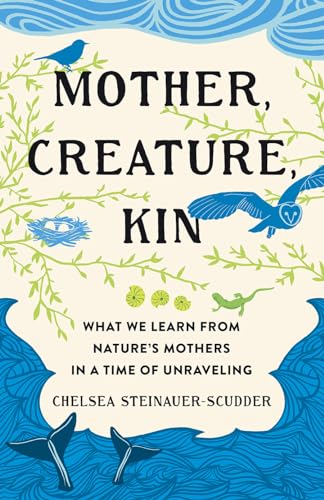
Chelsea Steinauer-Scudder’s beautiful book Mother, Creature, Kin brings to mind the essays of Barbara Kingsolver and Rebecca Solnit, and Diane Ackerman’s A Natural History of the Senses. Steinauer-Scudder explores such topics as climate change, motherhood, seeking (and finding) one’s center as well as one’s place in the world. She asks her readers to consider their roles within the world, reminding us that the greatest gift we can do for future generations is to leave the world a better place than we found it. She acknowledges the challenges in this, admitting her own failings while striving to do better. Mother, Creature, Kin is a book that everyone should read. It is illuminating and thought-provoking, at times heartbreaking, but pulsing with life.
“Uncredited: Women’s Overlooked, Misattributed, and Stolen Work” by Allison Tyra is an excellent book. She names and credits literally hundreds of women who were not recognized or rewarded for their achievements, from art to medicine to space exploration and beyond. As an amateur scholar of women’s history (i.e. I am not a student), I recognized some of these brilliant women; others I had unsurprisingly never heard of. Tyra’s book is an epic of female experience: the struggles we face, the biases we must fight against, the acknowledgements we are denied. This book should be read by all, though there will be plenty of naysayers that will insist that “it didn’t happen that way.” (And we all know who will say things like that, don’t we?)
Allison Tyra’s book should be recognized as the very valuable work of history it is. It deserves a place in classrooms as a reference book and a history of women’s experiences and accomplishments. Read this for the information, read it just because, or read it and allow yourself to fall into rabbit holes of related history. Whatever your reason, read this.
Celia Drill’s The Lost World is some of the best contemporary poetry I have ever read. Her work is enthralling; she plays with language, creating images in the mind that are a kaleidoscope of emotion and thought. I found myself highlighting entire poems instead of single lines. I read her poems two, three times over, looking for meaning withing the meaning. Drill creates surreal landscapes of sound—I read her poems out loud, wanting to feel the flow of her language.
Drill’s poem “The Raven” describes the raven thus: “When the raven appears, he is never a bird; he is always a small, dark man. He walks with a cane, with God as his witness.”
A bird dies alone in the snow: “I take her home to forest’s solace, lay her in the dark earth beneath joined pines […] The forest is mourners holding hands. My dead bird recedes into roots. And unlike me, silent stranger in dimming woods, she sings from networked branches.”
Celia Drill crafts lines of such beauty: “Rain makes widows of the ghost pines…”; “There is no time, say the dragonflies, only color.”; “Sweetness spirals from the throats of violet, coalesces, sisterhoods of stars.” Her poem “Mug for Lapsang Souchong” is as graceful as the fox that the potter dreams of.
We know writers are artists, and in The Lost World Celia Drill embodies this ideal. “I am only a sparrow,” she says, “but I am voluminous.”




 This is the Mask