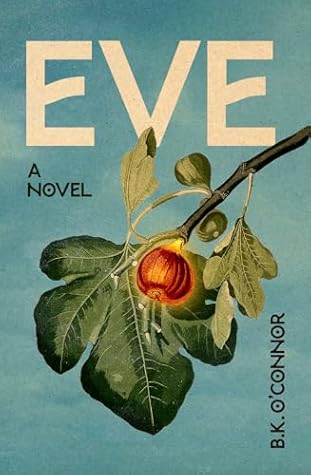
A huge thank you to NetGalley and Histria Books for the review copy of B. K. O’Connor’s beautiful book “Eve.” It is very appreciated!
I initially rated this book four stars on Goodreads, but I am revising that to a full five; this book was so good it deserves all of the stars. Some years ago, I read Mark Twain’s “Eve’s Diary,” in which he was so close to almost understanding a woman’s point of view that I wonder if Livy advised him. B. K. O’Connor obviously needed no assistance in bringing Eve to life in a spectacular fashion. O’Connor gives us Eve as she was meant to be, the Mother of All, brilliant, curious, fearless; she challenges the status quo by her very existence. O’Connor’s Eve dares to challenge God. She refuses to be meek. She refuses to accept “this is how it is.” When she is not given answers, she seeks her own, traveling the known world to find the answer to humankind’s purpose on the earth. She becomes the beloved daughter of a multitude of goddesses, learning from each land she visits. She is a teacher, divine in her own human femininity.
B. K. O’Connor gives readers a fierce, strong, independent female lead with the ability to touch your heart. She loves, she laughs, she weeps for her loved ones, fights to survive and seeks to learn. This Eve is no simple companion. She is a woman as woman is meant to be.
Thank you very much NetGalley and Andrews McMeel Publishing for the ARC of Amanda Lovelace’s newest collection “the witch doesn’t drown in this one”!
Amanda Lovelace has done it again (as if that is a surprise): she has plumbed the deepest parts of her heart and shared her pain, her anger, her hope, and her love with the world. Her poems tell the stories of women: our struggles, our fears and heartbreaks, our triumphs. She speaks so we can be heard: “if she were a wolf, no one/ would ignore her howls.”
Lest you think women are irrational, or overreacting, know this: “She is not angry/ about the state of/the world anymore/ She is/ simply filled/ to the/ f*cking/ brim/ with sorrow. –but don’t worry, the witch doesn’t/ drown in this one”
She reminds her readers of their strength, even when they are at their breaking point: “If you’re going to cry, then cry/ once you’re finished, / come back to shore and get back/ on the battleground / there is still a war to win, witch.” Keep fighting sisters, she says. Keep raging, and nurturing, and creating. We will not be pushed aside.
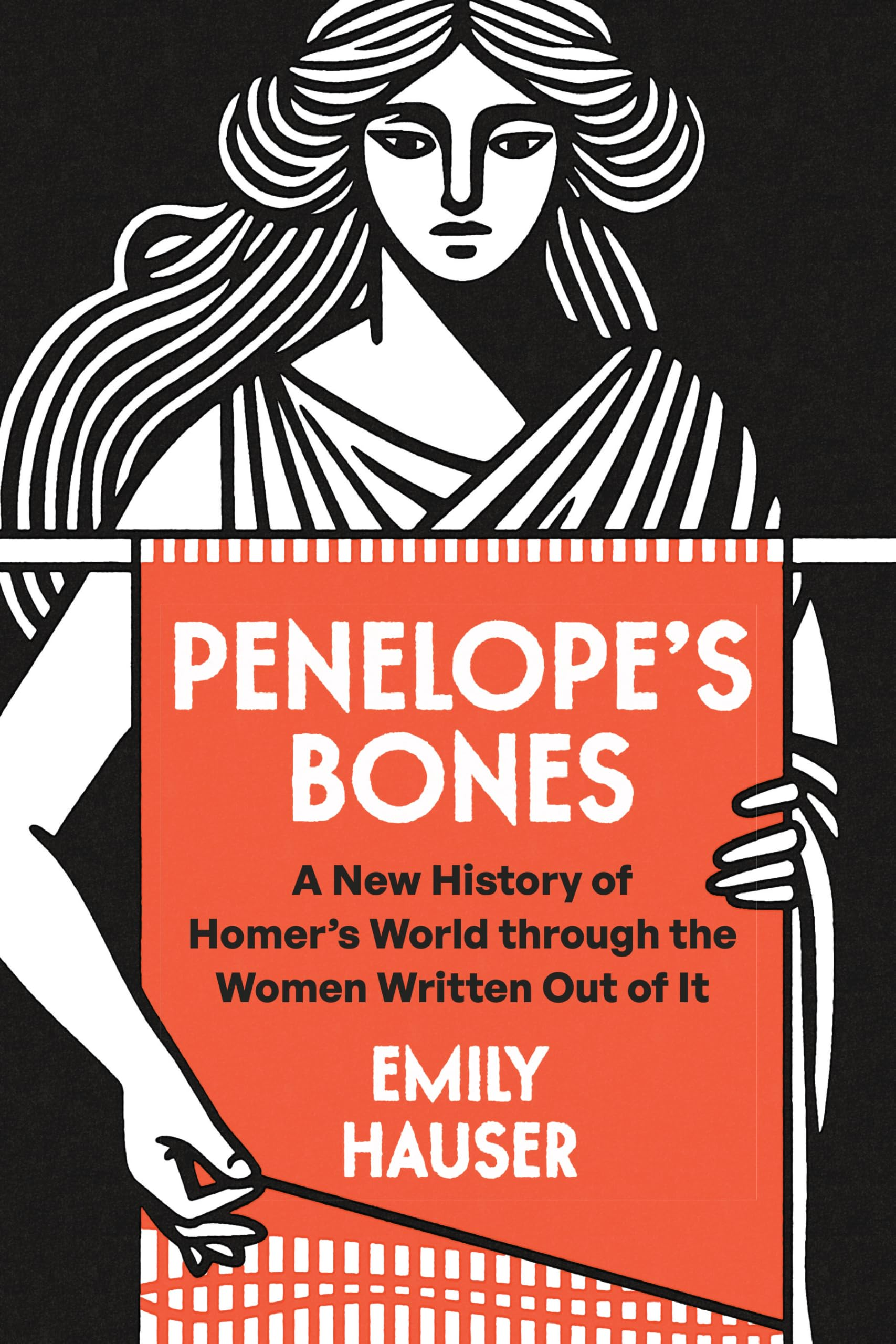
Emily Hauser’s brilliant book “Penelope’s Bones” has a place of note on the shelf beside my copies of Natalie Haynes’ “Pandora’s Jar” and Divine Might.” Hauser has presented her readers with a detailed study of figures from Homer’s works that hover in the background of his heroes’ lives: the women of legend. The women not deemed important enough to have their own epics, the women that worked so the men could ride to glory, the women that were captured, enslaved, crowned, and killed. This book is engaging and informative, offering different theories about women’s roles in ancient Greece thank ones that have been accepted as fact for centuries. Hauser supports her theories with archaeological studies that suggest what we have been taught to believe may not have been so. One thing that I appreciate about this book is that Hauser examines women from the mythos as living women from historical records. She doesn’t portray Briseis just as “Achilles’ slave” but considers what the background of a woman in her position might have been, what her life might have been like before her enslavement, and what happened after. “Penelope’s Bones” is a fascinating way of reexamining the Iliad and the Odyssey, allowing readers to look into the lives of women from a long-distant past.
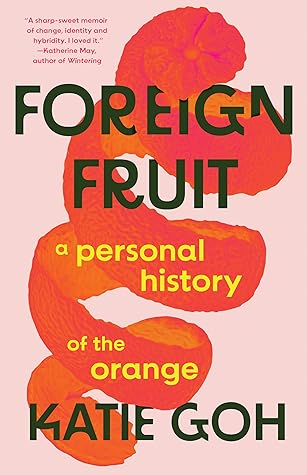
Foreign Fruit by Katie Goh is an outstanding book. I was expecting a microhistory about oranges, or citrus fruit as a whole; I was not expecting an incredibly well-researched social history about culture, society, belonging, searching for one’s place in the world, biases, acceptance, food cultivation, and environmentalism (among other topics). Goh’s book takes readers from Ireland and Malaysa to China, Italy via the Silk Road, France, Russia, and the United States. Readers witness the destructive oppression of Dutch and British colonialism, Communist tyrants, and violent racism. I had never heard of the Los Angeles Riot of 1871, in which nineteen Chinese immigrants were murdered, and no one was held accountable.
Readers are also introduced to the wonders of citrus cultivation; I was also unaware that similar to apples, citrus seeds will not grow true to the parent plant: if you plant a clementine seed you will get some kind of variety of citrus, possibly even a clementine (but don’t count on it). Goh tells us of the origins of many of the citrus varieties we are familiar with today, how the fruit rose to such popularity (aside from being delicious), and its cultural significance in many cultures.
In a fashion similar to Crying in H Mart and My Berlin Kitchen, Goh describes a childhood of feeling like an outsider, growing up in Ireland as the child of an Irish mother and a Chinese-Malaysian father. Her love of her heritage is evident despite her inner struggle to see just where she fits in. Her descriptions of visits to her family in Malaysa are filled with warm childhood memories, and when she returns as an adult she is just as eager to embrace her culture and identity.
This book was a pleasure to read, engaging, informative, completely engrossing. I highly recommend this as a memoir, a microhistory, and as a study of society.
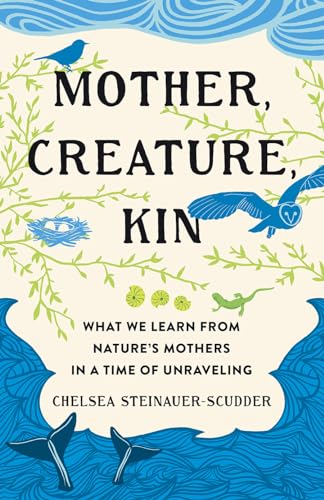
Chelsea Steinauer-Scudder’s beautiful book Mother, Creature, Kin brings to mind the essays of Barbara Kingsolver and Rebecca Solnit, and Diane Ackerman’s A Natural History of the Senses. Steinauer-Scudder explores such topics as climate change, motherhood, seeking (and finding) one’s center as well as one’s place in the world. She asks her readers to consider their roles within the world, reminding us that the greatest gift we can do for future generations is to leave the world a better place than we found it. She acknowledges the challenges in this, admitting her own failings while striving to do better. Mother, Creature, Kin is a book that everyone should read. It is illuminating and thought-provoking, at times heartbreaking, but pulsing with life.
“Uncredited: Women’s Overlooked, Misattributed, and Stolen Work” by Allison Tyra is an excellent book. She names and credits literally hundreds of women who were not recognized or rewarded for their achievements, from art to medicine to space exploration and beyond. As an amateur scholar of women’s history (i.e. I am not a student), I recognized some of these brilliant women; others I had unsurprisingly never heard of. Tyra’s book is an epic of female experience: the struggles we face, the biases we must fight against, the acknowledgements we are denied. This book should be read by all, though there will be plenty of naysayers that will insist that “it didn’t happen that way.” (And we all know who will say things like that, don’t we?)
Allison Tyra’s book should be recognized as the very valuable work of history it is. It deserves a place in classrooms as a reference book and a history of women’s experiences and accomplishments. Read this for the information, read it just because, or read it and allow yourself to fall into rabbit holes of related history. Whatever your reason, read this.
In Permission, memoirist Elissa Altman asks “Who has the right to tell a family’s story? Who “owns” a family’s history? Do we need permission to tell our story?”
Altman says, “The writing of memoir is often fraught; our friends, colleagues, families, entire cultures turn writers into pariahs for what we create, for who we are, for how we dare take ownership of our own stories.” She also writes “Beyond time, space, and money to write, permission is the single biggest hurdle that the creative—new or accomplished—faces, and often over the most mundane of issues.”
I am not a memoirist; most of what I write is completely made up, influenced by true events perhaps, but very loosely so. I do not feel the desire to tell true stories, and I have never considered what my family’s reaction would be if I chose to do so. I expect there would be anger, as Altman experienced. I am sure I would be told I was wrong, lying, or accused of fabricating everything for attention. Others would relish the attention it would bring, being of the mindset that adverse attention is better than lack of attention. I do not think I would be disowned as Altman was; I think I would be allowed to remain so people could be disgusted with me.
Altman reminds her students, “No one owns the right to craft our story but us, but we must remember that the complex work of memoir demands that we also write with clarity, compassion, and ambiguity, which allows the reader to determine their own response to the story.”
Elissa Altman’s Permission is an outstanding presentation of memoir, writing, self-exploration, and how one experiences (and suffers from) a family’s reaction to a secret that needs to be told. I will be supplementing my e-copy with a print edition for both reference and the reminder that sometimes being true to oneself means standing alone in the face of disapproval and still telling my story.
My sister and I are proud Muffin Wallopers and set aside time every Sunday to engage in pursuits associated with this title. “What is a Muffin Walloper?” you ask. Allow me to enlighten you.
Per WordGenius.com, “A “muffin-walloper” is an unmarried woman who gathers with friends to gossip. In the Victorian era, these conversations often happened over tea and cakes — hence the muffin part of the phrase.” Now, my sister and I are both happily married women. And we don’t actually gossip during these Sunday afternoon sessions. We brew ourselves cups of tea, make nice little snacks, and sit down with our phones, pens, notebooks, and a highlighter or two and discuss our current “Sister Read,” a book we have chosen to read together. We tried to host an online book group and invited other Muffin Wallopers to join us, but no one participated, so we decided to go solo (duo?). The phones are a necessity because I live in Western Massachusetts, and she lives in Coastal Maine.
Since summer, we have been reading Philippa Gregory’s Normal Women:Nine Hundred Years of Making History. This book has been both enlightening and absolutely infuriating. Spoiler alert: absolutely nothing has changed regarding women’s rights, roles, safety, or status in nine hundred friggin years. We are holding our final discussion for this book on Monday 12/9 after we wrap up the Afterword (postponed due to my daughter’s baby shower on 12/8…yay baby! My youngest grandson is due in January, and I cannot wait to meet him. In the meantime, I shall continue to spoil his brother and sister.)
We have agreed to take the rest of December off to work on our December TBRs. I shared mine in a previous post. (see the link here: https://nicolekperkins.com/2024/12/01/december-tbr/ if you are interested in taking a look) By an amusing consequence, we both decided to read The Old Magic of Christmas by Linda Raedisch. I expect we will have a phone call to discuss it once we have finished it. I’m currently reading it; I have no idea what Sister is reading at present. Besides Normal Women, that is.
January 1st will see us begin our next Sister Read, The Woman They Could Not Silence: One Woman, Her Incredible Fight for Freedom, and the Men Who Tried to Make Her Disappear by Kate Moore. (Henceforth I shall refer to this book as TWTCNS because like all kickass titles it’s very long.) I have read Kate Moore’s incredible and horrifying book The Radium Girls: The Dark Story of America’s Shining Women. My sister has not, and I did suggest this as our next book, but we both own a copy of TWTCNS because I forgot I had a Kindle copy and bought it in paperback. Guess who got a free paperback copy of TWTCNS?
The Woman They Could Not Silence tells the story of Elizabeth Packard, jailed in an insane asylum by her husband for being inconvenient. (Minor spoiler, Elizabeth Packard was not mentally ill.) From Goodreads:
“1860: As the clash between the states rolls slowly to a boil, Elizabeth Packard, housewife and mother of six, is facing her own battle. The enemy sits across the table and sleeps in the next room. Her husband of twenty-one years is plotting against her because he feels increasingly threatened – by Elizabeth’s intellect, independence, and unwillingness to stifle her own thoughts. So Theophilus makes a plan to put his wife back in her place. One summer morning, he has her committed to an insane asylum.
The horrific conditions inside the Illinois State Hospital in Jacksonville, Illinois, are overseen by Dr. Andrew McFarland, a man who will prove to be even more dangerous to Elizabeth than her traitorous husband. But most disturbing is that Elizabeth is not the only sane woman confined to the institution. There are many rational women on her ward who tell the same story: they’ve been committed not because they need medical treatment, but to keep them in line – conveniently labeled “crazy” so their voices are ignored.
No one is willing to fight for their freedom and, disenfranchised both by gender and the stigma of their supposed madness, they cannot possibly fight for themselves. But Elizabeth is about to discover that the merit of losing everything is that you then have nothing to lose.”
For the last few months my husband and brother-in-law have been watching Sunday afternoon football to the not-so-muffled sounds of their wives’ raging over topics discussed by Philippa Gregory in her book. I think by the time Sister and I are done reading TWTCNS our long-suffering husbands are going to hope we read something much lighter in topic, like True Crime.
I will post a review on Normal Women after Sister and I have our final discussion so I can share her thoughts on the books as well. For those of you who may have already looked it up, it is a monster of a book, covering a lot of material, some of it very hard to read.
The masterly Natalie Haynes has gifted us with another incredible work of brilliance. I do not know if this is intended to be a companion book to her 2020 book Pandora’s Jar, but as I own both of them, I’ll continue to read them together. Her examination of female dramatis personae in Greek myth offers valuable insight to the realm of women’s studies and classical studies (and to anyone who just happens to like reading about mythology and women’s literature like yours truly). Haynes presents each chapter almost as an autobiography of the Goddess in question, discussing Her connection and relevance to women both past and present. As a Dianic Pagan, the Goddess of the Greek and Roman pantheon are not mere figures of legend to me but a part of my spiritual practice. The Goddess Hestia figures largely in my devotions, and I was delighted to find Her included in this study as She is often overlooked for more glamorous figures. Haynes gives us a different view of the Goddesses and their mythological actions; she reprises their roles in ancient society and offers them to us in relation to modern women’s issues and challenges. I have been a fan of Natalie Haynes since I first read her novel A Thousand Ships. Her fiction is spectacular, and her nonfiction works are peerless.
This book explodes into your psyche. Wytovich takes her readers by storm, pulling them into a maelstrom of emotion and language and sensation. “My name is werewolf, death-cup, noise,” she screams charging through hordes of grinning demons. Ghost girls watch from garden shadows as you daintily sip poisoned tea; we dine with witches on thornapple, mushrooms, wild strawberries, and boiled spiders. “Three times I came to tea,” the mystical triad, three wishes, click your heels three times, and you too can read the omens. Wytovich illustrates with words, creating fantastical paintings: “She stood inside the four corners / securely in sunlight–smiling / a fairy princess against / my unwelcoming face / precious, with a quiet respect.” Wytovich’s writing brings to mind the work of Charlotte Perkins Gilman and Mary Oliver, but her voice is uniquely, angrily, her own. She questions suffering and disturbance and gives us an illusion of genteel femininity shielding ferocious womanhood. Yet there is beauty glowing behind her ferocity: “Awakened, a trailing mist / hugs my morning tea / an early love, shining.” in “On the Subject of Blackberries” Stephanie Wytovich has created a universe of thought. You cannot read her writing and be unaffected. It forces you to consider what is real and what we are told is false, though only the reader knows for sure.


 This is the Mask